Introduction: The Art of Stillness in a Fast-Paced World
Do you often feel overwhelmed by work and life? Modern people face constant information overload from their phones and an ever-growing to-do list, keeping their body and mind in a tense state for long periods. Traditional Chinese medicine teaches us that imbalances in the body and emotions often stem from "Qi" (vital energy) disorders. Regaining balance doesn't have to be complicated—just use simple daily techniques to bring your mind back to calmness. The following five traditional Chinese methods for stillness are simple, safe, and can help you move from busyness to ease.
Techique One: Abdominal Breathing - Calming the Qi
When anxiety strikes, try "abdominal breathing." Find a quiet corner, sit down, and place your hands on your abdomen. Breathe in slowly, feeling your belly rise; hold your breath for 2 seconds, then exhale evenly. Repeat this 6-8 times per minute for 3 minutes. The principle is to activate the parasympathetic nervous system through deep breathing, allowing the "Qi" to descend, thus naturally calming the mind.
Techique Two: Warm Foot Bath - Guiding Fire Back to the Origin
One hour before bedtime, soak your feet in warm water (around 40°C) for 15 minutes, ensuring the water covers your ankles. You can add three slices of ginger or a small amount of moxa. According to traditional Chinese medicine, the soles of the feet are the "second heart," and warm water helps guide upward floating heat downward, relieving irritability and insomnia. After soaking, gently massage the Yongquan point (the depression at the front one-third of the sole), which enhances the effect.
Techique Three: Sitting Meditation - Nourishing the Spirit and Gathering Qi
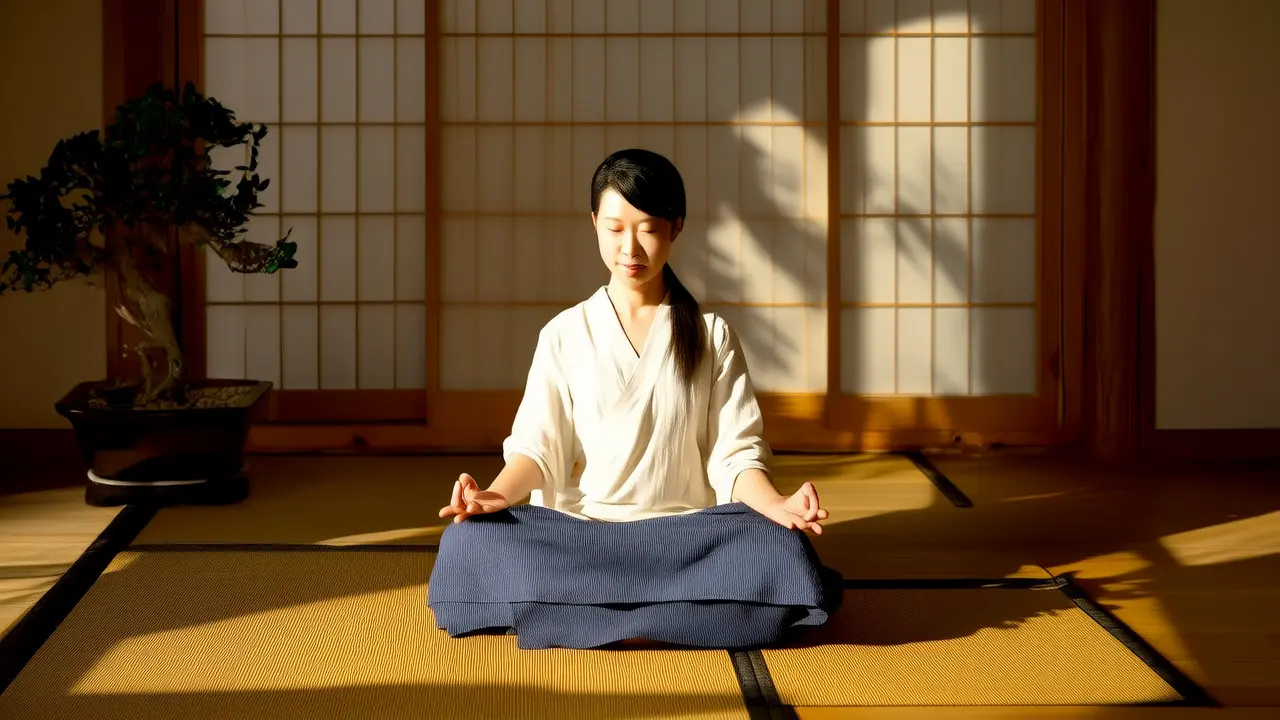
Choose a fixed time each day (such as upon waking or after lunch) to sit quietly for 5-10 minutes. Sit cross-legged or on a chair, keep your spine straight, and place your hands lightly on your knees; close your eyes and focus your mind on your breath at the tip of your nose. Let thoughts come and go without interference, treating them like passing clouds. This is a practice of "gathering the mind," reducing mental dispersion and restoring inner energy.
Techique Four: Listening to Sounds - Five Tones for Heart Healing
The five tones in traditional Chinese medicine (Gong, Shang, Jue, Zhi, Yu) correspond to the five internal organs. When feeling stressed, listen to the soothing "Jue" tone (such as the guzheng piece "High Mountains and Flowing Water"), which can relieve liver stagnation and regulate qi; when tired, listen to the "Gong" tone (such as the xun piece "Lonely Orchid"), which can strengthen the spleen and calm the spirit. Spend 10 minutes each day listening with your eyes closed, letting the melody harmonize your emotions.
Techique Five: Acupressure - Immediate Stress Relief
When you feel chest tightness or dizziness, press the "Neiguan" point (two finger widths above the wrist crease, between the tendons) and the "Taichong" point (the depression between the first and second toes on the top of the foot) with your thumb for one minute each, applying pressure until a sense of soreness and distension is felt. This is a variation of "Opening the Four Gates," which can unblock the flow of blood and qi, quickly calming agitation.
Conclusion: Composure is a Daily Practice
You don't have to wait for the weekend to relax. Incorporate these techniques into your fragmented time—deep breathing while waiting for the bus, soaking your feet before bed, closing your eyes to rest during lunch... After maintaining this for two weeks, you'll find yourself better able to cope with stress. When your mind is calm, your quality of life naturally improves. Remember: balance is not a destination, but a choice made every single day.