Introduction: The Ritual of the Night Starts from the Soles of Your Feet
After a busy day, both the body and mind long for peace. Traditional Chinese health wisdom emphasizes "adjusting according to the time," and night is the best time to collect yang energy and nourish yin essence. From warm foot baths to meditative relaxation, these two simple habits can help you shed fatigue, promote smooth flow of qi and blood, and naturally enter deep relaxation. No complicated equipment is needed; just a few minutes can make you feel gently comforted mentally and physically.
Step One: Warm Foot Bath, Guide Qi and Blood Downward
A foot bath is a classic action in traditional Chinese nighttime health care. Soak your feet in water around 40°C for 15 minutes, with the water covering your ankles. The water temperature should not be too high, just warm and comfortable. During the foot bath, the capillaries on the feet expand, circulation accelerates, which helps relieve tension in the lower limbs and guide qi and blood from the upper part of the body back to the lower part, making you feel sleepy. You can add a few slices of ginger or a handful of mugwort to the water to enhance the effect of warming up and dispelling cold. Note that it's not advisable to take a foot bath within one hour after eating, and people with diabetes should control the water temperature.
Step Two: Massage the Soles, Activate Reflex Zones
After the foot bath, when your feet are slightly warm, use your thumb to press the Yongquan point (the depression at the front third of the sole). Press each foot for 3 minutes, with the pressure being enough to cause a sense of soreness and fullness. Yongquan is the starting point of the kidney meridian, and regular pressing can strengthen the kidneys, consolidate vital energy, and improve sleep. Then you can knead your toes and gently scrape the top of your feet to further relax the foot fascia. This small action can unblock meridians, spreading a sense of comfort from the soles of your feet throughout your body.
Step Three: Sitting Meditation, Harmonize the Mind
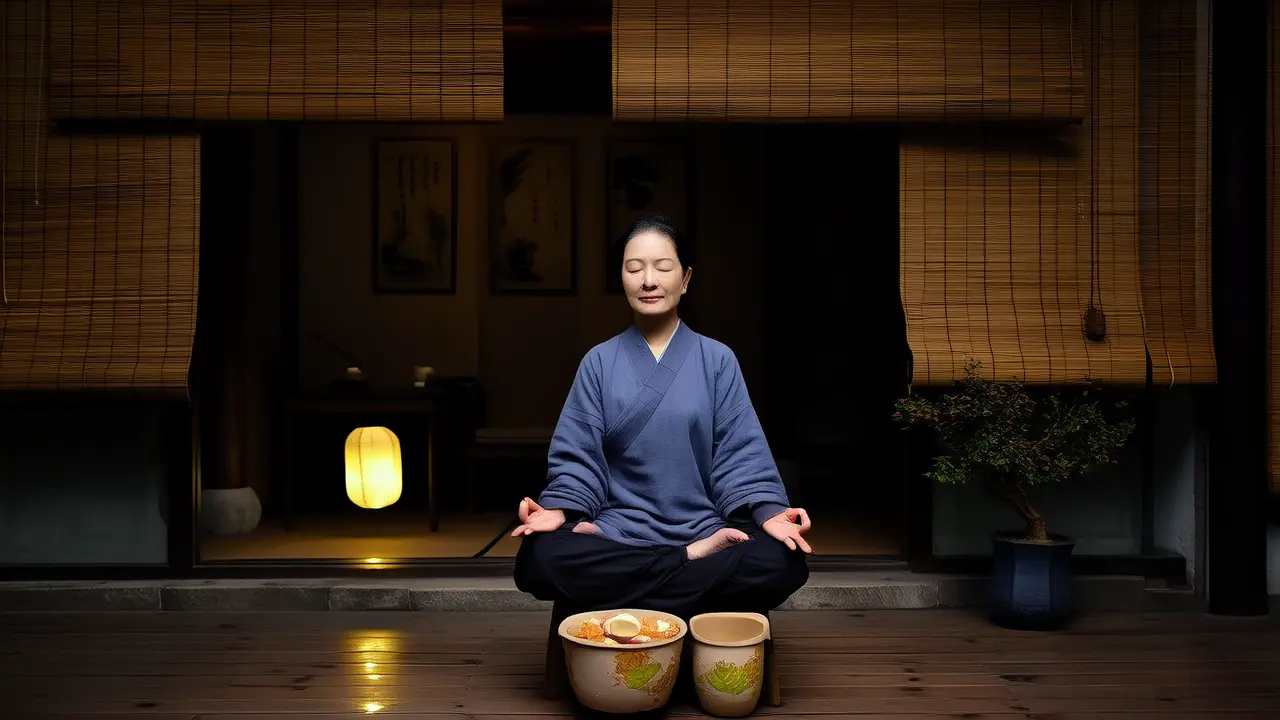
Do not lie down immediately after a foot bath. Instead, sit cross-legged on a cushion, place your hands lightly on your knees, and close your eyes. First, take a deep breath and slowly exhale, focusing your attention on your breathing. If there are distracting thoughts in your mind, don't resist them; gently bring your thoughts back to your breath. Start with 5 minutes and gradually extend to 15 minutes. Meditation reduces the excitement of the sympathetic nervous system and activates the parasympathetic nervous system, helping to stabilize heart rate and reduce stress. Traditional Chinese meditation emphasizes "keeping still," allowing qi and blood to flow smoothly and naturally fall asleep.
Summary: Consistent Daily Practice, Reap Peace
From foot bath to meditation, it's just a small act of self-care during the night. These traditional Chinese habits are safe and gentle, relying not on medicine but fundamentally adjusting the body's rhythm. After a week of practice, you will find it easier to fall asleep and enjoy deeper sleep; after a month, you will have more energy during the day. Remember, health preservation is a gradual process, and you don't need to pursue immediate results. If you have special health conditions, please consult a professional physician.
Disclaimer: The content of this article is for reference only and cannot replace professional medical advice. Individual constitutions vary; if you experience discomfort or illness, please seek medical attention promptly.