Introduction: How Long Has It Been Since You Took a Deep Breath?
In our fast-paced modern life, our breathing often becomes shallow and rapid, like a continuously running machine. However, ancient Eastern wisdom tells us that breathing is the "energy mechanism" that regulates both body and mind. Between each inhale and exhale lies the key to restoring inner calm. Today, we share just one simple technique - diaphragmatic deep breathing - integrated with the traditional Chinese health philosophy of balancing Yin and Yang, harmonizing body and mind, helping you relieve emotions, ease tension, and regain that long-lost tranquility.
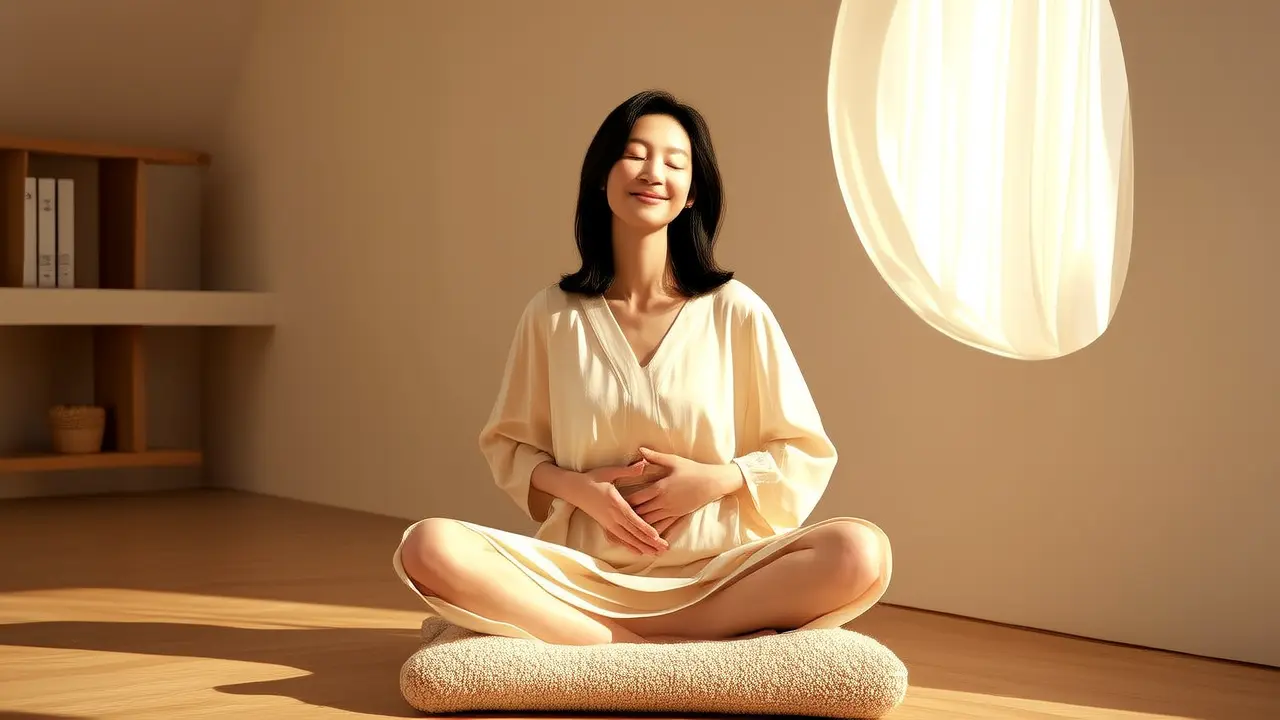
Technique Explained: Three-Minute Diaphragmatic Breathing
When you feel anxious, irritable, or overwhelmed, find a quiet place to sit or lie down, and follow these steps:
- Preparation: Loosen your belt and tight clothing, and gently place your hands on your abdomen.
- Inhale: Breathe in slowly through your nose, imagining the breath flowing like water into the Dantian (three inches below the navel), while your abdomen expands like a balloon, keeping your chest still. Count silently for 4 seconds.
- Hold: After inhaling, gently hold your breath for 2 seconds, feeling the breath staying warm inside your body.
- Exhale: Exhale slowly through your mouth or nose, allowing your abdomen to contract inward, as if expelling all the impurities from your body. Count silently for 6 seconds.
- Repeat: Repeat this process 5-10 times, gradually slowing down the rhythm and focusing on the sensation of your abdomen rising and falling.
Principle: Regulate the Energy Flow, Achieve Yin-Yang Balance
From a Traditional Chinese Medicine perspective, shallow and rapid breathing belongs to "excessive Yang," which easily causes the mind to become restless. In contrast, deep diaphragmatic breathing can guide the energy back to the original source (the lower Dantian), allowing "Yin" to be nourished and "Yang" to be contained. Between each inhale and exhale, the energy flows smoothly, shifting the body from a tense state to a relaxed mode, naturally dissolving tension. It's like letting a turbid glass of water settle, where the silt sinks and clear water emerges.
Summary: Give Yourself a Few Minutes of Breathing Time Every Day
This technique requires no specific time or place; you can practice it anytime and anywhere, whether you're at the office, on the subway, or before bedtime. After practicing for several days, you will find your body becomes more flexible, your sleep quality improves, and you are better able to maintain composure when facing challenges. Remember: Breathing is the most loyal friend of your body, always waiting for you to return.
Disclaimer: The breathing exercises shared in this article are for relaxation purposes only and cannot replace medical diagnosis or treatment. If you suffer from severe anxiety, difficulty breathing, or chronic illness, please consult a professional physician.