Introduction: Let the Heart Unfold Like Tea Leaves
Emotions are like the wind, sometimes gentle, sometimes fierce. You cannot control the direction of the wind, but you can adjust your posture. The Chinese practice of quieting the mind emphasizes finding balance in motion—like brewing a good cup of tea, where water temperature, time, and mindset are all essential. The following five gentle techniques are suitable for any moment when you feel tense, anxious, or exhausted. They require no special equipment, yet they can help you gradually regain a calm and focused mind.
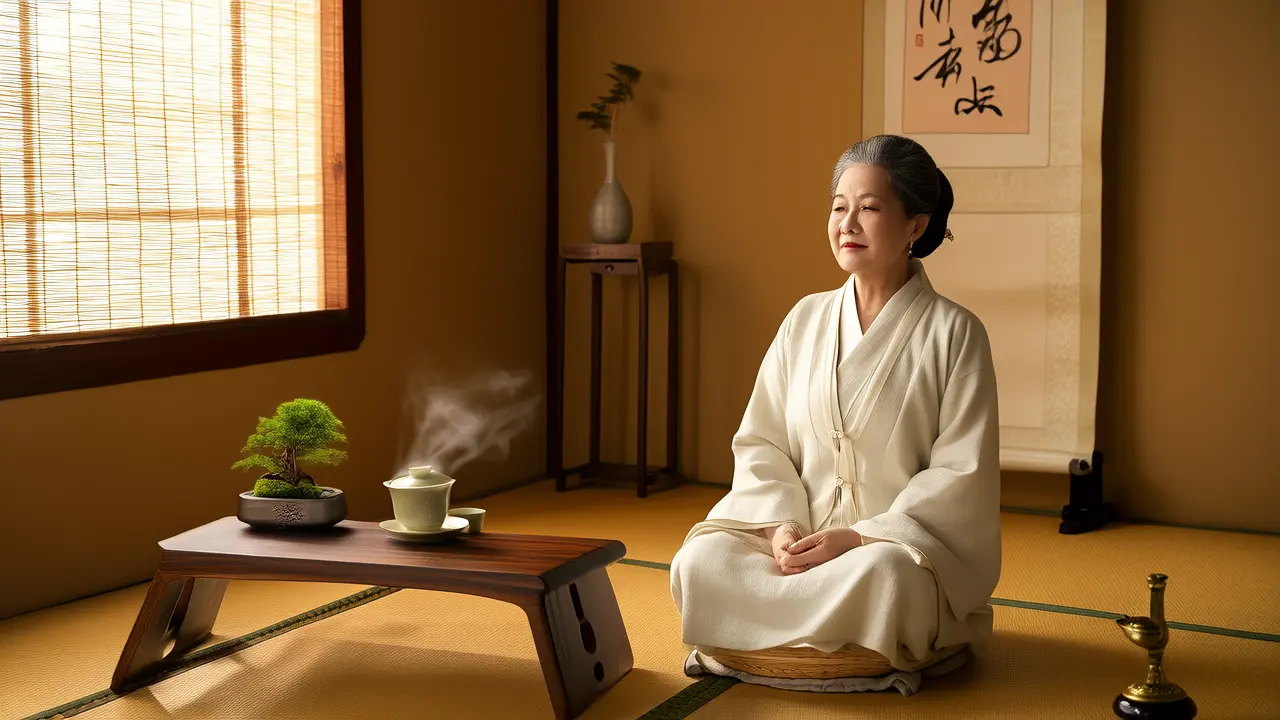
Technique One: Abdominal Breathing – A Simple Way to Balance Yin and Yang
Traditional Chinese medicine believes that breathing is a bridge connecting the body and the mind. When you feel irritated or stressed, try abdominal breathing: sit on a chair, place your hands gently on your abdomen. Breathe in deeply through your nose, feeling your belly expand like a balloon; then exhale slowly through your mouth, allowing your belly to contract naturally. Do this 5 to 10 times. This activates the parasympathetic nervous system, slowing your heartbeat and making your emotions feel gently embraced. The principle is simple: deep inhalation replenishes yang energy, while slow exhalation releases yin fire, thus naturally balancing yin and yang.
Technique Two: Five-Finger Mind Calming – A Portable Calming Agent
No tools are needed, just your hands. Use the thumb of your right hand to press each fingertip of your left hand sequentially — starting from the index finger and ending with the pinky. Press each fingertip for 3 seconds while silently reciting "calm" in your mind. Then switch hands and repeat. This method originates from traditional Chinese meridian theory, as fingertips are the ends of the body's qi and blood flow. Pressing them stimulates the peripheral nerves, shifts attention, and helps the brain transition from "fight mode" to "rest mode." It is especially suitable for use before meetings, during waiting periods, or before bedtime.
Technique Three: Tea Meditation
Replace your afternoon coffee with a cup of hot tea (green tea, chrysanthemum tea, or jasmine tea are all acceptable). While drinking tea, do nothing else. First, observe: the color of the tea broth; then smell: how the fragrance fills your nostrils; then take small sips, feeling the warm liquid glide down your throat. Focus all your attention on this cup of tea. Tea contains theanine, which relaxes the nervous system without causing drowsiness. More importantly, this act of "focusing on the present" trains your mind, letting distracting thoughts drift away with the steam. Traditional Chinese medicine says "tea is the medicine for all diseases," because it calms the heart and soothes the spirit.
Technique Four: Walking to Regulate Qi – Walk Away Your Tension Step by Step
Find a quiet place, even if it's just the ground floor of your neighborhood or a quiet alley. Wear comfortable shoes and walk slowly. While walking, don't wear headphones or look at your phone. As you step down, silently say "relax" in your mind. If you find walking leads to distracted thoughts, focus on a fixed point 10 meters ahead (such as a tree or a streetlamp), and when you reach it, choose another one. Traditional Chinese medicine believes that "prolonged sitting harms muscles, prolonged thinking harms the spleen." Walking helps circulate stagnant qi and blood, and tension will be gradually released with each step.
Technique Five: Listening to Rain (or Any White Noise)
If it's currently raining outside, find a seat by the window, close your eyes, and listen for 5 minutes. If there's no rain, search online for "rain sounds" or "stream sounds" as white noise. The key is: don't judge the volume of the sound, just listen purely. Imagine raindrops washing away the heat inside your heart. In traditional Chinese five elements theory, water corresponds to the kidneys and governs fear and anxiety. Rain sounds belong to water, which nourishes kidney energy and calms the mind. This method has no side effects and is suitable for any moment of emotional discomfort.
Summary: Mind Calming Is a Daily Small Practice
These five techniques are simple, but their real power lies in repetition. You don't need to wait until your emotions get out of control to remember them. Spend a few minutes every day practicing, just like changing your tea every day. Calmness isn't about having no storms, but learning to coexist with them. As an old saying goes: "A calm heart is like tea, and a person is as unassuming as chrysanthemums." Try it, and you deserve this coolness from within.
Disclaimer: The content of this article is for reference only for health and wellness purposes and should not replace professional medical diagnosis, treatment, or advice. If you experience any physical discomfort during practice, stop immediately and consult a doctor. The author is not responsible for any consequences resulting from using the information in this article.