Introduction: Calm Mind, Naturally Cool
Have you ever had such moments: after a long day of work, your body is exhausted, but your mind feels like it's on fire? Or even when there's nothing serious, you always feel inexplicably tense? According to Traditional Chinese Medicine (TCM), this is a sign of imbalance between Yin and Yang. Excess Yang leads to irritability, while insufficient Yin causes anxiety. Today, we share an extremely simple heart-nourishing secret - the morning sitting and breathing regulation method. It requires no tools, just a few minutes, and can help you balance Yin and Yang, returning your body and mind to a gentle and relaxed state.
Why does balancing Yin and Yang nourish the heart?
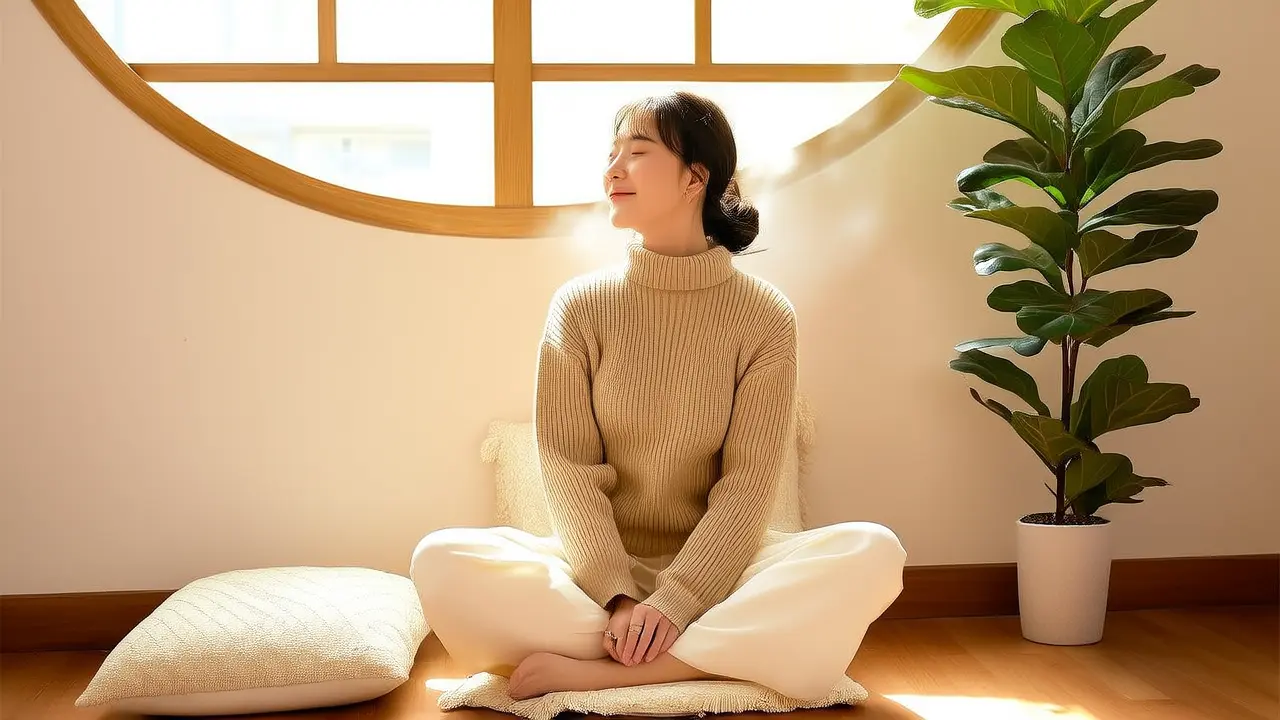
According to TCM, the heart belongs to fire and governs the mind. In normal conditions, heart fire and kidney water are in harmony, maintaining Yin-Yang balance. Once stress or fatigue disrupts this balance, excessive heart fire may lead to palpitations, insomnia, and irritability. By sitting quietly and regulating breath, slowing down breathing, and focusing the mind, we can guide the floating Yang energy back to the lower part of the body, while allowing Yin fluids to rise and moisten the heart meridians. This entire process is a gentle re-balancing of Yin and Yang, similar to adding a bit of coolant to an overheated engine—not forcibly suppressing, but naturally harmonizing.
A Simple Technique: Morning Sitting and Breathing Regulation
Appropriate situations: After waking up in the morning, feeling mentally foggy, burdened, easily tense, or inexplicably irritable. Just 5 minutes each day.
Specific Steps
- Step 1: Preparation Sit on the edge of the bed or yoga mat, with legs naturally crossed (or sit upright on a chair), hands gently placed on the knees, eyes closed.
- Step 2: Observe Breathing Breathe naturally three times, feeling the air entering and exiting the nostrils. Then begin "short inhale and long exhale": inhale slowly through the nose for 4 seconds, then exhale slowly through the mouth for 8 seconds. While exhaling, imagine that all the worries and tension in your heart are expelled with the breath.
- Step 3: Guide the Qi Back to the Origin As you inhale, imagine a cool white light entering from the top of your head (Baihui point), flowing down along the spine to the Guanyuan point (lower丹田) below the navel. As you exhale, imagine a warm golden light flowing from the Guanyuan point down the legs to the Yongquan point at the soles of the feet. Repeat 5-10 times.
- Step 4: Completion Rub your hands together until warm, then gently place them over your eyes (with eyes closed), feeling the warmth of your palms. Then slowly open your eyes and move your hands and feet.
The Principle of Gentle Regulation

The core of this technique is "using Yang to guide Yin, and using Yin to control Yang." Long exhalation activates the parasympathetic nervous system, lowers heart rate, and relaxes blood vessels, which is the "Yin" aspect. Imagining a cool white light flowing from the top of the head to the Dan Tian belongs to "guiding Yang into Yin," bringing the fire energy from the head down. The imagination of warmth at the soles of the feet is "guiding fire back to its origin," allowing Yang energy to take root. In just five minutes, Yin and Yang gradually harmonize through your breath and mental focus, naturally making your body and mind gentle and relaxed.
Summary: Nourishing the heart doesn't have to be complicated; the key lies in daily persistence
Yin-Yang balance is not an abstract theory but a simple action you can do every day. The morning sitting and breathing regulation method is like giving your mind a gentle massage. With consistent practice, you will find that tension decreases, emotions become more stable, and you can maintain a sense of calm when facing pressure. Remember, true heart nourishment is learning to coexist with your own rhythm.
Disclaimer: The content of this article is based on TCM health preservation concepts, for reference only as health knowledge, and does not constitute medical diagnosis or treatment advice. If you have persistent emotional or physical discomfort, please consult a professional doctor promptly.