Introduction: The Wisdom of Night, Starting with Letting Go
After a busy day, the body is exhausted, but the mind still keeps churning. According to traditional Chinese medicine, night belongs to Yin, a time for gathering and rest. If you still carry the tension and excitement from the day before bed, it's like throwing a red-hot iron into cold water—causing an imbalance between Yin and Yang, which not only affects sleep but also drains your mental energy. Actually, just 5 minutes of a simple Yin-Yang balancing exercise can help you follow the natural rhythm, allowing your body and mind to calm down, returning to their original state of peace and relaxation.
What is Yin-Yang Balancing?
Yin and Yang are not abstract philosophical concepts, but natural states: daytime is Yang, active and excited; nighttime is Yin, quiet and restful. The core of the pre-sleep practice is "guiding Yang back to Yin"—directing the excessive Yang energy (such as mental thoughts or physical tension) back into the body's depths, allowing Yin energy to naturally arise. It's like a farmer putting tools back in the warehouse after work, so that the body and mind can rest.
Why choose 5 minutes before bedtime?
The turning point of the rhythm needs a gentle transition. The 5 minutes before bedtime is the golden window to shift from "Yang" to "Yin." If you use your phone or think about work during this time, it's like continuing to "ignite" the fire; while a short exercise is like pressing a "mute button," telling your body: it's time to switch channels. Short duration makes it easy to stick to, and better fits modern life rhythms.
Simple Three Steps: Pre-Sleep Yin-Yang Balancing Exercise
Step One: Sitting and Regulating Breath (2 minutes)
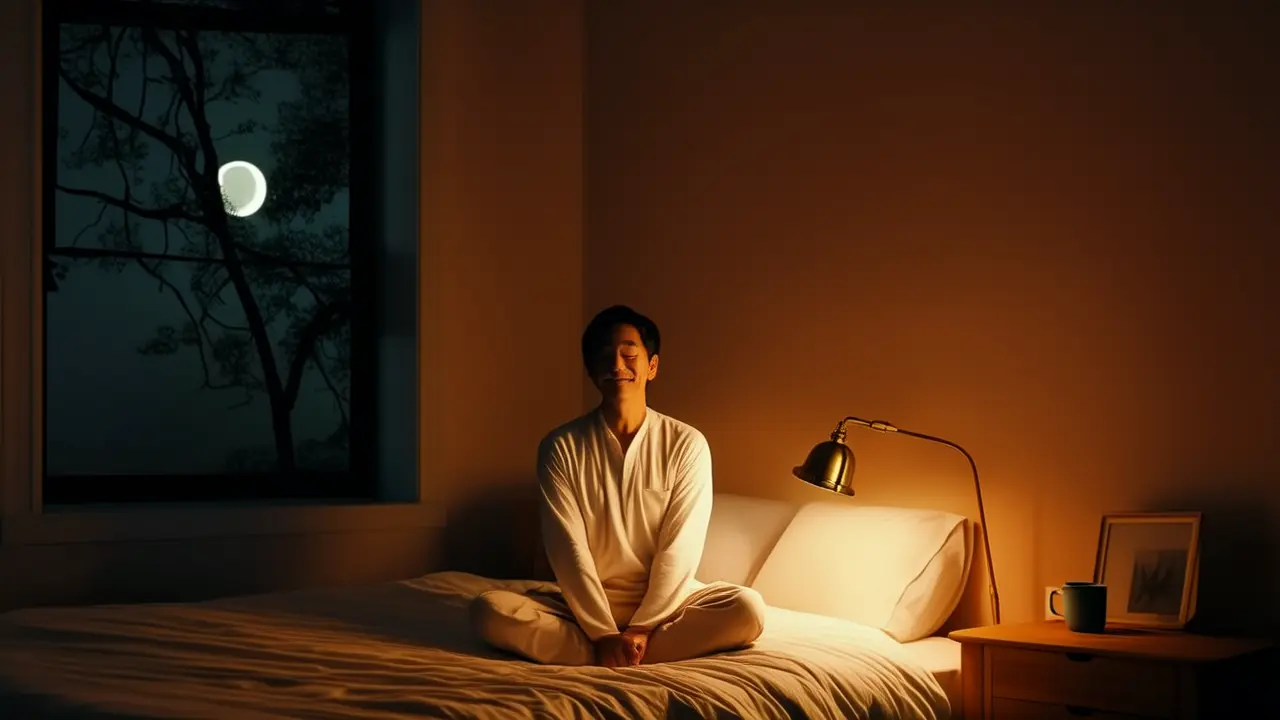
After getting into bed, sit upright or cross-legged, place your hands gently on your knees. Close your eyes and breathe naturally. When inhaling, silently say "quiet"; when exhaling, silently say "relax." There's no need to deliberately breathe deeply, just relax. After 10 breaths, you will feel your heartbeat slow down and your shoulders drop.
Step Two: Gently Pressing the "Shenmen" Acupoint (1 minute)
Find the space between the bone on the inner side of your wrist, on the side of your little finger (the Shenmen acupoint). Gently press it with your thumb, pressing during exhalation and releasing during inhalation. Spend half a minute on each hand. This is the original acupoint of the Heart Meridian, which can collect scattered mental energy and bring back the energy of overthinking.
Step Three: Abdominal Breathing for Sleep (2 minutes)
Lie flat on your back, placing your hands on your abdomen. When inhaling, let your abdomen rise like a balloon filling up; when exhaling, let your abdomen contract, imagining that you are breathing out the fatigue of the day. Repeat 10 times. Note: Exhalation should be longer than inhalation, for example, inhale for 4 seconds and exhale for 6 seconds. This activates the parasympathetic nervous system, allowing your body to enter a "repair mode."
Conclusion: Small Practices, Returning to Nature
This exercise is not complicated, yet it contains the wisdom of the balance between Yin and Yang: regulating breath to balance the body's energy, pressing acupoints to collect the mind, and abdominal breathing to guide the breath back to its origin. Spending 5 minutes every night before bed is like performing a gentle "sunset ritual" for your body and mind. After a week of consistent practice, you will find it easier to fall asleep, fewer nighttime awakenings, and a refreshed feeling upon waking. Following the rhythm is not going against the current, but learning to be like the moon, full when it should be full, and waning when it should be waning. May you start sleeping soundly from tonight until morning.