Introduction: Finding Your Inner Harbor in the Noise
Do you wake up every morning to an alarm clock, rush to work, face endless to-do lists, and stare at screens until your eyes ache? Is this also your daily routine? Modern life is fast-paced and stressful, often leaving our minds in a tangle. In fact, for thousands of years, Chinese health wisdom has offered a simple solution: meditative sitting. It requires no special place, costs nothing, and just needs a few minutes of your time to gradually regain that long-lost sense of calm and peace.
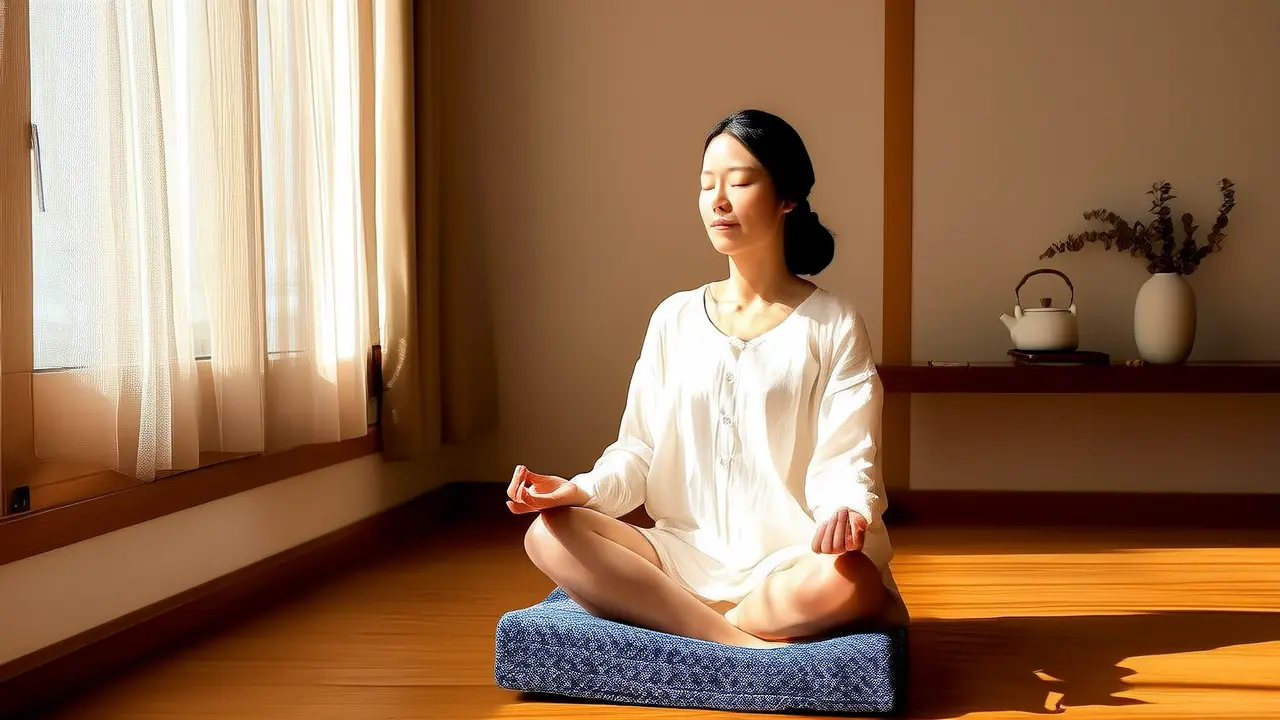
Meditative Sitting Method: A Gentle Practice for Emotional Discomfort
When you feel irritable, anxious, mentally foggy, or inexplicably tense, try this traditional Chinese method of calming the mind. Its core principle is "yin-yang balance and physical-mental harmony" — relax the upper body (yang) and stabilize the lower body (yin), guiding the flow of qi and blood through breathing.
How to Do It: Four Simple Steps
- Step One: Find a quiet corner. Any chair will do, or simply sit on the floor. Gently straighten your back without forcing it, and let your hands rest naturally on your knees.
- Step Two: Close your eyes and focus on your exhalation. No need to breathe deeply intentionally; just let the breath flow naturally. Imagine that with each exhalation, you are slowly exhaling tension and fatigue out of your body.
- Step Three: Gently touch your tongue to the upper palate (the roof of your mouth). This is a common technique in traditional Chinese meditation. It connects the Ren and Du meridians, allowing the flow of qi to be smoother and naturally bringing a sense of stability to your mind.
- Step Four: Mentally recite "relax, still, balanced". When inhaling, think "relax" — relax all your muscles; when exhaling, think "still" — calm your thoughts; then, when breathing again, think "balanced" — restore emotional equilibrium. Just 3-5 minutes of practice is enough.
Gentle Adjustment Principle: Why Is It So Effective?
In traditional Chinese medicine, it's said, "Stillness nourishes qi, and when qi flows smoothly, the mind becomes calm." Prolonged sitting and excessive thinking can deplete heart qi, leading to mental unrest. The meditative sitting method helps temporarily cut off external distractions by focusing on breathing and bodily sensations, shifting the brain from a "fight or flight" mode to a "rest and digest" mode. The posture of touching the tongue to the upper palate promotes the small circulation of the Ren and Du meridians, helping to balance yin and yang. This entire process is like giving your inner self a gentle massage — effortless yet effective over time.
Summary: Five Minutes a Day, Regain Peace
Inner calm is not a luxury but an innate ability for everyone, merely covered by busyness. There's no need to pursue "immediate absence of distracting thoughts"; just spend a few minutes each day practicing this simple traditional Chinese method of meditative sitting. After one or two weeks of consistent practice, you'll find yourself more easily relaxed, emotionally stable, and with better sleep. May every one of you find your moment of inner calm amidst the fast pace of life.
Disclaimer: The content of this article is for cultural and health knowledge sharing only and does not constitute medical advice or diagnosis. If you have severe emotional or health issues, please consult a professional doctor or psychotherapist promptly.