Introduction: Why Do We Need "Nourishing the Heart with Qi"?
Life is getting faster and faster, and we often feel tense and irritable, as if there's a stone on our hearts. In traditional Chinese medicine, "qi" is the body's energy and also the master of emotions. When qi flows smoothly, the heart becomes calm. Today, I will share a simple daily practice for calming the mind, helping you relieve emotions and regain inner peace.
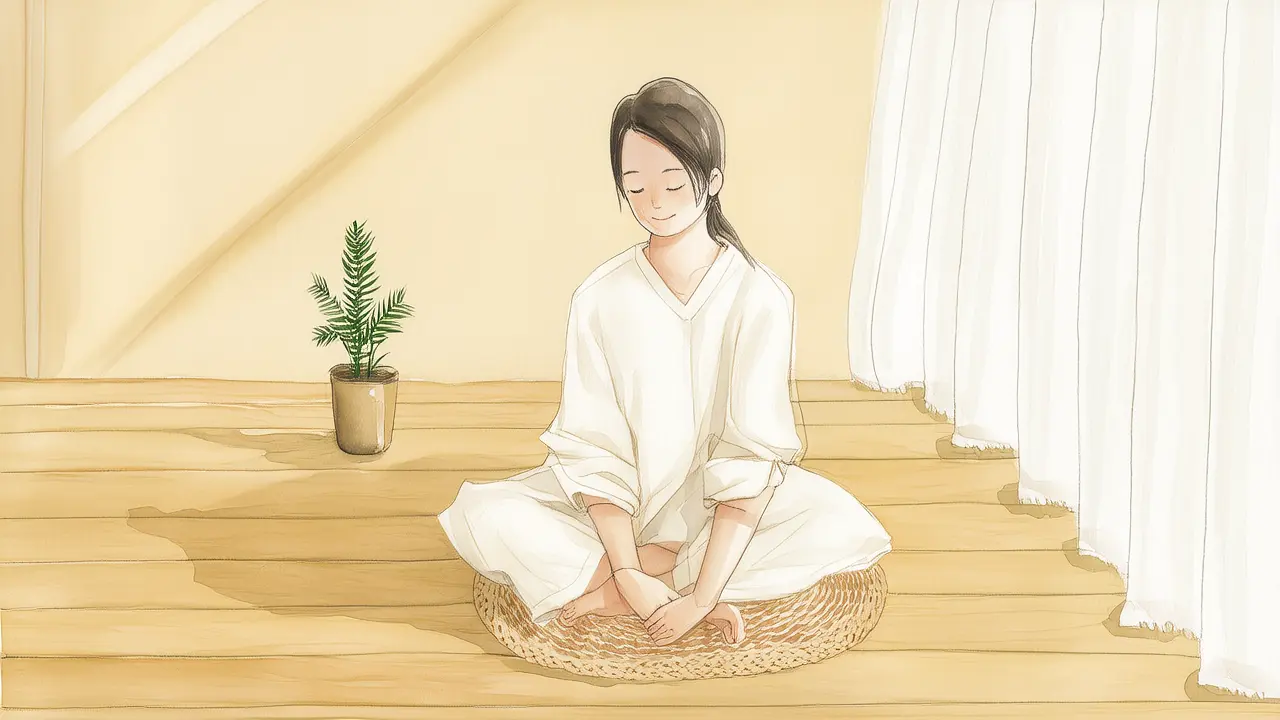
A Simple Technique: Abdominal Breathing
Here, I will only introduce one safe and risk-free exercise - abdominal breathing. It requires no tools and can be done anytime and anywhere.
When is it suitable to do?
- When feeling tense or anxious
- When feeling down or irritable
- Before bedtime to calm your mind
How to do it
- Find a quiet place, sit or lie down, and relax your body.
- Place your hands gently on your abdomen, and close your eyes.
- Breathe in slowly through your nose, feeling your abdomen rise like a balloon.
- Breathe out slowly through your mouth or nose, allowing your abdomen to sink back down.
- Repeat for 5-10 minutes, keeping a natural rhythm and not holding your breath.
Do it once a day, or whenever you feel emotional fluctuations; the effects are gentle and lasting.
Why is it effective?
Respiration is the bridge connecting the body and the mind. Deep abdominal breathing regulates the flow of "qi," bringing yin and yang into balance. At the same time, it activates the parasympathetic nervous system, helping the body switch from a "tense mode" to a "relaxation mode," thus calming emotions and relieving tension.
Summary
Calming the mind and nourishing qi is not mysticism, but a life wisdom that everyone can master. Spend a few minutes each day focusing on your breathing, allowing qi to flow smoothly, the mind to be calm, and the body to relax. With persistence, you will find yourself becoming more peaceful and your emotions more stable.
Disclaimer: The content of this article is for reference only regarding health knowledge and physical and mental adjustment, and does not constitute medical diagnosis or treatment advice. If you have any physical or psychological discomfort, please consult a professional doctor or psychotherapist promptly.