5 Minutes in the Morning, Start a Comfortable Day
Do you often feel stiff shoulders and a sore back when you wake up in the morning? This physical discomfort is often caused by slowed blood circulation during the night and muscles staying in the same position for too long. In fact, just spending 5 minutes each day practicing a few simple Eastern Qigong movements can effectively unblock the flow of qi and blood, relax your body and mind, and make the whole day feel light and comfortable. No equipment is needed, and it can be done at home, safely and gently.
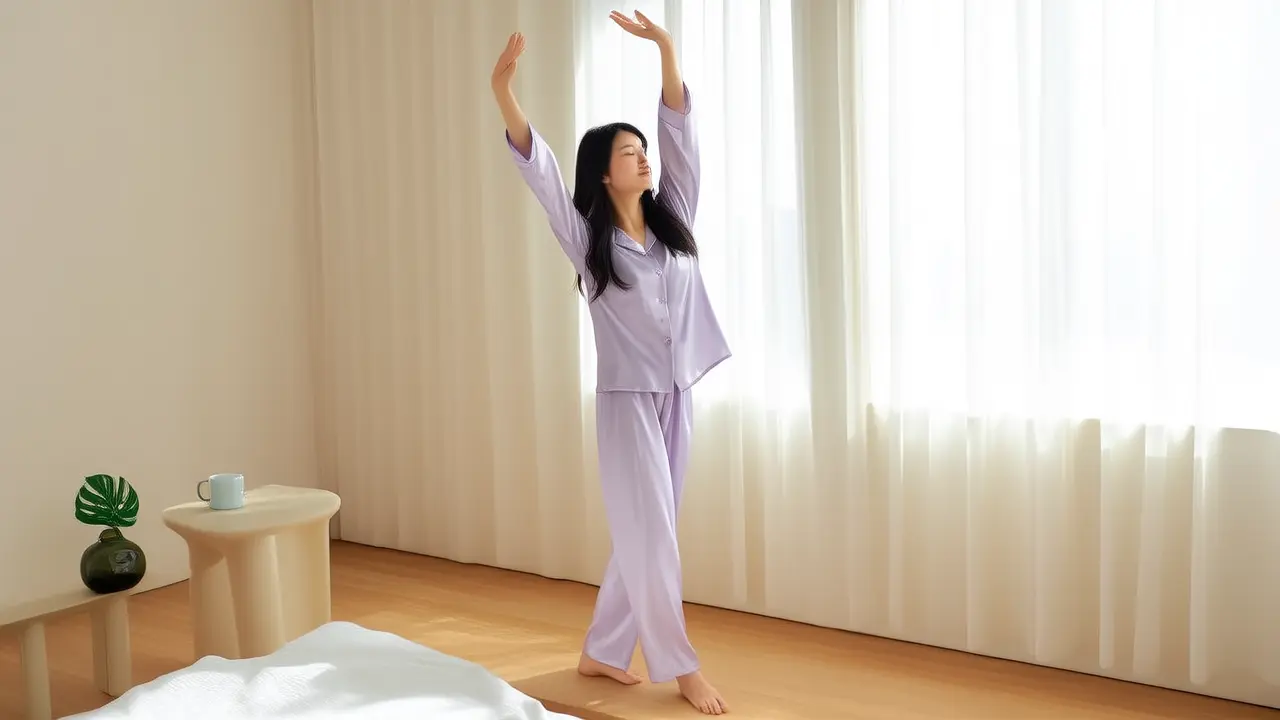
Where is the discomfort? Morning stiffness is typical
After a night's sleep, blood circulation slows down and joint fluid secretion decreases, leading to stiffness in the neck, shoulders, and lower back upon waking up. Especially for people who work long hours sitting or have improper sleeping postures, the stiffness in the morning is more noticeable. If this condition is not adjusted in time, it will continue throughout the day, affecting work efficiency and mood.
Exercise Details: Three Steps of "Lifting Heaven to Stretch the Body"
Step One: Preparatory Posture - Standing Still and Regulating Breathing
Stand with your feet shoulder-width apart, hands placed in front of your lower abdomen (men place the left hand inside, women place the right hand inside). Close your eyes, take three deep breaths, and imagine the breath flowing from the soles of your feet to the top of your head. Feel your body gradually awakening from sleep.
Step Two: Hands Lift Heaven, Breath Coordination
Inhale as you slowly raise your hands from both sides of your body above your head, palms facing up, as if lifting the sky. At the same time, slightly tilt your neck backward but not excessively. Maintain this stretched posture, hold your breath for 2 seconds, and feel the stretch in your shoulders, neck, and chest. Exhale as you slowly lower your hands back to the front of your lower abdomen. Repeat 5 times.
Step Three: Left and Right Rotation, Relaxing the Back
Place your hands on your hips. Inhale as your body slowly rotates to the left to the maximum extent (keeping the pelvis still), then exhale as you return to the center; then rotate to the right. Alternate this movement, doing 5 times on each side. This exercise gently mobilizes the spine and lower back muscles, promoting the flow of blood and qi in the back.
Regulation Principle: Balance Between Movement and Stillness, Unblocking Qi and Blood Flow
This "Lifting Heaven to Stretch the Body" exercise integrates the principles of "opening and closing" and "ascending and descending" in Qigong.
- Unblocking Qi and Blood: By opening and closing the arms up and down, it promotes the expansion and contraction of the thoracic cavity, enhancing heart and lung circulation, delivering fresh blood to stiff muscle tissues.
- Relaxing the Body and Mind: Combined with deep breathing, the parasympathetic nervous system is activated, reducing cortisol levels and alleviating morning anxiety.
- Balanced Breathing Regulation: The movement synchronizes with breathing, forming a natural breathing rhythm without holding your breath or breathing too quickly, conforming to the health preservation principle of "balance between movement and stillness."
Summary: Daily Light Care, the Key Lies in Persistence
Spending 5 minutes every morning, no need for excessive sweating or special venues. The key lies in developing a habit: after waking up, first drink a glass of warm water, then spend 5 minutes practicing these Qigong exercises. After sticking to it for a week, you will find that the stiffness upon waking up significantly decreases, your energy throughout the day becomes more abundant, and your mood becomes more stable. Remember: when regulating the body, gentle methods are more enduring than intense ones.
Disclaimer
The content of this article is for reference only and does not constitute medical diagnosis or treatment advice. If you have cervical spondylosis, lumbar disease, or other serious health issues, please consult a professional doctor before practicing. Please practice within your capacity, and stop immediately if you feel uncomfortable.