Introduction: Finding the Anchor of the Heart in the Noise
Modern life moves at a fast pace, and anxiety and tension often come uninvited. Do you often feel restless and have trouble sleeping? In fact, more than two thousand years ago, our ancestors had already discovered a gentle and effective method for calming the mind - sitting meditation with regulated breathing. It is not a mysterious religious ritual, but a simple and safe Chinese health maintenance technique that can help you balance your body and emotions, gradually calming your mind.
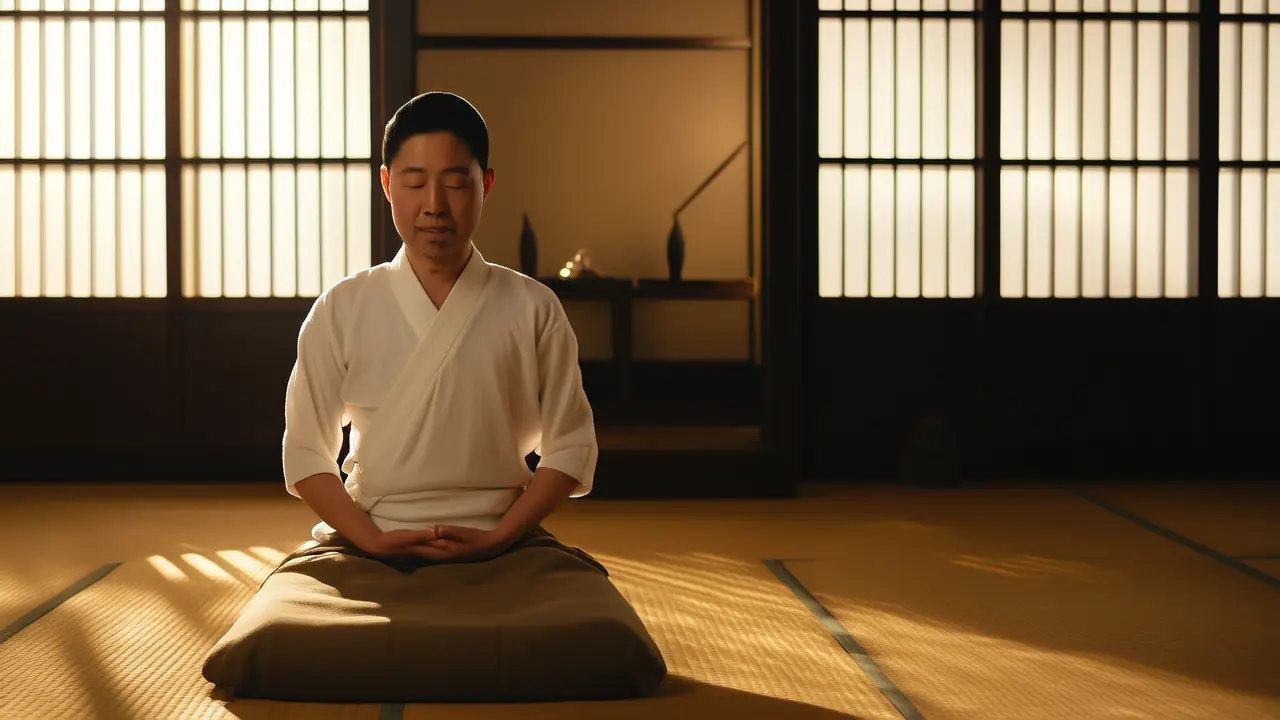
Tip: Deep Breathing to Bring Energy Back to Its Place
Today, we will learn the most basic method for calming the mind: Sitting Meditation with Regulated Breathing. It requires no equipment and can be done anytime, anywhere. According to traditional Chinese medicine, physical and mental health depend on the balance of yin and yang in the body, and "qi" (vital energy) serves as a bridge connecting the body and emotions. When you are anxious, qi rises, causing an increased heart rate. Through deep, slow breathing, you can guide the qi back to the lower abdomen (the dan tian), allowing your whole body to relax.
Applicable Situations:
- Feeling tense, irritable, or heart palpitations
- Difficulty falling asleep at night
- High work or study pressure, with confused thoughts
Steps to Practice (5-10 minutes each time):
- Find a quiet place: Sit on a chair or cushion, keep your back straight but not stiff, and place your hands naturally on your knees.
- Close your eyes, with a slight smile on your lips: Gently close your eyes, and maintain a subtle smile on your lips, which helps relax the facial muscles.
- Breathe in through the nose and out through the mouth, slowly and deeply: Breathe in slowly through your nose, silently counting 4 seconds; hold your breath for 2 seconds; then exhale slowly through your mouth, silently counting 6 seconds. Let the exhalation be slightly longer than the inhalation, which helps relax the nervous system.
- Imagine the flow of energy descending: As you inhale, imagine fresh air flowing from the top of your head down to your lower abdomen. As you exhale, imagine tension and impurities being expelled from the soles of your feet. Repeat this 10-20 times.
Mild Adjustment Principle:
From the perspective of traditional Chinese medicine, this practice can "calm the mind and nourish the qi" - by rhythmic, deep breathing, it allows lung qi to circulate, promoting blood circulation; it brings the mind (referred to as "shen" in traditional Chinese medicine) back to its proper place, no longer drifting. Modern science has also found that slow breathing can activate the parasympathetic nervous system, lowering heart rate and blood pressure, and relieving anxiety. Throughout the process, you don't need to pursue "a mind without distractions," just gently bring your attention back to your breathing again and again. This is the best way to care for yourself.
Summary: A Few Minutes Every Day, Peace Comes Naturally
Although sitting meditation with regulated breathing seems simple, consistent practice yields tangible results. It is like a gentle massage for the mind, making you feel peaceful and comfortable from the inside out. If your mood is a bit unsettled today, try doing it for five minutes now. Remember, nurturing the mind does not require grand gestures; the simplest breathing contains the wisdom of thousands of years.
Disclaimer: The content of this article is for sharing traditional cultural health knowledge only, and should not be used as a substitute for professional medical diagnosis or treatment. If you suffer from severe anxiety, depression, or other physical or mental illnesses, please consult a doctor or a psychological counselor promptly.