Introduction: The Wisdom of Emotional Management in Ancient Times
In today's fast-paced life, anxiety and irritability seem to be the norm. In fact, ancient Chinese medical masters had long summarized a gentle method for calming the mind—rather than deliberately suppressing emotions, they advocated adjusting breathing, thoughts, and movements to restore balance between body and mind. Today, let us explore the traditional Chinese approach to stillness and find inner peace, allowing our emotions to become calm and harmonious.
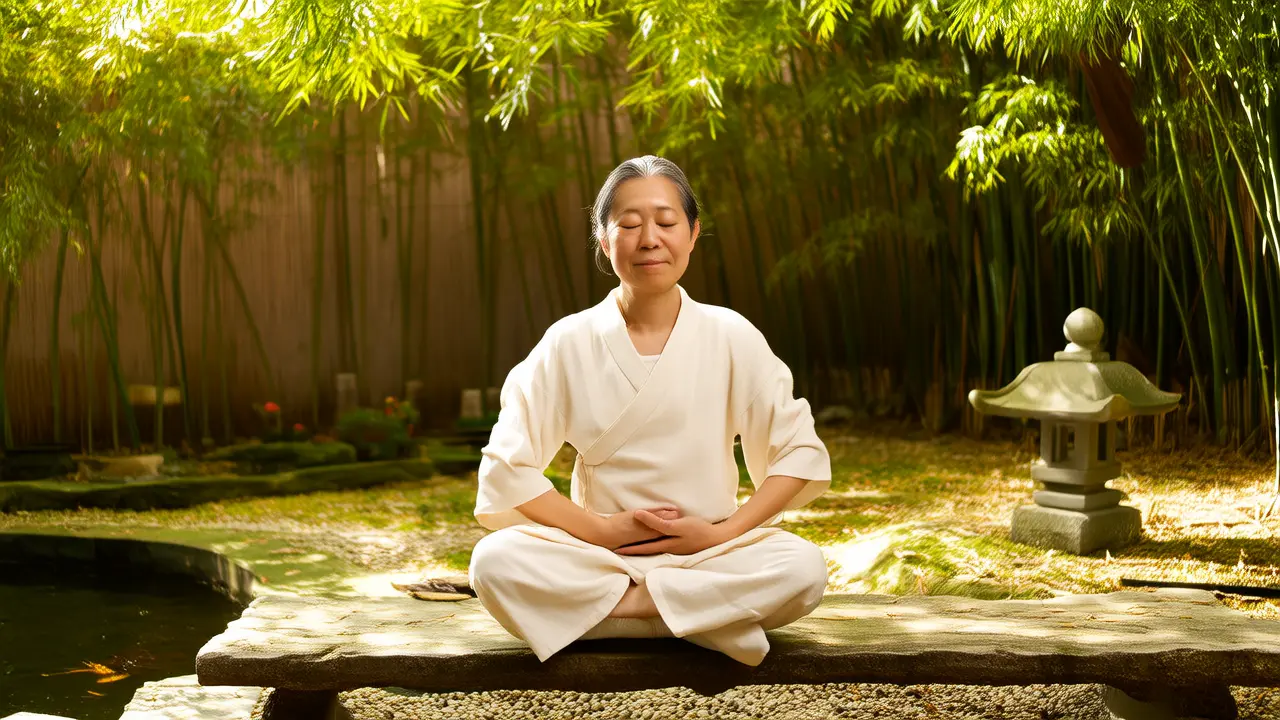
1. Calm the Mind by First Calming the Breath: Abdominal Breathing
According to Traditional Chinese Medicine, "Qi is the leader of blood," and emotional fluctuations often lead to Qi rising or becoming disordered. The simplest method is abdominal breathing: find a quiet corner, sit down, and place your hands lightly on your abdomen. Breathe in slowly through your nose, feeling your belly expand like a balloon; pause for a second, then exhale slowly through your mouth, letting your belly contract. Repeat this 5-10 times. The key lies in "deep, long, even, and slow" breathing, which helps guide Qi back to its origin, relaxing tense nerves.
2. Guide the Spirit Through Posture: Relaxation Techniques in Tai Chi Standing Posture
If your mind is in chaos, try standing posture. Stand with your feet shoulder-width apart, knees slightly bent, and arms as if holding a ball in front of your chest. Imagine yourself as a tree, with roots growing from your feet and a string pulling your head upward. Maintain this posture for 3-5 minutes while silently repeating "relax shoulders, relax elbows, relax waist." When your body feels slightly warm, chaotic thoughts will also settle down. This is the subtlety of TCM's "unity of form and spirit"—adjusting physical posture to guide the mind into tranquility.
3. Unblocking the Three Jiao: Gentle Massage along the Gallbladder Meridian
TCM states that "the gallbladder governs decision-making," and blockage in the gallbladder meridian can lead to indecision and fear. Gently tap along the line of the pants seam on the outer side of the thigh, from top to bottom, 30 times on each side. Apply force as gently as a breeze brushing willow leaves, ensuring comfort. During tapping, you may feel a wave of warmth, indicating the unblocking of meridians and the calming of liver Qi. After finishing, take a deep breath, and you will feel much of the tightness in your chest has dissipated.
4. Daily Care: Soothing Tea and Meditation
In the evening, boil 5 longans, 3 jujubes, and 10 lotus seeds to make tea. Longan nourishes the heart and spleen, jujube replenishes blood and qi, and lotus seed clears heart fire. Sip slowly while sitting quietly with your eyes closed for 10 minutes. Feel the sweetness of the tea spreading in your mouth, and let your thoughts gradually calm down. This method of "diet combined with meditation" not only replenishes yin and blood but also allows yang energy to be stored, achieving a state of yin-yang balance.
Conclusion: Stillness Is a Gentle Gift to Yourself
The Chinese way of stillness does not aim to cut off troubles, but rather to guide them like flowing water. When you feel emotionally uncomfortable next time, return to breathing, standing posture, or tapping, and gently embrace yourself with the wisdom of the ancients. Just ten minutes a day can help your body and mind find inner peace in a soothing and harmonious way.