Introduction: A Simple Way to Unwind
Feeling stiff after a long day? You don't need a gym or any equipment. This gentle Tai Chi movement helps you relax your body, calm your mind, and release tension. It's safe, easy, and perfect for beginners.
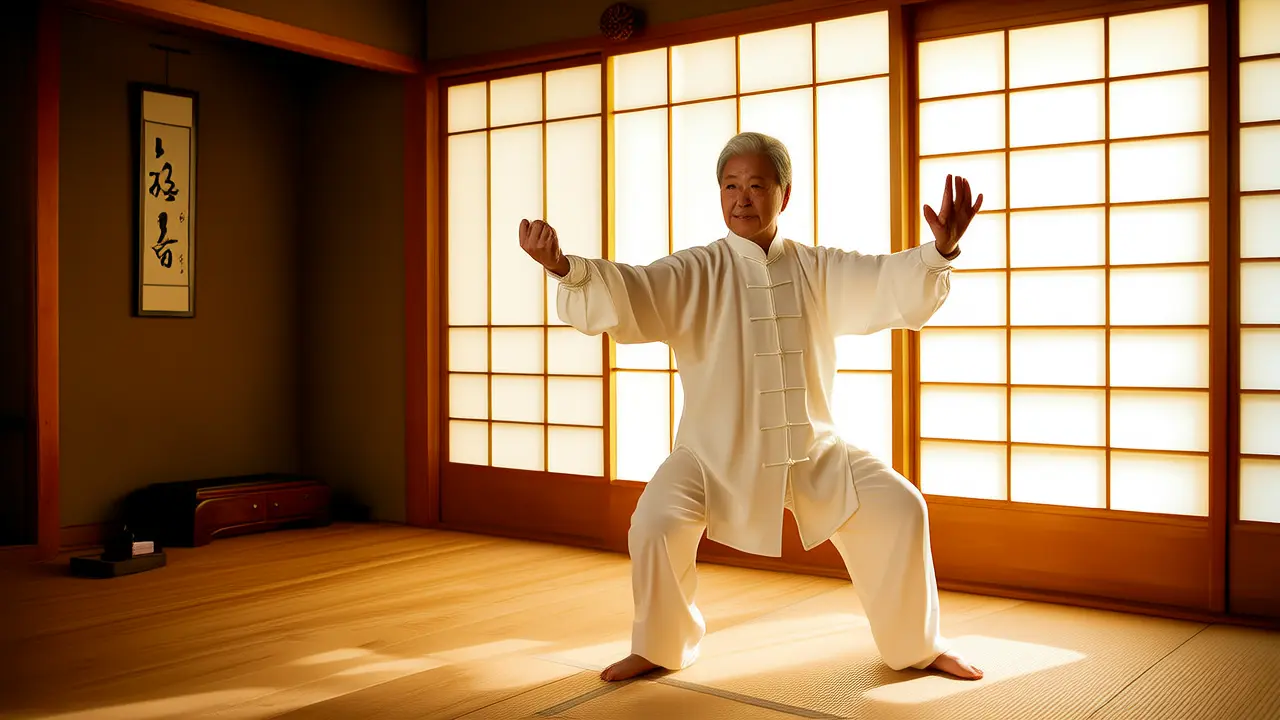
What You'll Learn: The Tai Chi Opening (Qi Shi)
We focus on one basic move: the Tai Chi Opening. It helps loosen tight shoulders, relax the neck, and improve blood flow. You can do it anywhere, even in your living room.
When to Use It
This move is great when you feel tired, stressed, or have sore muscles. It works for all ages and fitness levels.
Step-by-Step Instructions
- Stand with your feet shoulder-width apart. Let your arms hang naturally. Keep your knees slightly bent, not locked.
- Take a slow, deep breath in through your nose. As you inhale, gently raise both arms in front of you, palms facing down, until they reach shoulder height.
- Exhale slowly through your mouth. As you breathe out, softly lower your arms down to your sides. Imagine pushing a heavy weight downward.
- Repeat 6–8 times, moving with your breath. Keep your movements slow and smooth like flowing water.
Breathing and Body Awareness
Breathe deeply and evenly. Inhale as you lift, exhale as you lower. Feel your chest open, shoulders drop, and spine lengthen. This activates a gentle circulation of energy, which Chinese tradition calls "qi" (life force). The balance of movement and stillness helps your body reset.
Why This Works: Gentle Healing Principles
This movement aligns with traditional Chinese wellness ideas: it promotes smooth flow of qi and blood, relaxes the mind, and balances yin and yang. You don't need to force anything. Just move softly, breathe calmly, and let your body find its natural rhythm. It's a daily gentle practice that supports overall comfort.
Summary
The Tai Chi Opening is a simple, powerful way to release physical and mental tension. With just a few minutes of slow, mindful movement, you can feel more relaxed and refreshed. Try it today – your body will thank you.
Disclaimer: This article is for informational purposes only and does not replace medical advice. Always listen to your body. If you have a medical condition or injury, consult a healthcare professional before starting any new exercise.