Introduction
Waking up in the morning, both the body and mind need a gentle transition. Traditional Chinese health practices emphasize "adjusting according to the season," and in the morning when yang energy begins to rise, it's most suitable to awaken the qi and blood with a mild approach. Starting with a glass of warm water, combined with simple mindful movements, can create a morning ritual that is uniquely yours. The following five steps are easy and soothing, helping you start a new day with a balanced state.
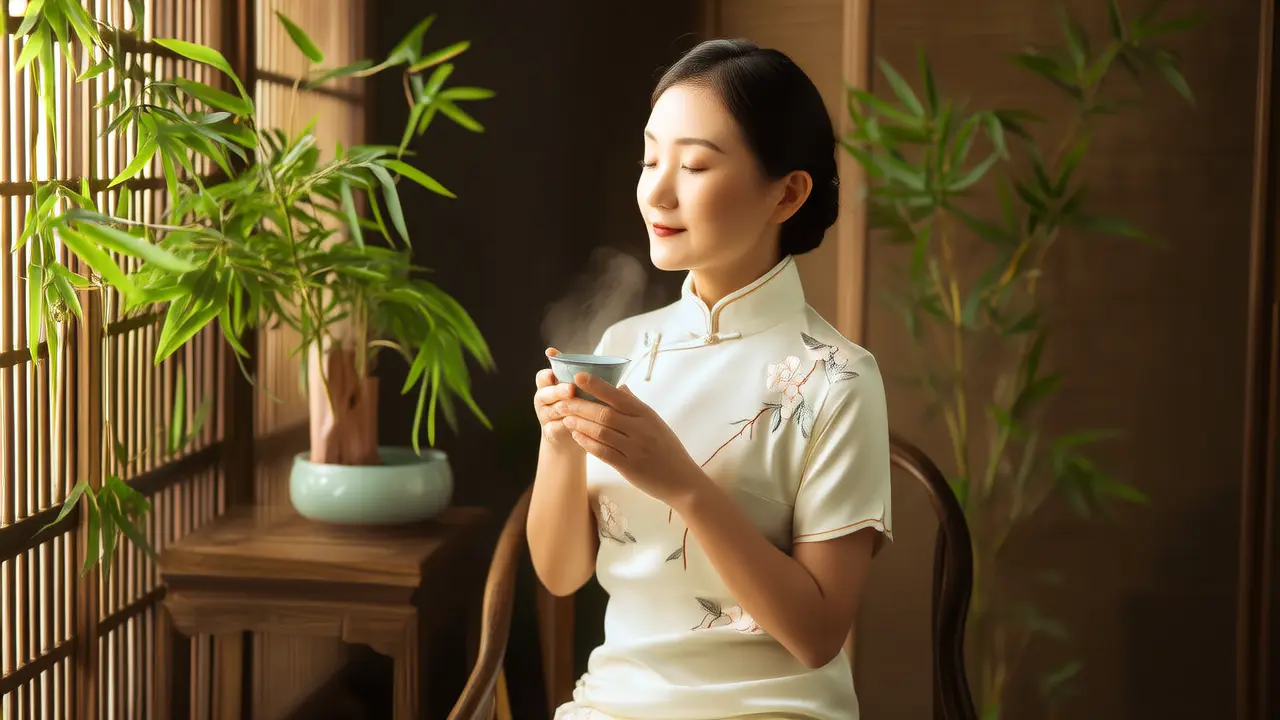
Step 1: A glass of warm water upon waking - nourishing the body and mind
After waking up, don't rush to get out of bed or check your phone. Prepare a glass of warm water around 40°C (about 200 ml) and drink it slowly in small sips. Warm water gently awakens the stomach and intestines, promotes the circulation of qi and blood, and helps the body eliminate metabolic waste accumulated during the night. This simple action aligns with the concept of "smooth flow of qi and blood," making you feel comfortable from the inside out.
- Applicable situations: Any morning, especially when feeling dry mouth, tiredness, or stress after waking up.
- Not applicable situations: Adjust accordingly for those with severe edema or those advised by doctors to limit water intake.
- Mild principle: Warm water is non-irritating and does not add burden, only promoting circulation with a mild temperature.
Step 2: Slowly stretching - relaxing joints
After drinking water, sit on the edge of the bed or on the bed, and slowly stretch. Raise your hands above your head while inhaling, feeling the stretch in your spine and limbs; then exhale and slowly lower them. Repeat three times. This movement activates the joints, allowing the circulation of qi and blood to be more smooth, and relieves stiffness caused by long sleep.
- Applicable situations: When the body feels tight or shoulders ache after sleeping.
- Notes: Perform the movement slowly, avoid sudden force to prevent injury.
- Mild principle: Follow the natural movement of the body, not intense, helping to awaken muscles and meridians.
Step 3: Gentle abdominal massage - regulating the middle jiao
Place your palms on the abdomen, and gently draw circles clockwise around the navel. Apply light pressure and move slowly, for about one minute each time. According to traditional Chinese medicine, "the abdomen is the palace of the five internal organs and six腑." Gentle massage can promote intestinal peristalsis, help qi and blood return to balance, and improve digestion and sleep quality.
- Applicable situations: When feeling bloated, having difficulty with bowel movements, or wanting to enhance comfort through daily care.
- Not applicable situations: Avoid within one hour after eating or if there is an abdominal wound or pain.
Step 4: Deep breathing by the window - absorbing calm energy
Stand by the window (if possible, open the window slightly to let fresh air in). Let your hands hang naturally, close your eyes, take a deep breath, and imagine the breath sinking into the dantian; then exhale slowly, feeling the relaxation in the chest. Do this five times. This action calms the mind, soothes the chaotic thoughts from the night, and achieves "relaxation of body and mind."
- Applicable situations: When feeling tense, anxious, or before needing to focus attention.
- Mild principle: Deep breathing is the simplest way of mindfulness, which can regulate the autonomic nervous system and reduce stress.
Step 5: Listening to a few minutes of silence - returning the heart to the present moment
Finally, find a comfortable position to sit or stand, do nothing, just quietly listen to the surrounding sounds - birdsong, distant car sounds, your own breathing. Sustain this for 2-3 minutes. This "unoccupied" period is the essence of traditional Chinese mindfulness: non-judgmental, non-controlled, simply being aware of the present moment, allowing the heart to regain peace.
- Applicable situations: All mornings, especially when life is busy and thoughts are scattered.
- Not applicable situations: If time is extremely limited, it can be shortened to 1 minute.
Summary
These five steps take only 5-10 minutes in total, yet they bring a peaceful tone throughout the day. The essence of traditional Chinese health practices lies not in complex techniques, but in the persistence of daily care and adjusting according to the season. Starting with a glass of warm water, gradually experience the changes in your body and mind. You will find that true recovery often lies in the simplest and gentlest rituals.