Introduction: The Philosophy of Slow Nurturing in a Cup of Tea
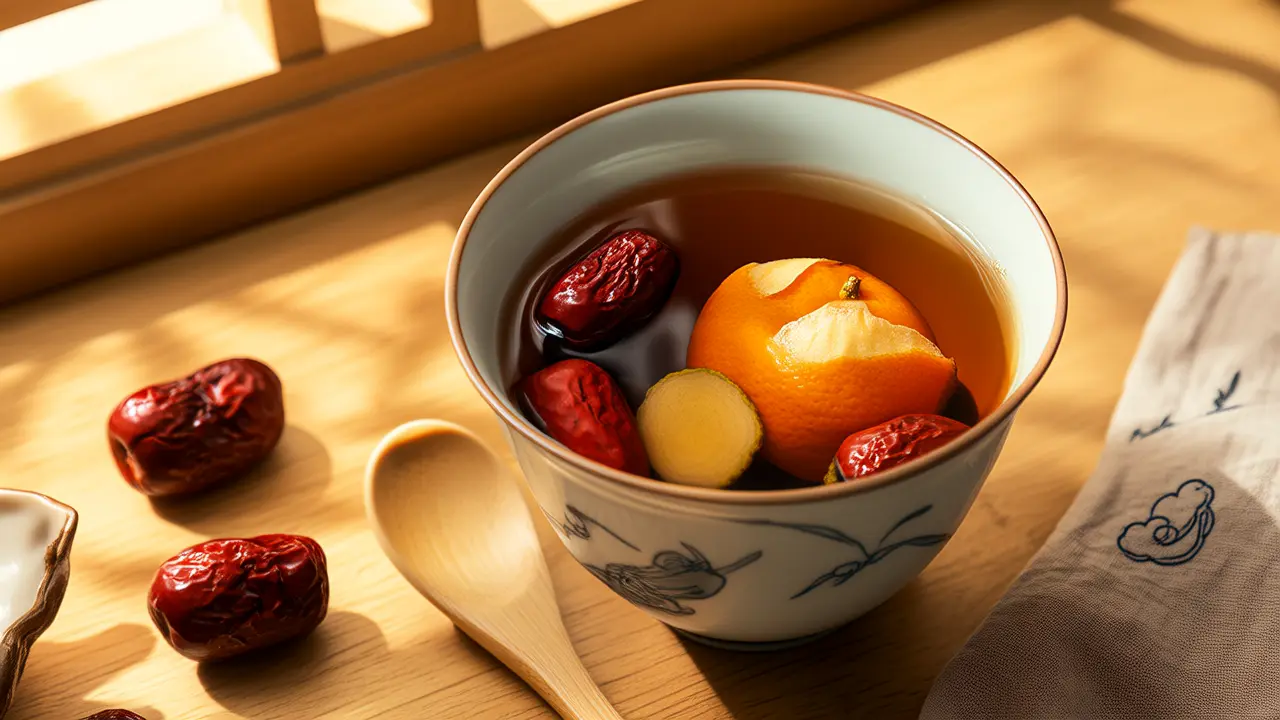
In our fast-paced lives, we often forget that our bodies need gentle care. Eastern dietary wisdom emphasizes "the same origin of medicine and food," using common herbal ingredients to infuse natural energy into daily life through slow cooking over low heat. Today, I share a simple health maintenance tip - a tea made with tangerine peel, red dates, and ginger, suitable for when you feel tired, have a cold stomach, or during seasonal changes, helping to soothe the body and mind and warm the spleen and stomach.
Applicable Discomforts
If you often feel cold hands and feet, bloated after meals, mentally exhausted, or prone to catching colds during seasonal changes, this mild tea is very suitable. It doesn't treat diseases, but through daily nurturing, it can help your body regain balance.
Ingredients Preparation
- Dried tangerine peel, one small piece (about 3 grams, it's recommended to choose aged tangerine peel over five years old)
- Three red dates (pitted to avoid excessive heat)
- 2-3 slices of ginger (with skin, sliced to dispel wind-cold)
- 600 ml of water
Preparation Steps
Rinse the dried tangerine peel briefly, remove the seeds from the red dates and tear them open, and slice the ginger. Put all the ingredients into a small pot, add water, bring to a boil over high heat, then simmer over low heat for 15 minutes. When the tea turns a light amber color and emits fragrance, turn off the heat. Drink it while warm, in small sips, and finish within a day.
Mild Adjustment Principles
This tea follows the traditional Chinese medicine principle of "harmonizing the spleen and stomach, warming the center and dispersing cold." Dried tangerine peel helps regulate qi and strengthen the spleen, aiding digestion; red dates nourish blood and qi, offering a mild and beneficial effect; ginger expels cold pathogens and promotes circulation. Combined, these three ingredients are neither too cold nor too hot, making them very gentle. At the same time, they align with the concept of "seasonal health adjustment." It is best consumed during autumn, winter, or early spring to help the body resist external pathogens and maintain internal warmth.
Summary
The wisdom of Eastern diet does not lie in complex prescriptions, but in the gradual and continuous care in daily life. Spend ten or fifteen minutes each day to brew a cup of herbal tea, slow down your pace in the aroma, and let your body be gently cared for. Please remember, this tea is suitable for daily health maintenance and cannot replace medication. If you have underlying conditions or are taking medication, please consult a professional first. May you find peace of mind and body in a warm cup of tea.
Disclaimer: The content of this article is for reference only regarding health knowledge and does not constitute medical advice, diagnosis, or treatment of any disease. If you feel unwell, please seek medical attention promptly.