Introduction: Gentle Awakening from Body to Mind
Have you ever felt stiff shoulders and neck, or aching back after long hours sitting in front of a computer or looking down at your phone? These minor discomforts are actually the body's way of reminding us that our blood and qi circulation has slowed down. Qigong, an ancient Eastern health wisdom, is not mysterious. It requires no equipment, nor does it demand high intensity. Just a few minutes can help you relax your muscles, regulate your breathing, and gently support your immune system. Below are three beginner-level movements that you can do at home every day, safe and comfortable.
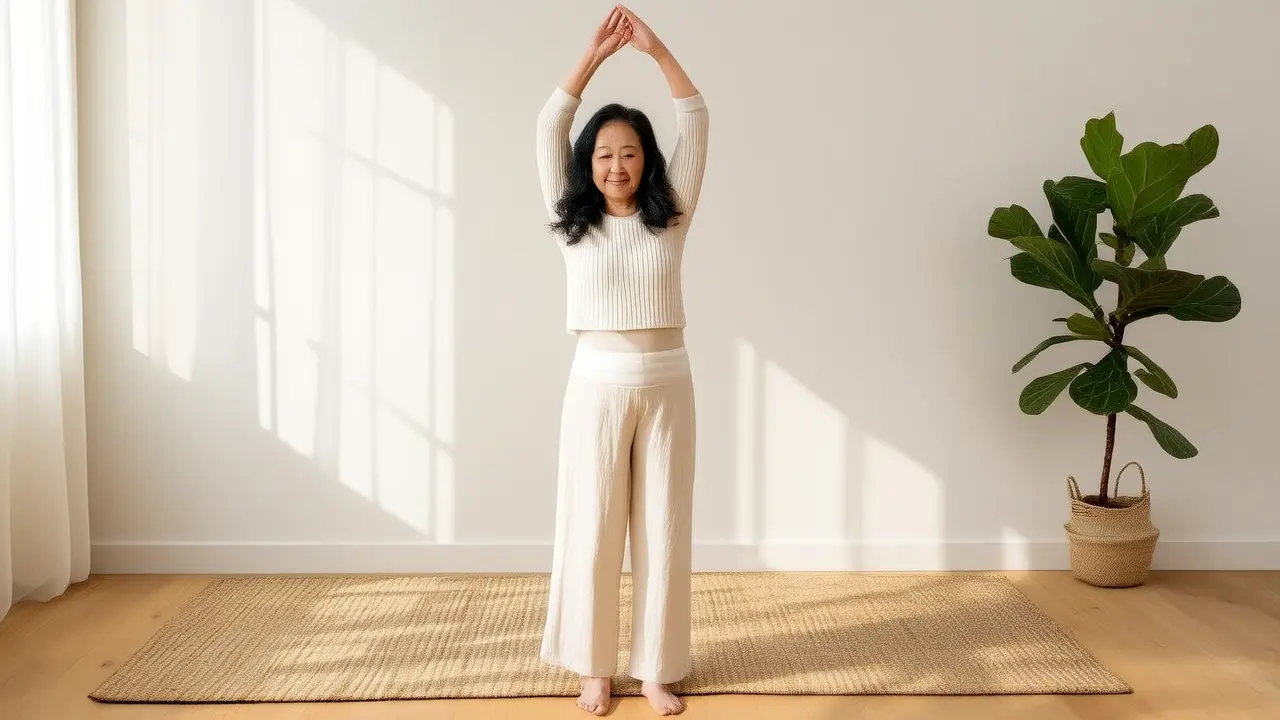
Movement One: Hands Holding the Sky to Regulate the Three Jiao - Stretching the Spine and Opening the Chest Cavity
This movement originates from Baduanjin and is especially suitable for morning or after long periods of sitting. Stand with your feet shoulder-width apart, breathe naturally. Cross your hands in front of your abdomen (palms up), and slowly lift them over your head, while tilting your head up to look at your hands, feeling the spine being gently stretched. Hold for 5 seconds, lifting during inhalation and lowering slowly on exhalation. Repeat 6 times. Principle: Unblocks the hand's three yin meridians and the triple warmer meridian, promoting the upward flow of blood and qi, relieving stiffness in the shoulders and back, creating a "smooth path" for immune cells to circulate.
Movement Two: Left and Right Like a Bow Shooting a Crane - Expanding the Chest to Regulate the Lungs and Release Stress
Mimicking the posture of archery effectively opens the thoracic cavity and improves hunched posture. Step your left foot to the left, squat into a horse stance (knees not exceeding the toes). Clench your fists in front of your chest. Inhale as you pull your left hand to the left like drawing a bow, and push your right hand forward like pushing an arrow, turning your head to the left and gazing into the distance. Exhale as you return to the original position, then switch sides. Do 4 times on each side. Note: perform the movement gently without force. This movement stretches the lung and large intestine meridians, increases oxygen intake, helps the body resist fatigue and tension, indirectly supporting immune balance.
Movement Three: Shaking the Head and Swinging the Tail to Eliminate Heart Fire - Relaxing the Waist and Calming the Mind
When work pressure is high and your mind is restless, try this gentle twisting movement. Squat into a horse stance, place your hands on your knees, and inhale to prepare. Exhale as your upper body tilts to the left (starting from the waist), your head looking as far back as possible, imagining your tailbone (coccyx) swaying to the right. Inhale to return to the original position, then repeat in the opposite direction. Do 3 times on each side. The range of motion doesn't need to be large; focus on feeling the rotation of the waist and abdomen and deep breathing. According to traditional Chinese medicine, "heart fire" relates to emotions and sleep. This movement helps blood and qi descend by relaxing the spine and massaging abdominal organs, calming the mind and naturally stabilizing immunity.
Summary: Ten Minutes Daily for Inner Balance
The above three movements are simple and safe, requiring no special location. Spend 10 minutes daily practicing, combining deep and slow breathing, and you can effectively relieve physical stiffness and release emotional stress. Remember: Qigong is not a treatment but a daily gentle health practice. Its core lies in "unblocking blood and qi, balancing movement and stillness," allowing the body to self-repair through relaxation. With consistent practice, you will feel increased energy and fewer minor illnesses. Try it out and let ancient wisdom add value to your health.
Disclaimer
The content in this article is for sharing health and wellness knowledge only and does not constitute medical advice. If you have specific conditions such as joint injuries or cardiovascular diseases, please consult a professional physician before deciding whether to practice. If any discomfort occurs during practice, stop immediately.