Introduction: Why Do We Become Stiffer the More We Sit and Tired the More We Move?
Modern people spend long hours hunched over desks or looking down at their phones, causing the shoulders, neck, back, and hips to become like rusted hinges. Many believe that "exercise" means sweating it out in a gym, but Eastern health wisdom offers a gentler approach—performing five simple, soothing movements daily. You don't need to sweat or stretch to the limit; just move slowly while coordinating with your breath to unblock the flow of qi and blood, making your body feel light again. These movements originate from Tai Chi, Baduanjin (Eight Pieces of Silk), and yoga, emphasizing "balance between movement and stillness" and "calm breathing," suitable for all ages to practice at home.
First Exercise: Cat-Cow Pose — Awakening the Entire Spine
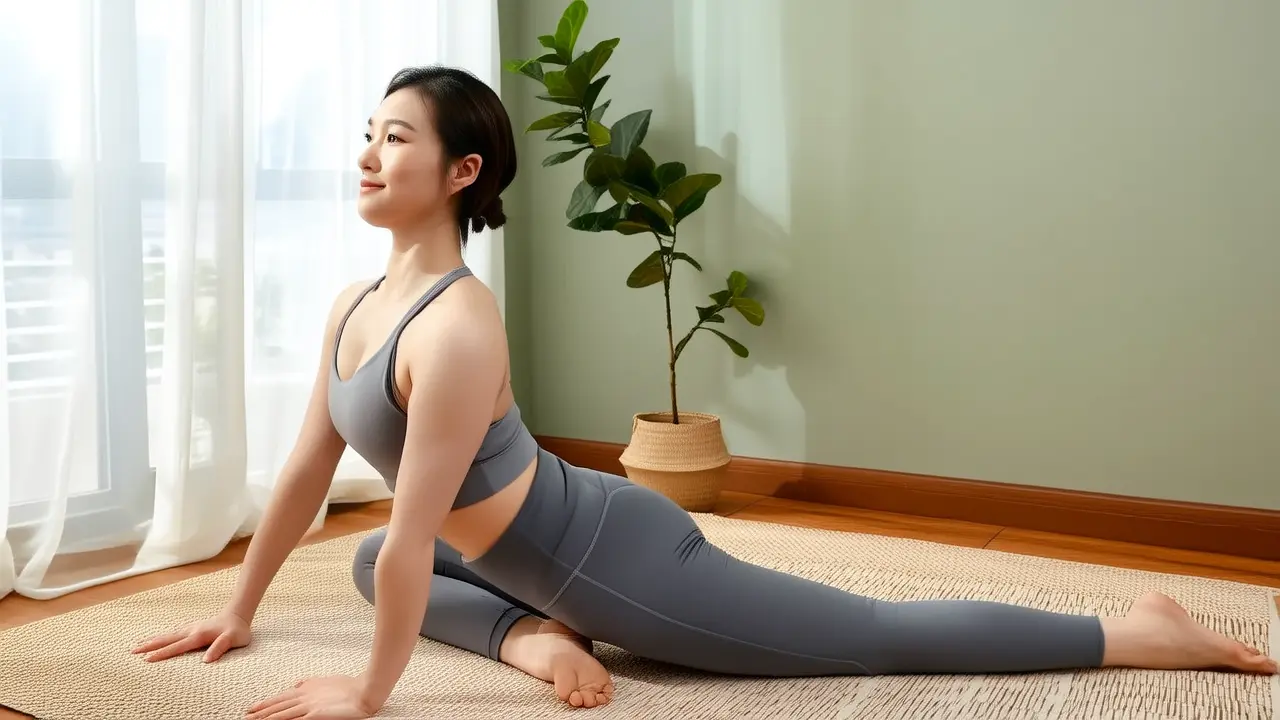
Applicable Areas: Cervical vertebrae, thoracic vertebrae, lumbar vertebrae, and stiff back.
Exercise Steps: Kneel on all fours, with hands directly under the shoulders and knees directly under the hips. Inhale, lift your head, arch your back, and lift your buttocks, letting your back curve downward (Cow Pose); exhale, lower your head, round your back, and tuck your abdomen, like a cat arching its body (Cat Pose). Repeat slowly 6–8 times.
Breath Coordination: Inhale into Cow Pose, exhale into Cat Pose, holding each pose for 2 seconds.
Gentle Adjustment Principle: The spine's extension and contraction promote nutrient circulation in the intervertebral discs, relax the erector spinae muscles in the back, and massage the internal organs of the abdomen, improving digestion.
Second Exercise: Shoulder Circles — Relieve the "Stones" of Tension
Applicable Areas: Shoulders, back of the neck, and upper trapezius muscles.
Exercise Steps: Sit cross-legged or stand. Inhale, lifting both shoulders to the ears; exhale, moving both shoulders backward and downward in a large circle, bringing the scapulae closer. Repeat 8 times, then reverse and circle forward 8 times.
Breath Coordination: Inhale when raising the shoulders, exhale when lowering them.
Gentle Adjustment Principle: Shoulders are where multiple meridians converge (such as the Hand Three Yang Meridians). Circular movements can unblock these meridians, remove lactic acid buildup, and relieve early stiffness associated with "shoulder periarthritis."
Third Exercise: Pelvic "∞" Movement — Freeing the Stiff Pelvis
Applicable Areas: Hip joints, lower back, and pelvic area.
Exercise Steps: Stand with feet slightly wider than shoulder-width apart, hands on the waist. Imagine drawing an "∞" shape with your pelvis (a horizontal figure-eight). First draw 8 circles counterclockwise, then 8 clockwise. Move slowly, with small, smooth motions.
Breath Coordination: Breathe naturally without holding your breath.
Gentle Adjustment Principle: A stiff pelvis often accompanies prolonged sitting and lower back discomfort. Drawing an "∞" helps loosen the sacroiliac joint and promote pelvic blood circulation, offering preventive benefits for women's menstrual cramps and elderly lower back pain.
Fourth Exercise: Twisting and Clapping — Broaden the Mind and Smooth the Qi
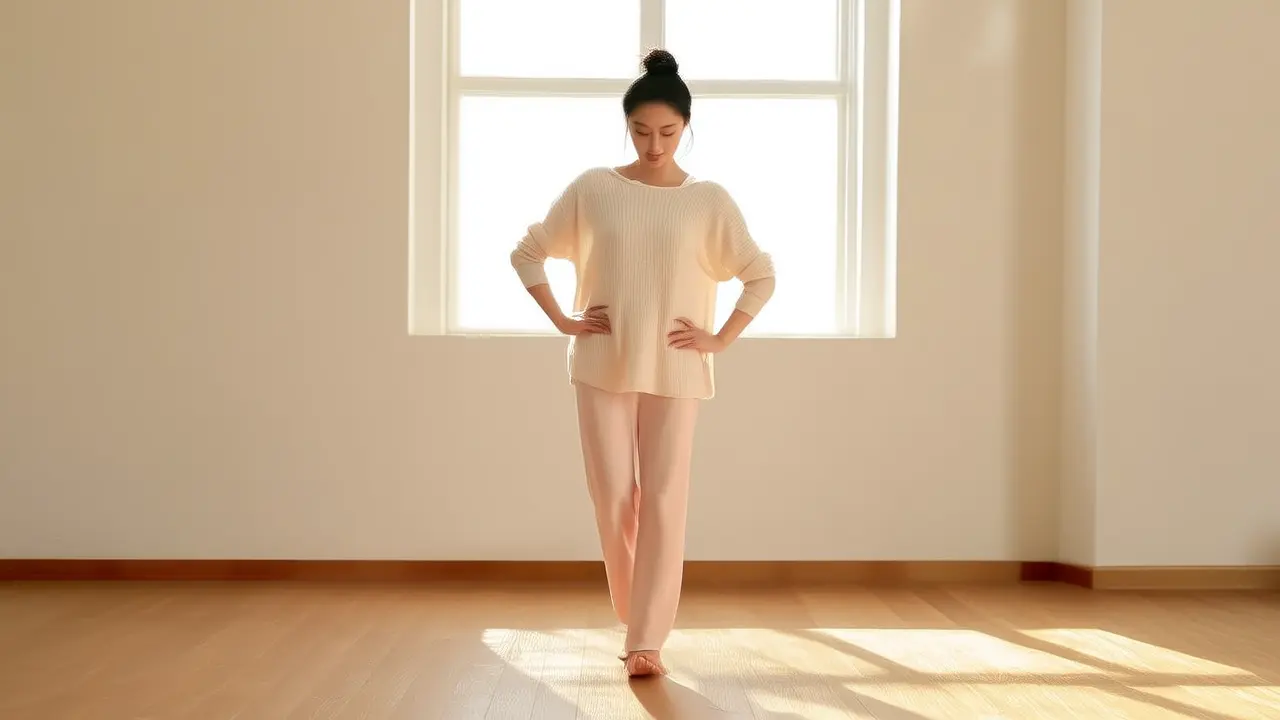
Applicable Areas: Sides of the torso and the belt meridian (around the waist).
Exercise Steps: Stand with feet slightly wider than shoulder-width apart. Inhale, raise arms sideways; exhale, twist the body to the left, clapping the left side of the waist with the right hand and the right scapula with the left hand; repeat on the other side. Perform 8 times on each side.
Breath Coordination: Exhale during twisting, inhale when returning to the center.
Gentle Adjustment Principle: Traditional Chinese medicine says "twisting the shoulders loosens the belt meridian." When the belt meridian is unblocked, the blood and qi of the lower body flow smoothly. Clapping also has the effect of massaging meridians, helping to relieve irritability and anxiety.
Fifth Exercise: Stepping in Place — Regaining Lightness in the Lower Limbs
Applicable Areas: Ankle, knee, thigh, and calf.
Exercise Steps: Stand naturally, stepping like riding waves: lift the toes of the left foot, shift weight to the right foot; then lift the heel of the right foot, shift weight forward; alternate left and right, moving slowly, like small steps in place. Perform for 30 seconds.
Breath Coordination: Breathe naturally, matching the pace with your breath, without forcing.
Gentle Adjustment Principle: The soles of the feet are known as the "second heart." Small flexions and extensions promote blood return in the lower limbs, reducing the risk of varicose veins, while activating the stabilizing muscles of the ankles.
Summary: Daily 5 Exercises — A Cup of "Warm Water" for the Body
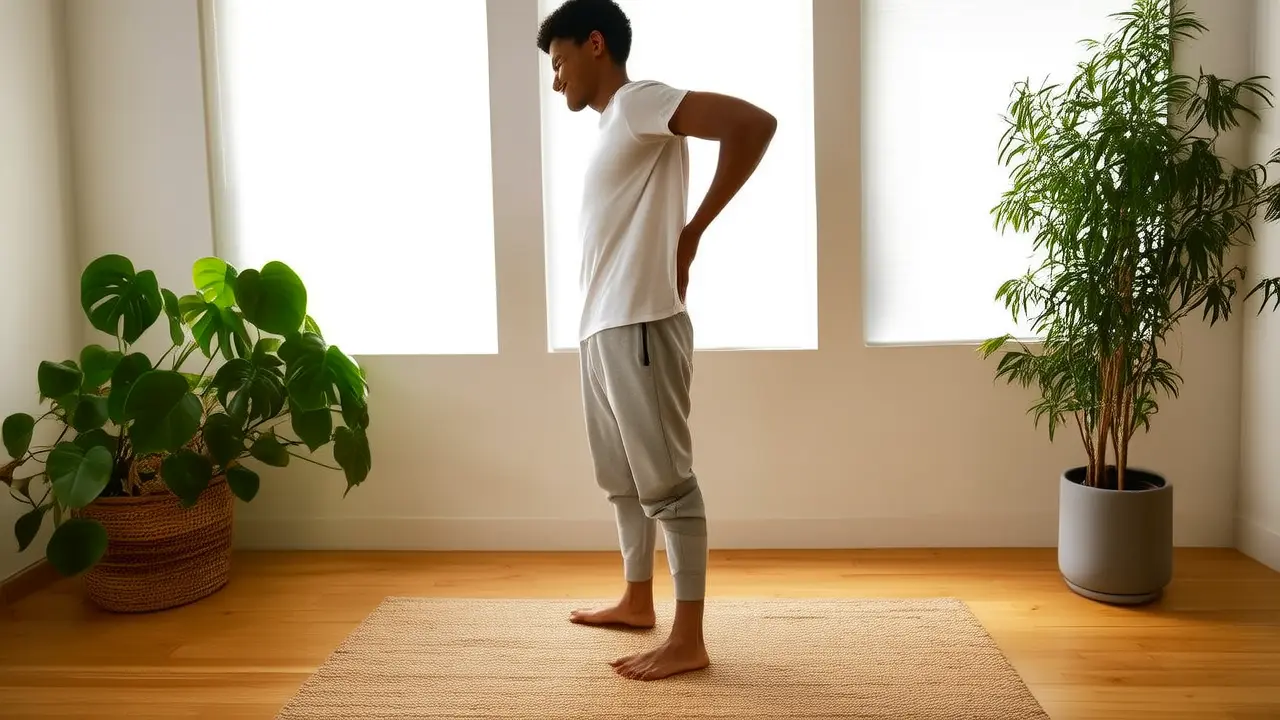
These five exercises can be done individually or combined, taking only 10–15 minutes total. They don't focus on strength or speed but on "unblocking" and "relaxing." Practicing them in the morning after waking up or before bedtime, you'll find your shoulders no longer hunch, the frequency of back pain decreases, and your steps become lighter. This is precisely the core of Eastern health philosophy—not exhausting your energy, but awakening your body's self-healing ability. Treat "Daily 5 Exercises" as a gentle gift for your body. With consistent practice, the feeling of lightness will gradually return.
Disclaimer: The content of this article is for reference only and should not replace professional medical advice. If you have acute injuries, severe skeletal diseases, or unexplained pain, please consult a doctor first. Stop practicing immediately if you feel discomfort.