Introduction: Regain Your Breath in the Fast Pace
Do you feel life is like an unceasing machine? Work, socializing, and information overload keep your mind constantly tense. In fact, peace is not far away - just five simple daily mindfulness habits can help you reconnect with inner tranquility. Drawing inspiration from Eastern wisdom, these habits use the concept of yin-yang balance and meditation to gently soothe emotions, allowing you to stand firm amidst the noise.
1. Morning Meditation: Setting the Balance for the Day
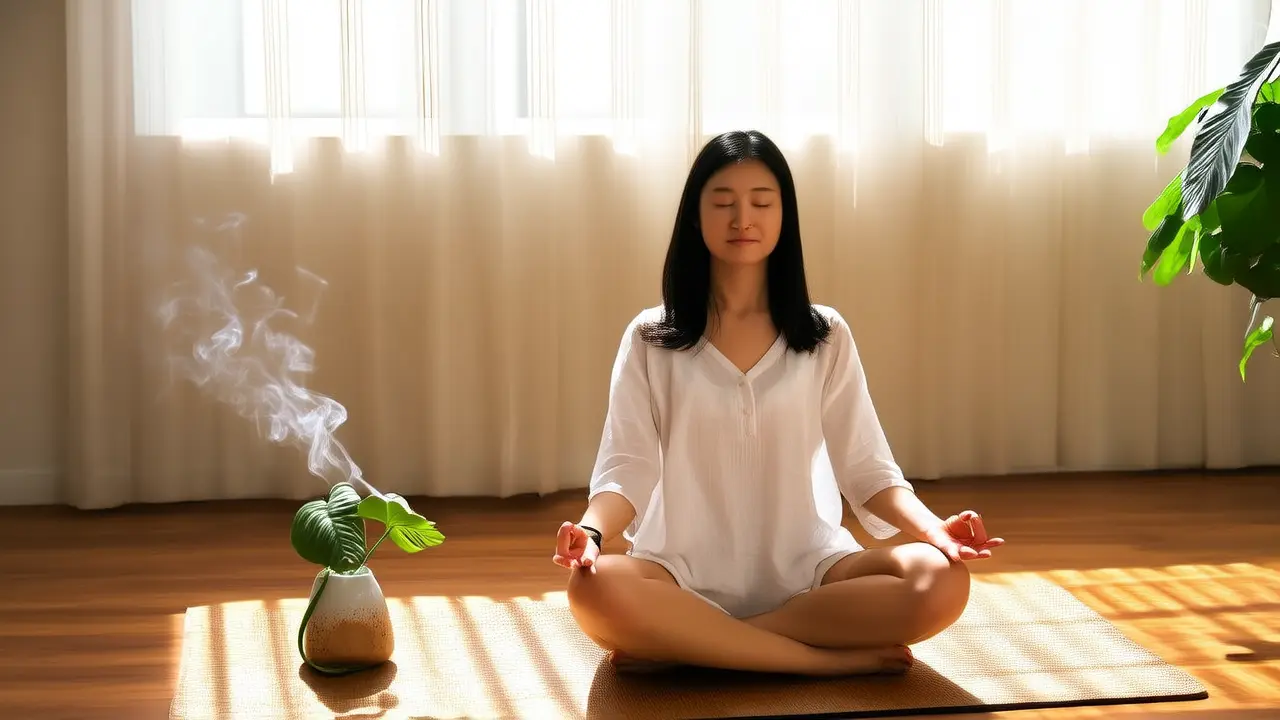
After waking up each day, spend 5 minutes sitting on a chair or the floor, closing your eyes, and focusing on your breathing. Imagine inhaling white light (positive energy) and exhaling gray air (negative tension). This simple meditation regulates the autonomic nervous system, lowers cortisol levels, and shifts your body and mind from "fight mode" to "relax mode." According to traditional Chinese medicine, morning belongs to yang; meditation helps gather yang into yin, achieving initial yin-yang harmony.
2. Mindful Breathing: An Emotional Anchor Anytime, Anywhere
When you feel anxious or irritable, pause for 10 seconds. Inhale deeply through your nose for 4 seconds, hold your breath for 2 seconds, and exhale slowly through your mouth for 6 seconds. Repeat this three times. This "4-2-6 breathing technique" activates the parasympathetic nervous system, quickly relieving tension. The principle is stimulating the vagus nerve, making heart rate variability more stable. As traditional Chinese medicine says, "smooth qi leads to calm mind," using breathing to harmonize the flow of qi.
3. Nature Walk: Healing Through Grounding

During lunch break or in the evening, walk for 5 minutes on grass, sand, or soil, taking off your shoes. Walking barefoot on the ground allows you to exchange charges with the Earth's electromagnetic field, helping neutralize free radicals in your body. Traditional Chinese medicine advocates "unity between heaven and humanity," and walking barefoot connects you to the earth, drawing earth energy into your body, clearing heart fire, and soothing emotions. Be sure to choose a safe environment to avoid injury.
4. Gratitude Journal: The Magic of Changing Perspectives
Every night before bed, write down three small things that made you feel warm or grateful that day (even something as simple as a good cup of tea). The process of writing activates the prefrontal cortex, reducing excessive reactions from the amygdala. From the perspective of traditional Chinese medicine, "happiness brings smooth qi and clear thoughts," and feelings of gratitude belong to yang, which can promote the circulation of qi and blood, dispelling gloom. After maintaining this for a week, you will find yourself more likely to see the positive side of life.
5. Evening Relaxation Ritual: Preparing for Sleep

30 minutes before bedtime, turn off electronic screens, dim the lights, and perform a simple "body scan": close your eyes, starting from the top of your head, relax each part sequentially - forehead, cheeks, shoulders, arms, abdomen, thighs, toes. Stay on each part for 5 seconds, imagining warm water flowing through it. This can improve sleep quality and regulate melatonin secretion. According to traditional Chinese medicine, nighttime belongs to yin; relaxation rituals help yang enter yin, nourishing the heart and calming the spirit.
Summary: Small Habits, Big Changes
These seemingly small habits actually form an entire mental care system. Spending just 15-20 minutes a day can create a peaceful space for yourself amidst the noise. They don't rely on any devices, are safe and gentle, suitable for everyone. When inner peace becomes the norm, you can face life's challenges more calmly. Start today, and try one habit now.