Introduction: Shoulders and Neck Meet Daily Stress
Do you often feel your neck is locked, and your shoulders are heavy like carrying stones? After long periods of sitting, looking down at your phone, or working for extended hours, this stiffness has almost become a common condition for modern people. Don't worry, you don't need to go to the gym or hire a coach. Today, we share an ancient wisdom - Tai Chi. Tai Chi is not only a martial art, but also a gentle method of body conditioning. This simple "Cloud Hands" posture can gently dissolve the tension in your shoulders and neck like flowing water, helping you regain a sense of physical ease within minutes.
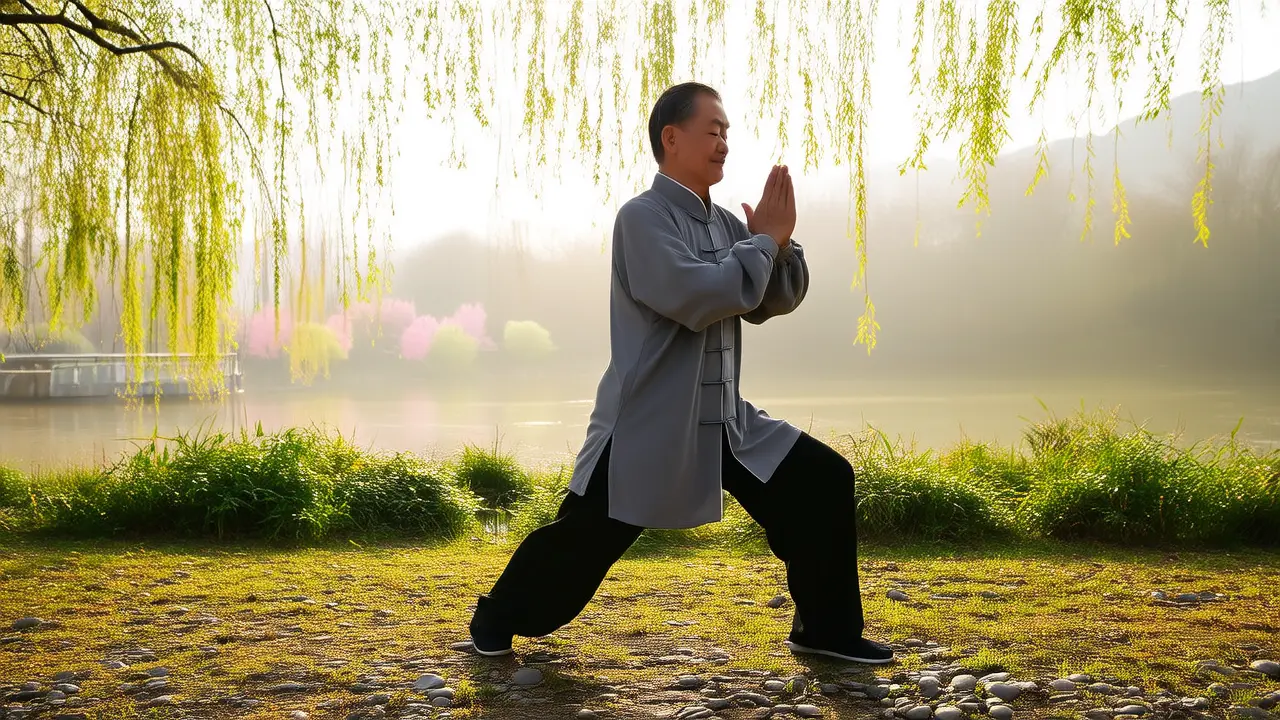
Technique Explanation: Tai Chi Cloud Hands - The Key to Relaxing Shoulders and Neck
1. Preparatory Posture: Rooted in the Earth
Stand with your feet shoulder-width apart, knees slightly bent, and lower your body's center of gravity. Imagine yourself as a tree, rooted in the ground, with a naturally straight spine. Let your hands hang naturally on both sides of your body, tuck your chin slightly, and gently lift the Baihui point (at the top of your head). Breathe naturally and relax your entire body.
2. Movement Steps: Like Flowing Clouds
- Starting Position: Slowly raise your hands to chest level, palms facing down, fingertips pointing towards each other, as if holding a balloon. Let your shoulders drop, without lifting them up.
- Left Cloud Hand: As you inhale, slowly shift your body's center of gravity to the left, moving your left hand in an arc to the left outside, gradually turning your palm outward. At the same time, move your right hand in an arc to the left inside, with your palm facing your chest. Keep your eyes following the movement of your left hand, but do not twist your head too much, keeping your neck relaxed.
- Right Cloud Hand: As you exhale, slowly return your center of gravity to the middle, then shift it to the right, moving your right hand in an arc to the right outside, turning your palm outward, while your left hand moves in an arc to the right inside, with your palm facing your chest. Keep your eyes following your right hand.
- Repetition: Gently repeat 5-8 times. The movements must be slow, like moving through water.
3. Breathing Coordination: Guiding the Body with Breath
Each time you draw an arc, inhale, feeling the breath rising from the Dantian (three inches below your navel) to your shoulders and wrists; when you exhale, shift your center of gravity, feeling the breath flowing from your shoulders along your arms to your fingertips, releasing excess tension.The key is: breathing should be slower and deeper than the movements. If you feel short of breath, breathe naturally without forcing it.
4. Gentle Adjustment Principle: Unblocking Qi and Blood, Combining Movement and Stillness
According to traditional Chinese medicine, "pain arises from blockage, and relief comes from unblocking." Stiffness in the shoulders and neck often results from stagnation of qi and blood in the meridians. The Tai Chi Cloud Hands, through slow and continuous circular movements, guide the scapulae, cervical vertebrae, and shoulders into deep stretching, like clearing a river, allowing qi and blood to flow naturally. At the same time, deep and prolonged breathing can activate the parasympathetic nervous system, reducing stress hormones, allowing both body and mind to relax. It does not forcefully stretch, but instead uses "soft" power to guide the body back to a balanced and upright state.
Summary: Five Minutes Daily, Easy Health Care
This simple Tai Chi Cloud Hands routine requires no special location or equipment, and even no need to change clothes. You can perform it in the office, at home, or even in a park. Spend five minutes every day, repeating this movement as if whispering to your body. You will find that your shoulders are no longer so stiff, your neck turns more flexibly, and even your mood becomes calmer. Remember, Tai Chi is not a performance, but a dialogue with your own body. Take it slowly and enjoy the process.
Disclaimer
The information provided in this article is for general health and wellness reference only and does not constitute medical diagnosis or treatment advice. If you have serious neck injuries, disc problems, or other health conditions, please consult a professional physician before trying any new exercise. Listen to your body, and stop immediately if you experience discomfort.