Introduction: Why the Last 10 Minutes Before Sleep Are So Important?
In today's fast-paced life, many people go to sleep directly after a day of fatigue and thoughts, resulting in difficulty falling asleep or shallow sleep. Traditional Chinese Medicine emphasizes "adjusting according to the time," as night is the time for the body's yang energy to subside and yin energy to nourish. If you can gently relax your body and mind for 10 minutes before bedtime, it can help regulate the flow of qi and blood, calm the mind, and lay the foundation for quality sleep. Today, we introduce a simple and effective traditional Chinese health care technique that requires no complicated tools and can be done at home.
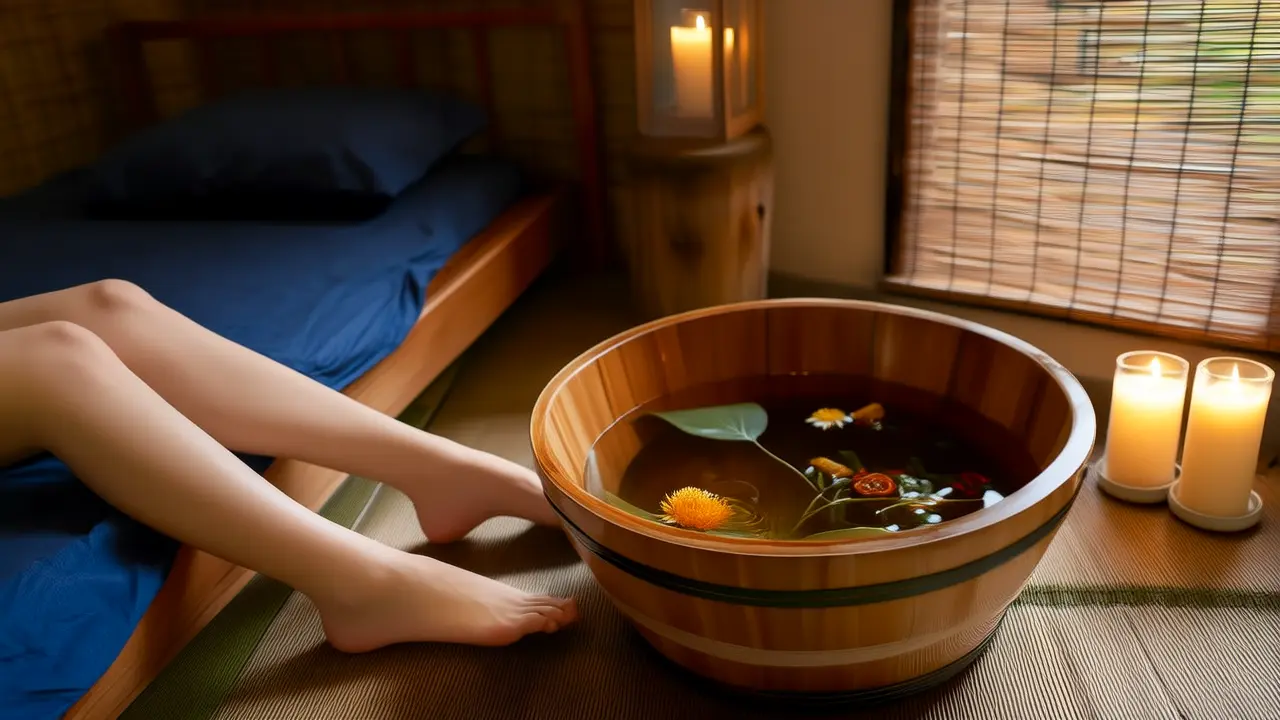
Soaking Feet in Warm Water: Guiding Fire Back to the Origin, Warming the Soles of the Feet
The feet are known as the "second heart" of the human body, as they are the starting and ending points of many meridians. Soaking your feet in warm water around 40°C for 10 minutes before bed can guide excessive internal heat downward, making the mind clear and the limbs warm. Method: Prepare a basin of warm water that covers the ankles, and add a small amount of mugwort or slices of ginger to enhance the warming effect. Stop when your back starts to sweat slightly; avoid sweating heavily. Note: Those with wounds or skin allergies on their feet should use caution; diabetics should control the water temperature.
Massaging the Yongquan Point: Calming the Mind, Guiding Qi to the Kidneys
The Yongquan point is located in the depression at the front one-third of the soles, and it is the starting point of the kidney meridian. Massaging this point can stimulate kidney energy and help the mind to settle down. Method: After soaking your feet, dry them, then use your thumb to rub the Yongquan point from the sole toward the heel about 100 times, with a suitable level of soreness and tension. Alternate between both feet. Note: Pregnant women and patients in acute stages of hypertension should avoid strong stimulation. Principle: By stimulating the kidney meridian, it guides upward-moving heart fire downward, achieving a state of peaceful sleep through the "interaction between the heart and kidneys."
Abdominal Breathing: Regulating Qi and Blood, Relaxing Internal Organs
Many people tend to breathe using their chest before going to sleep, which leads to tension. Abdominal breathing allows the diaphragm to descend, massaging the internal organs in the abdomen, promoting circulation of qi and blood, and simultaneously activating the parasympathetic nervous system to lower the heart rate. Method: Lie down, place one hand on your abdomen. When inhaling, feel your abdomen rise; when exhaling, let your abdomen contract inward. Breathe 6-8 times per minute for 5 minutes. Note: Breathe naturally without holding your breath. Long-term practice can help relieve anxiety and improve gastrointestinal function.
Conclusion: Accumulation Over Time, Peace and Comfort
The last 10 minutes before sleep are not a task but a gentle gift you give yourself. The three techniques of soaking feet, massaging acupoints, and regulating breathing integrate the wisdom of traditional Chinese health care, such as "adjusting according to the time" and "smooth flow of qi and blood." With daily persistence, you will find that you fall asleep faster, have more stable dreams, and wake up feeling refreshed. Remember: Health care lies in gentle and continuous efforts; only by being calm and patient can you achieve a harmonious mind and body. If you have any special physical discomfort, please consult a professional physician.