Introduction: Synchronize with Nature, Regain the Rhythm of Body and Mind
We often say "follow the four seasons," but in traditional Chinese medicine, there are actually "five seasons" — Spring, Summer, Late Summer, Autumn, and Winter. Late Summer is a period of damp heat between summer and autumn, corresponding to the spleen and stomach. Understanding the characteristics of these five seasons and making gentle adjustments to daily habits can make your body more comfortable and your emotions more balanced. Today, let's discuss how to follow the cycle of the five seasons and protect your health with simple methods.
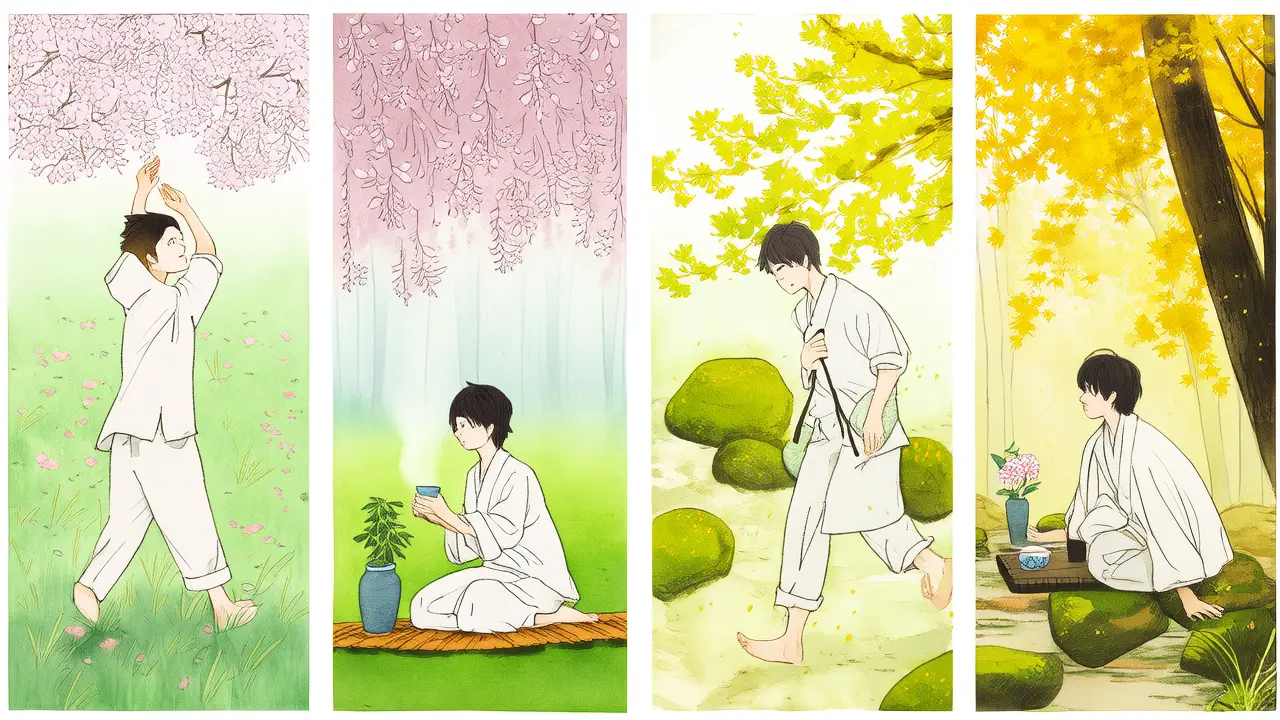
Spring: Awakening the Body, Expanding Yang Energy
In spring, all things revive, and the body's yang energy begins to rise. Many people feel drowsy (spring fatigue) and experience mood swings. At this time, the most important thing is "expansion."Method: After waking up every morning, stretch your body, lift your hands upward, and take five deep breaths. Then drink a glass of warm water (you can add a few mint leaves). This helps to regulate liver qi and relieve fatigue. Principle: Spring corresponds to the liver, which governs the tendons. Stretching promotes blood circulation and allows yang energy to rise smoothly.
Summer: Nourishing the Heart, Avoiding Excessive Cooling
Summer is hot, and heart fire is strong, leading to irritability, excessive sweating, and poor sleep. Many people like cold drinks and air conditioning, but this harms the spleen and stomach's yang energy.Gentle Adjustment: Boil a soup with mung beans, lily bulbs, and lotus seeds (without sugar), cool it down, and drink it during the day. Take a 20-minute nap at noon and avoid direct exposure to air conditioning. Principle: Summer corresponds to the heart. Gentle ingredients can clear heart fire without harming yang energy, and napping helps to nourish the mind and spirit.
Late Summer: Strengthening the Spleen, Removing Dampness with Gentle Care
During late summer (roughly from mid-July to late August), the weather is humid and hot, and the spleen is particularly sensitive to dampness. Common discomforts include bloating, loss of appetite, and a heavy feeling in the body.Simple Tips: Have a porridge made with millet and Chinese yam for breakfast (50 grams of millet, a small piece of yam peeled and cut into pieces, cooked together for 30 minutes). Walk for 15 minutes each day, just enough to break a sweat. Principle: Yellow foods affect the spleen. Yams strengthen the spleen, millet nourishes the stomach, and walking promotes the metabolism of water and dampness.
Autumn: Moisturizing the Lungs, Preventing Dryness, and Containing Vital Energy
Autumn is dry, and the lungs are easily affected by external pathogens, causing dry cough, dry skin, and low mood. At this time, we should "conserve."Method: Rinse your mouth with warm salt water in the morning and evening, and eat pears (you can steam them with a little bit of rock sugar). Turn off electronic devices half an hour earlier in the evening and sit quietly or read. Principle: Autumn corresponds to the lungs. White-colored foods moisturize the lungs. Reducing external stimuli allows yang energy to be contained internally, preparing for winter storage.
Winter: Nourishing the Kidneys, Warming Yang Energy, and Resting
Winter is cold, and the kidneys govern storage. Common issues include cold hands and feet, soreness in the waist and knees, and frequent colds.Gentle Adjustment: Soak your feet in hot water (around 40°C) before bedtime for 10 minutes, adding a few slices of ginger. During the day, expose your back to sunlight (at 10 a.m., for 15 minutes). For diet, drink a porridge made with black beans, walnuts, and millet (20 grams each). Principle: Winter is the time to nourish the kidneys. Black-colored foods affect the kidneys. Foot soaking and sunbathing both help to replenish yang energy and assist the body in storing energy.
Summary: Gentle Adjustment, Daily Accumulation
The core of the five-season health care is not strictly following certain rules, but observing your own body and making small adjustments according to seasonal changes. In spring, expand; in summer, clear the heart; in late summer, strengthen the spleen; in autumn, moisten dryness; in winter, warm the kidneys — each season uses the gentlest way to take care of yourself. By persisting in these small habits, you will find that your emotions become more stable, your body feels lighter, and life also gains a few more natural rhythms.