Why Choose Tai Chi as a Daily Exercise?
Tai Chi, an ancient Chinese health practice, is not only for the elderly. It is a comprehensive exercise characterized by slow, continuous, and smooth movements, making it ideal for modern people to relieve stress and relax their body and mind. For beginners, basic Tai Chi movements require no equipment and can be practiced at home or in a park, safely and without risk. Its core lies in "balance" — the shift of body weight, coordination of breathing and movement, and harmony between strength and flexibility. Through a few simple movements, you can experience the wonderful feeling of gradually stretching your body and mind.
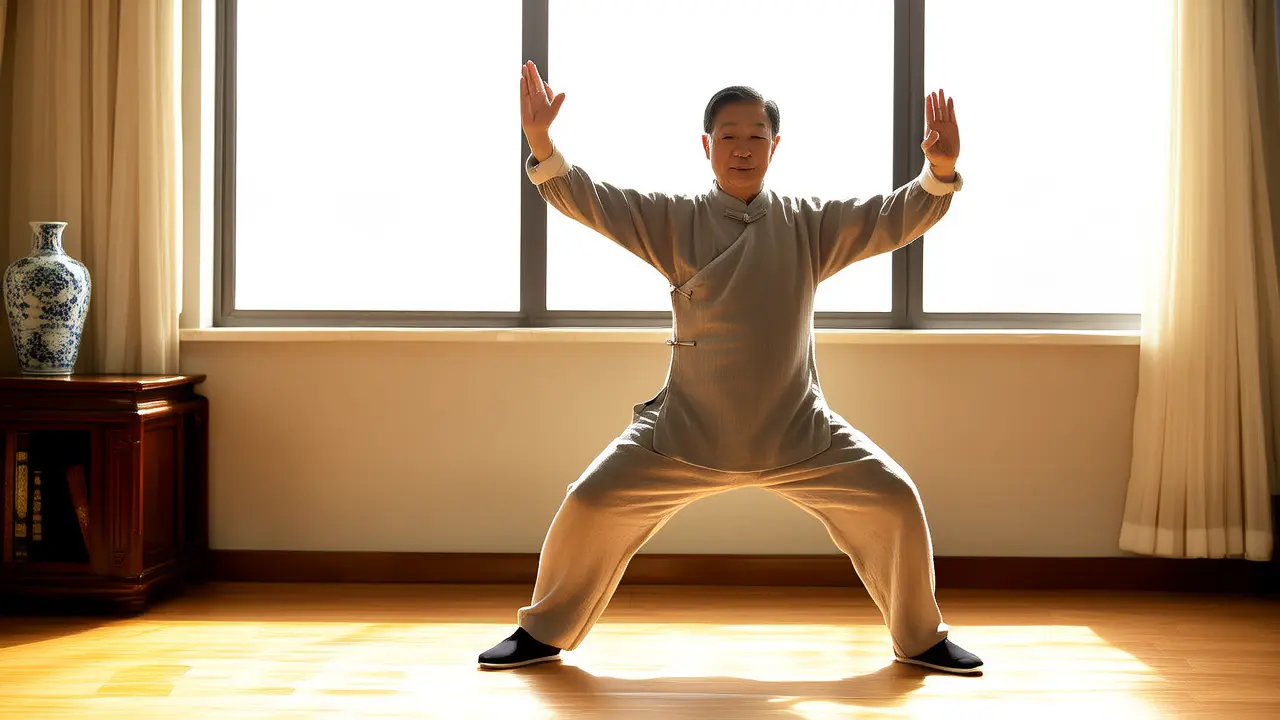
Starting Posture: Feel the Coordination of Weight and Breathing
Stand with feet shoulder-width apart, knees slightly bent, and hands naturally hanging at the sides. Inhale, and slowly raise both arms forward to the level of the shoulders, palms facing down. Exhale, and slowly bend the knees while lowering the hands to the front of the abdomen. The entire process feels like pushing waves in water, with even speed. This movement helps establish the concept of "qi sinking to the dantian": clear qi rises when inhaling, and turbid qi descends when exhaling, gradually unblocking the flow of qi and blood, and relieving stiffness in the shoulders and neck.
Wild Horse Parting the Mane: Open the Chest Cavity through Rotation
Keep the knees slightly bent, shift the weight to the right leg, and step the left foot forward to form a false step. At the same time, bring both hands to the front of the chest in a ball-holding posture (left hand on top, right hand below). As the weight moves forward into a left bow stance, the left hand moves in an arc to the left front (palm up), while the right hand presses down next to the right hip. Throughout the movement, focus on the extension of the arms and the rotation of the spine, with natural breathing: exhale when parting the mane, and inhale when returning. This basic movement gently stretches the thoracic vertebrae and activates the shoulder and hip joints, alleviating stiffness caused by prolonged sitting.
Cloud Hands: Flow Like Clouds
Stand with feet slightly wider than the shoulders, and cross the hands in front of the abdomen (right hand on top). As the weight shifts to the left, the right hand moves upward and to the right in an arc, following the movement with the eyes; simultaneously, the left hand moves downward and to the left in an arc. Then shift the weight to the right, and the left hand moves upward and to the left in an arc, while the right hand moves downward. Repeat this motion. Cloud Hands are the most representative of "whole-body movement": coordinated movements of all limbs, as if wind moves clouds. Combined with deep and long breathing, it effectively relaxes the nerves, enhances balance, and is especially suitable for people suffering from anxiety and insomnia.
Final Posture: Return to Calmness, Nourish Vital Energy
The final movement is the Final Posture. Bring the feet together, slowly press the hands down in front of the abdomen, and bend the knees to squat, then slowly rise, allowing the hands to naturally relax and hang at the sides. Stand with closed eyes for a moment, feeling the warm sensation of blood and qi flowing back into the body. This simple return movement helps the body transition from dynamic to static, consolidate the effects of the practice, and prevent energy from dispersing outward.
Summary: Ten Minutes Daily, Cultivate a Balanced Strength
The basic movements of Tai Chi are not complicated; the key lies in "slowness" and "continuity." Spend ten minutes daily practicing the Starting Posture, Wild Horse Parting the Mane, Cloud Hands, and Final Posture, and you will find your shoulders and back feel lighter, your sleep more solid, and your mindset more balanced. Remember: Tai Chi is an art of seeking stillness within movement and balancing yin and yang — using the gentlest way to awaken the body's self-healing potential. After practicing for a month, you will experience the beauty of "the balance of whole-body movement."