Introduction: The Mind's Longing for Peace in a Fast-Paced World
Do you often feel anxious and exhausted, even after getting eight hours of sleep? In today's high-pressure life, our bodies are busy dealing with work, family, and social obligations, while our inner selves are often neglected. Health is not just the absence of illness, but also the balance and harmony between mind and body. Actually, nurturing the heart is not an esoteric or complicated practice; it lies within our daily small habits. This article will guide you to explore three simple and practical secrets for nurturing the heart, helping you gradually regain inner peace and strength.
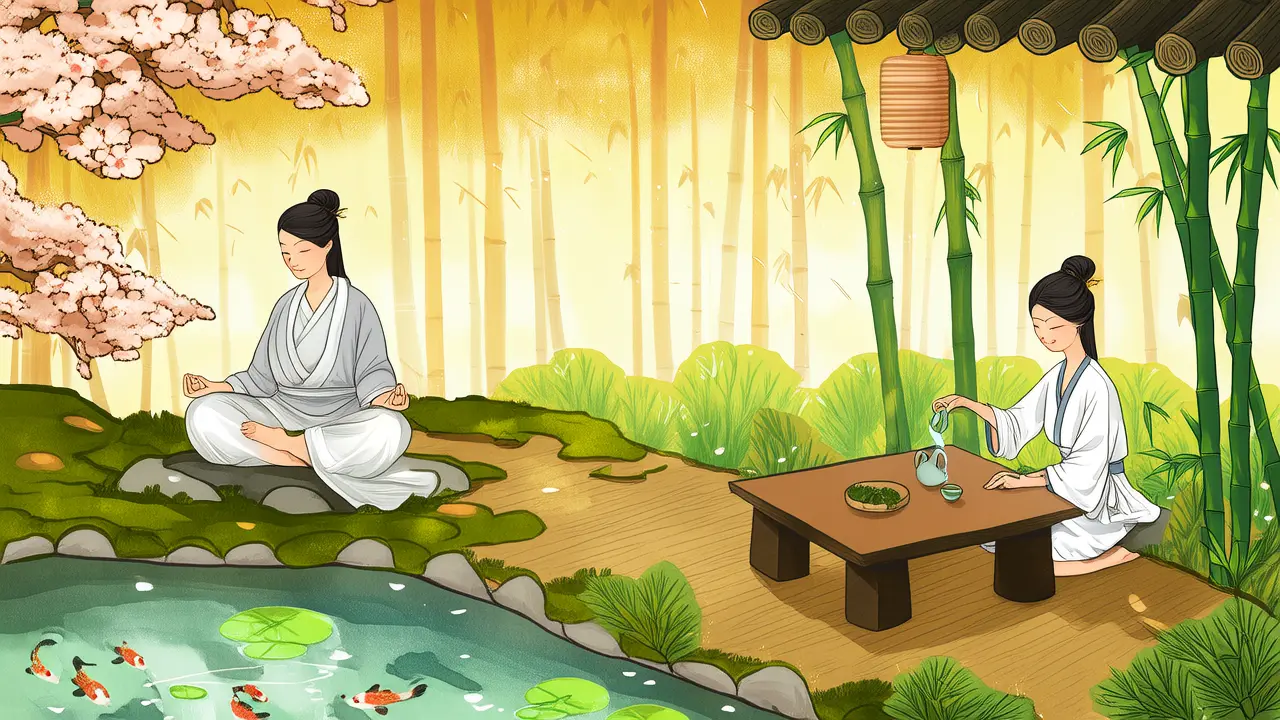
Secret One: Five Minutes of "Calm Breathing" Upon Waking Up, Rebooting Your Day's Energy
Why is Calm Breathing Necessary?
According to traditional Chinese medicine, "when the qi flows smoothly, the mind is at peace." When we first wake up in the morning, our subconscious still holds onto yesterday's thoughts. By focusing on breathing, we can guide the yang energy upward, relieve stagnation, and bring our thoughts back from chaos to order.
How to Practice It
- Preparation: After waking up, don't rush to get out of bed. Lie flat on your back, with your hands folded over your abdomen.
- Steps: Close your eyes, inhale slowly through your nose for 4 seconds, feeling your abdomen rise slightly; hold your breath for 2 seconds; then exhale slowly through your mouth for 6 seconds, feeling your abdomen sink. Repeat this five times.
- Points to Note: If your mind wanders during the process, gently bring your attention back to your breathing without judgment.
This simple action can activate the parasympathetic nervous system, lower cortisol levels in the morning, and help you greet a new day with a calm rather than anxious mindset.
Secret Two: A Short "Relaxing Nap" at Noon, Giving Emotions a Buffer Zone
Why Is Relaxation Needed at Noon?
The busyness in the morning often causes the sympathetic nervous system to become overly excited, leading to dizziness and irritability in the afternoon. Traditional Chinese medicine emphasizes "nourishing the heart at noon," as the heart meridian is most active at this time. Taking a short rest can protect heart energy and prevent excessive heart fire.
How to Practice It
- Setting: After lunch, find a quiet corner and sit on a chair with your feet flat on the ground.
- Steps: Gently place your hands over your chest (the area of the膻中穴, or "Sea of Qi") and close your eyes. Imagine each breath as warm sunlight entering your chest. Sustain this for 3 minutes.
- Adjustments: If the environment allows, you can play some soft instrumental music (such as the sound of a stream or guqin music).
This "hand therapy" delivers a sense of security through surface temperature and tactile feedback, directly calming the alarm response of the amygdala, allowing tense emotions to naturally relax.
Secret Three: A Nighttime "Gratitude Journal," Reflecting on the Day's Moments
Why Does Keeping a Gratitude Journal Nurture the Heart?
"The heart stores the spirit," and excessive thinking consumes heart blood. Shifting your focus from "lack" to "possessions" helps the brain rebuild positive neural pathways, reducing rumination before bedtime.
How to Practice It
- Preparation: Ten minutes before bedtime, take out a notebook or use your phone's memo app.
- Steps: Write down three things that made you feel warm or grateful today, even if they are as simple as "the coffee was especially delicious" or "a colleague opened the door for me." Describe each event with one or two sentences expressing your feelings.
- Advanced Tip: Read them aloud, then take three deep breaths and tell yourself, "Today has been good enough."
This is like performing a "cleansing" for the heart, clearing negative emotions' memory, allowing you to sleep more soundly and awaken with a lighter heart the next day.
Summary: Nurturing the Heart Is a Gentle Companion Every Day
Physical and mental harmony is not an immediate goal, but a continuous gentle journey. From morning breathing to midday rest, and then to evening gratitude, each small technique is an opportunity to communicate with yourself. You don't need to pursue perfection; just pay attention to one moment of pause and one deep breath in your daily life. Your heart will gradually tell you—what it needs is never a dramatic change, but being seen and treated kindly. Start today, try one of these secrets, and let nurturing the heart become the most natural foundation of your healthy life.