Introduction: When Life is on Fast Forward
Do you feel like you're being pushed by an invisible hand, rushing through each day, even your breathing becomes hurried? Work group messages, children's homework, unfinished plans... Modern people seem to be caught in a cycle of "busyness" and "tiredness." In fact, what we lack is not time, but a Chinese method of mindful stillness. It is neither mysterious nor complicated; it is hidden in the wisdom left by our ancestors—using the simplest methods to help you find your own peace amidst the noise.
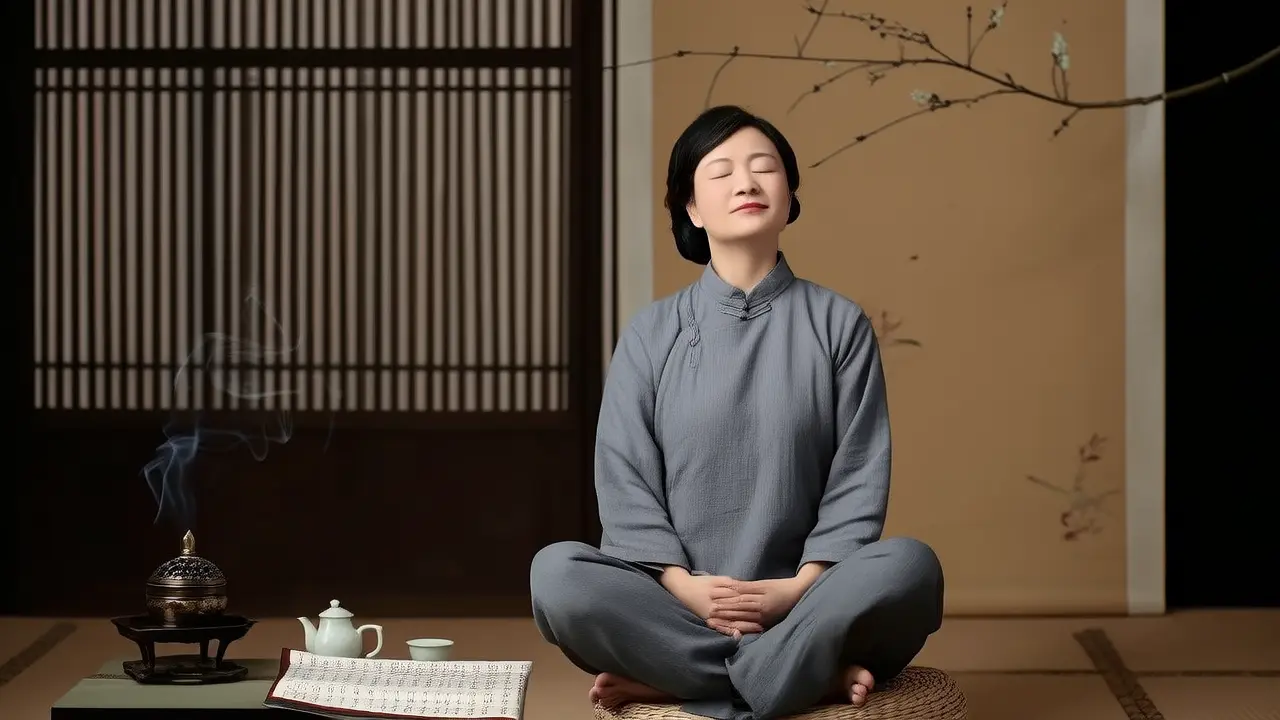
What is the Chinese Method of Mindful Stillness?
The Chinese method of mindful stillness is not esoteric. It is a health philosophy rooted in the balance of yin and yang and the smooth flow of qi and blood. It emphasizes that "stillness" is not about remaining motionless, but rather allowing restless energy to return to its natural rhythm. When you feel stressed, anxious, or have trouble sleeping, or are inexplicably irritable, it's actually your body reminding you that your harmonious rhythm has been disrupted. Try starting with breath regulation and standing meditation, allowing your mind to gradually become as clear as lake water.
A Simple Mindful Stillness Practice You Can Do Anytime: Natural Abdominal Breathing
Applicable Scenarios: After work fatigue, emotional tension, or pre-sleep anxiety.
- Find a quiet corner, sit or stand, and loosen tight clothing. Place both feet flat on the ground, and gently place your hands on your abdomen.
- Inhale slowly through your nose, silently counting to four, feeling your abdomen slightly rise like a balloon. Don't raise your shoulders; imagine the breath sinking into your lower dantian.
- Hold your breath for 2 seconds, letting the air stay briefly inside your body.
- Exhale slowly through your mouth, silently counting to six, feeling your abdomen naturally contract. The exhalation should be longer than inhalation, which can activate the parasympathetic nervous system and help you relax.
- Repeat 5-10 times. At first, it may feel unfamiliar, but don't rush; take it slowly.
Principle: This abdominal breathing originates from the traditional Chinese medicine concept of "qi as the commander of blood." Deep breathing can promote the circulation of qi and blood, balance yin and yang, and reduce excessive "fire," nourishing deficient "water." After five minutes, you will clearly feel your heartbeat stabilize and your mood ease.
Mindful Stillness Habits to Incorporate Into Daily Life
- Tea Breaks: Brew a cup of warm oolong or pomegranate tea, hold the cup with both hands, smell the tea aroma, and sip slowly. Five minutes of focused tea drinking is a small act of mindfulness.
- Morning Yang Rising: After waking up in the morning, stand in a meditation posture facing east for five minutes. Stand with your feet shoulder-width apart, knees slightly bent, and arms cradled in front of your chest. Imagine sunlight entering your body, feeling relaxation from head to toe.
- Evening Abdominal Massage: Lie down, place your left hand over your navel, and put your right hand over your left. Gently massage clockwise around the navel for 36 circles. This can promote intestinal movement and help you sleep better.
Conclusion: Harmonious Rhythm Starts With Every Breath
The Chinese method of mindful stillness doesn't require you to change your life immediately, but teaches you to find a gentle foothold in rough days. Just a few minutes each day through simple practices like breathing, standing meditation, and drinking tea, you can gradually repair the fragmented mind and body caused by busyness. Remember: the harmonious rhythm of a healthy life isn't something you passively wait for, but something you actively return to. From today, try slowing your mind down—you will find that the world isn't as noisy as it seems.