Introduction: Finding Peace in the Busy Life
Every day, facing work pressure and daily chores, both body and mind tend to become tense. You don't need to go to a gym or use professional equipment - just a quiet corner, following these few Tai Chi movements, you can relax your muscles, calm your breathing, and let anxiety gradually fade away within 10 minutes. Tai Chi emphasizes "using softness to overcome hardness," with slow and continuous movements, especially suitable for beginners and those who sit for long periods.
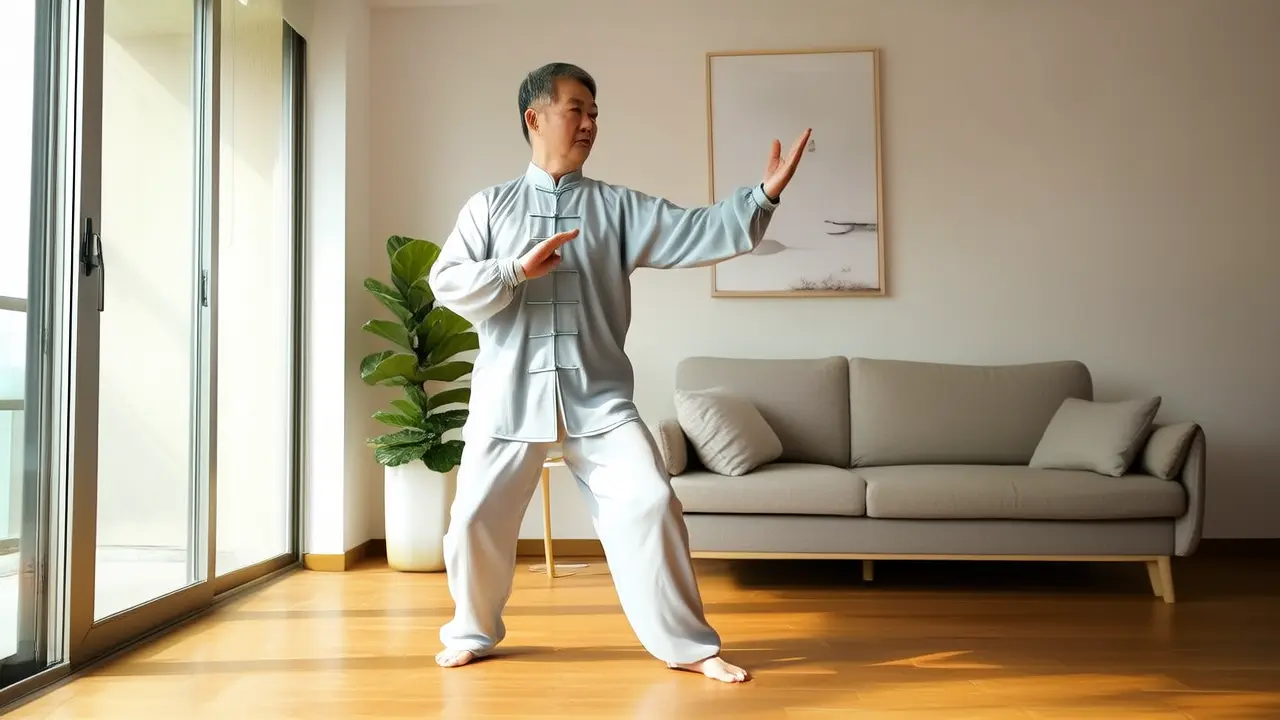
Movement One: Starting Posture - Regulating Breathing and Calming the Mind
Stand with feet shoulder-width apart, knees slightly bent, and hands naturally hanging at the sides. Inhale, slowly raise both arms forward to shoulder height, palms down; exhale, bend the knees, and gently lower the arms to the front of the abdomen. Repeat three times. This process guides you to focus on your breathing, helping your body and mind detach from external distractions. According to Traditional Chinese Medicine, this posture helps unblock the three yin meridians of the hands, promoting smooth circulation of qi and blood.
Movement Two: Hands Holding Heaven - Stretching the Body
Stand in the same position, slowly raise both hands from the abdomen, palms up, cross them above the head, then flip the palms upward to lift them, while inhaling; exhale, slowly let the arms fall back to the sides. This movement stretches the spine and shoulders, relieving stiffness caused by prolonged sitting. Combined with deep breathing, it opens the chest cavity, enhances oxygen exchange, and effectively reduces tension.
Movement Three: Lifting the Knee and Retreating Step - Relaxing the Waist and Legs
Turn the body to the right, shift the weight to the right foot; the right palm, facing down, moves along an arc in front of the right knee, while the left hand pushes forward simultaneously. Then switch to the other side. The movement resembles "embrace the knee and take a step," but the feet don't need to actually move, the weight naturally shifts between the two feet. It gently activates the hip joint and waist, improves lower back pain, allows qi to flow downward, and stabilizes emotions.
Movement Four: Single Whip - Opening the Chest
Turn the body slightly to the left, draw circles with both hands in front of the chest: push the left hand to the left, and grasp the right hand into a "hook hand" simultaneously. Focus your eyes on the left hand. Keep the knees slightly bent throughout, and perform the movement as smoothly as drawing silk. This posture stretches the arms and the side waist, stimulates the Pericardium Meridian and Gallbladder Meridian, helping to relieve irritability and boost energy.
Movement Five: Ending Posture - Returning to Origin
Place the hands folded over the abdomen (men place the left hand inside, women the right hand inside), breathe naturally for one minute. Then slowly lower the hands, bring the feet together, and stand quietly with closed eyes for a moment. This is the "concluding" part of Tai Chi, calming the qi guided earlier and returning the body and mind to a balanced state. With regular practice, you will feel as if you have just woken up, feeling relaxed.
Summary: Gentle Daily Care Lies in Consistency
These five movements do not require high intensity; practicing 5-10 minutes every morning or before bedtime can help relax tense nerves. Tai Chi emphasizes "balance between movement and stillness," each slow movement is a dialogue with your own body. Long-term practice not only makes the body more flexible but also stabilizes emotions. Remember, relaxation is not laziness, but the best way to restore your body.
Disclaimer: The content of this article is for reference only regarding health knowledge and does not constitute medical diagnosis or treatment advice. If you have any physical illness or severe discomfort, please consult a professional doctor. If you feel pain or dizziness during practice, stop immediately.