Introduction: Let the Gentle Power of Tai Chi Alleviate Anxiety
Life moves fast and stress is everywhere, often causing anxiety without warning. Instead of just enduring it, try a gentle relaxation method derived from Tai Chi. You don't need to go to a gym or use any equipment; you can practice in your living room. By performing slow movements combined with deep breathing, you will feel your body gradually becoming more flexible and your mood calming down. This method integrates traditional Chinese health concepts—unblocking the flow of qi and blood, maintaining balanced breathing, and harmonizing movement and stillness—to help you slowly release tension from a tense state.
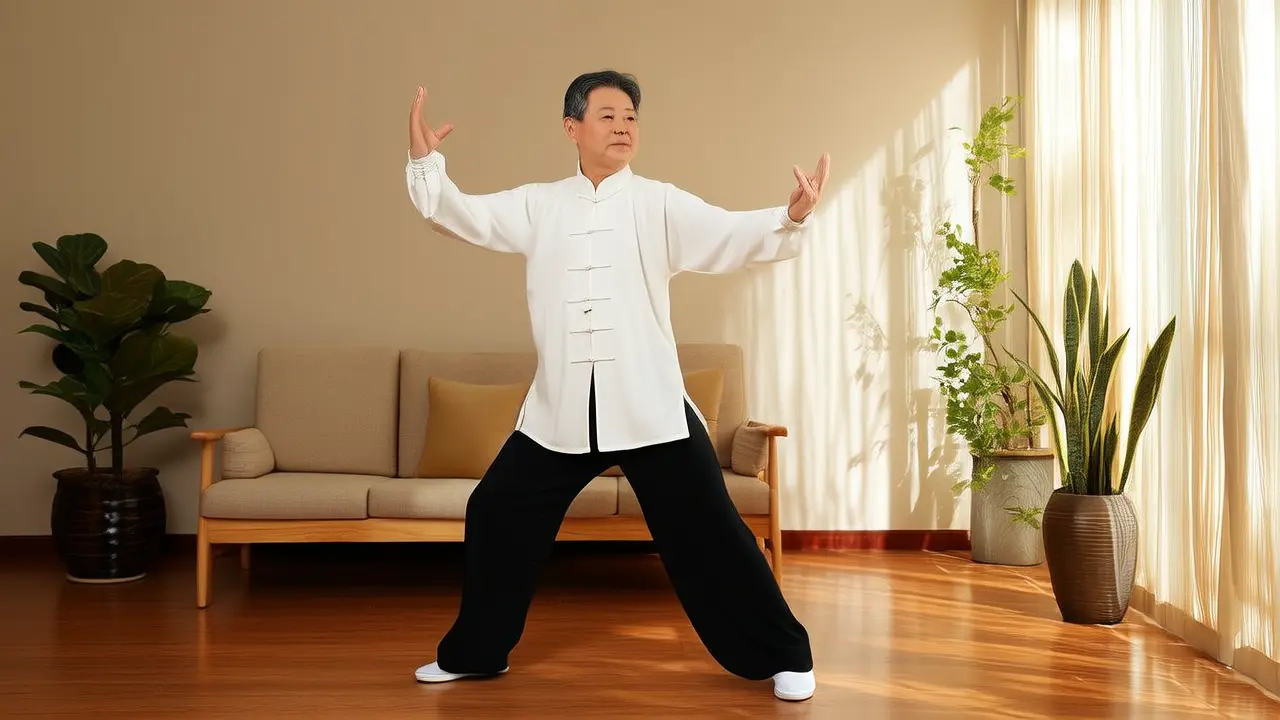
Applicable for Physical Discomfort
This relaxation method is especially suitable for the following situations:
- Stiffness and pain in the shoulders, neck, and back after long hours of sitting at a desk
- Feeling restless, having scattered thoughts, and difficulty concentrating
- Lying awake at night with your mind still racing
- Feeling chest tightness and shallow breathing
Whether you are an office worker, student, or caregiver, if you have mild anxiety or physical tension, you can practice this method.
Movement Steps: Cloud Hands and Starting Posture
Preparatory Posture
Stand with your feet shoulder-width apart, knees slightly bent, and hands naturally hanging by your sides. Close your eyes and take three deep breaths: inhale slowly through your nose, feeling your abdomen rise; exhale gently through your mouth, feeling your whole body sink down. Relax your jaw, shoulders, and armpits.
Cloud Hands (Alternating Sides)
1. Cross your hands in front of your lower abdomen, palms facing inward (as if embracing a balloon).
2. Inhale, slowly shift your body weight to your left foot, while your right hand moves upward and to the right like parting clouds, following the movement with your eyes.
3. Exhale, let your right hand return to its original position, and shift your weight back to the center.
4. Repeat on the other side. Do 8 repetitions on each side, moving slowly as if drawing in water.
Starting Posture (Rising and Falling Stance)
1. Begin from the preparatory posture. Inhale, slowly raise both arms to shoulder height in front of you, palms facing down.
2. Exhale, bend your knees deeper, and slowly press your arms down as if pressing a ball, stopping in front of your lower abdomen.
3. Repeat five times. With each inhalation, imagine drawing in the tranquility of heaven and earth, and with each exhalation, imagine expelling your anxiety.
Breathing Coordination and Gentle Adjustment Principles
Throughout the process, breathing is crucial. The movements must be synchronized with your breath: inhale when raising, exhale when lowering. This method of "leading the qi with the mind and moving the body with the qi" activates the parasympathetic nervous system, reducing heart rate and muscle tension. According to Traditional Chinese Medicine, anxiety arises from stagnation of qi, and the slow spiral movements of Tai Chi can unblock meridians and balance qi and blood, allowing stagnant energy to flow again. Practicing for 10 minutes daily, you can experience the transformation from "tense" to "relaxed."
Summary
This Tai Chi relaxation method does not pursue strength or range of motion, but rather "stillness" and "gentleness." When anxiety strikes, stop what you're doing, stand for a moment, and calm your body and mind with the arc movements of Cloud Hands and the rising and falling of the Starting Posture. After practicing for a week, you will find it easier to enter a calm state, and your sleep quality will also improve. Remember, gentle power is the most enduring.
Disclaimer
The movements provided in this article are for reference only for daily relaxation and should not replace professional medical advice or treatment. If you have severe anxiety symptoms or physical illnesses, please consult a doctor first. If you feel uncomfortable during practice, stop immediately.