Introduction
After a busy day, do you feel like there's a stone on your shoulders and neck? Aching, stiffness, and difficulty in turning—these discomforts quietly steal your energy. In fact, just 5 minutes a day, by pressing a few key acupoints with your fingers, can gradually relax tense muscles and promote smoother circulation of qi and blood. Traditional Chinese health care emphasizes "smoothness means no pain," and gentle massage can help you regain a sense of ease.
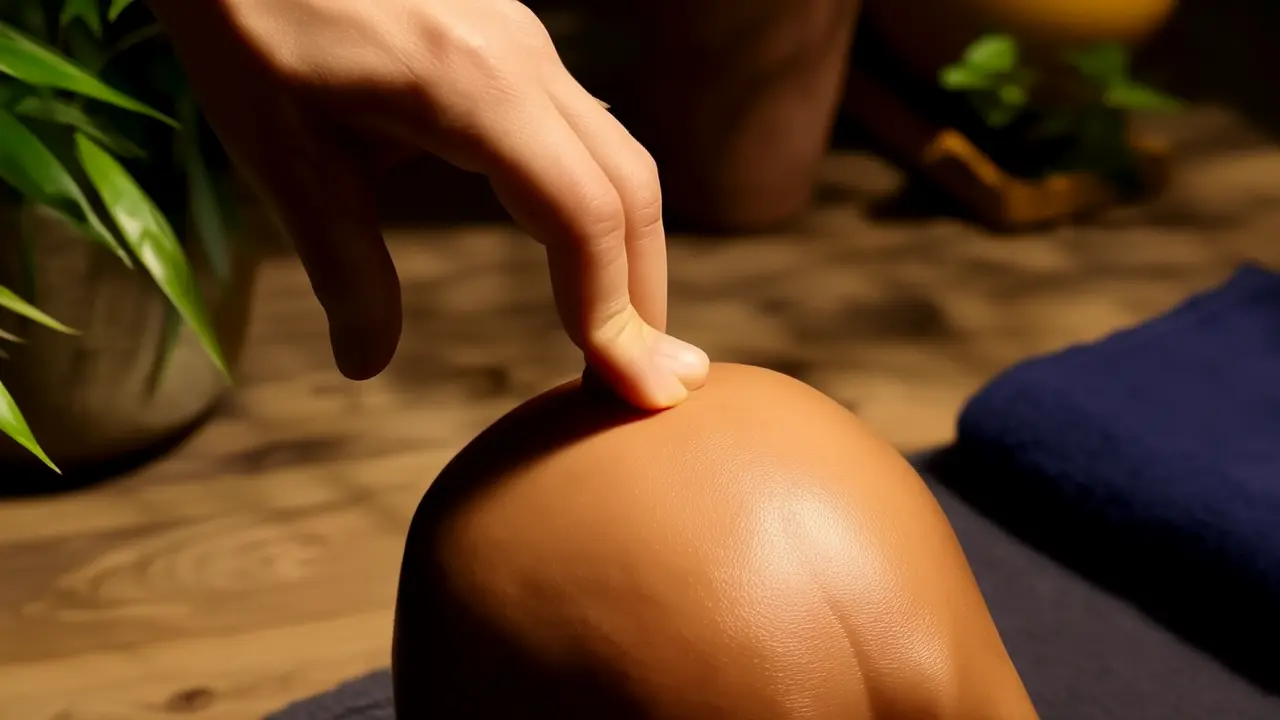
Why does acupoint pressure relieve shoulder and neck aches?
Shoulder and neck aches often result from prolonged低头 (looking down) and sitting still for long periods, leading to poor local blood circulation. Acupoints are the "switches" along the body's meridians. Pressing them can unblock obstructions, balance qi and blood, and relax tension. Gentle stimulation of acupoints can awaken the body's self-regulating abilities, gradually making stiff areas softer. It requires no complicated techniques, and you can do it at home safely and gently.
Key Acupoint: Fengchi (GB20)
Location: On the back of the neck, in the depression below the skull, approximately two finger widths behind the earlobe. How to operate: Use the thumb pads of both hands to gently press the Fengchi point, while the other four fingers support the head. First press straight down until there is a mild ache or distension, then rub clockwise for 30 seconds, followed by counter-clockwise rubbing for another 30 seconds. Do this once each in the morning and evening, for a total of 1 minute per session.
Principle: Fengchi is a crucial junction where qi flows between the head and neck. Pressing it can improve blood supply to the head, relieve stiffness at the back of the neck and dizziness, and promote smooth circulation of qi and blood in the upper part of the shoulders and neck.
Supporting Acupoint: Jianjing (GB21)
Location: In the center of the shoulder, at the midpoint of the line connecting the Dazhui (GV14) point (the highest bone at the back of the neck when bending forward) and the outer side of the shoulder. How to operate: Use the middle finger of one hand to rub the Jianjing point on the opposite shoulder. Apply enough pressure to create a sensation of soreness and distension without sharp pain, and continue rubbing for 1 minute. Then switch sides. You can also combine it with shrugging your shoulders to relax.
Principle: Jianjing directly relaxes deep shoulder muscles, alleviating the feeling of heaviness in the shoulders and back, especially suitable for people who sit for long periods.
Supporting Acupoint: Hegu (LI4)
Location: On the back of the hand, at the highest point of the muscle when the thumb and index finger are brought together. How to operate: Use the thumb of the other hand to press vertically on Hegu, applying moderate pressure and rubbing for 1 minute, alternating hands.
Principle: Hegu is known as the "universal acupoint," capable of regulating the circulation of qi and blood throughout the body, and it has an auxiliary effect in relieving neck muscle spasms. When pressed, you may feel a warm current rising from the hand to the shoulder, which is particularly comfortable.
Weekly Tips
- Warm up your palms before pressing to make the finger temperature more gentle.
- Combine pressing with deep breathing, relaxing during inhalation and gently increasing pressure during exhalation.
- Fix a specific time each day (such as during lunch break or before bedtime) to do 5 minutes of pressing, forming a habit.
- If you experience sharp pain or numbness during pressing, stop immediately.
Summary
Shoulder and neck aches don't happen overnight, and improvement also requires patience. Daily 5-minute acupoint pressing is like a gentle cleansing treatment for your body. Combined with maintaining proper posture and appropriate movement in daily life, you will soon find your neck more flexible and your shoulders lighter. Traditional Chinese health care emphasizes "light daily care"—effortless and time-saving, yet it can keep your mind and body in a peaceful and comfortable state.