Introduction: Your Shoulders and Neck Need a Gentle Relaxation
Do you feel stiff in your shoulders and neck, as if they were tied with heavy stones from sitting long hours at the office or scrolling on your phone? Don't worry, you don't need high-intensity training or expensive equipment. Just 10 minutes a day, doing a simple set of qigong movements at home, can promote blood circulation and muscle relaxation. Qigong is not esoteric; it's a practice that uses slow movements combined with breathing to gently awaken your body's self-healing ability. It's suitable for everyone, especially those who sit a lot and lack exercise.
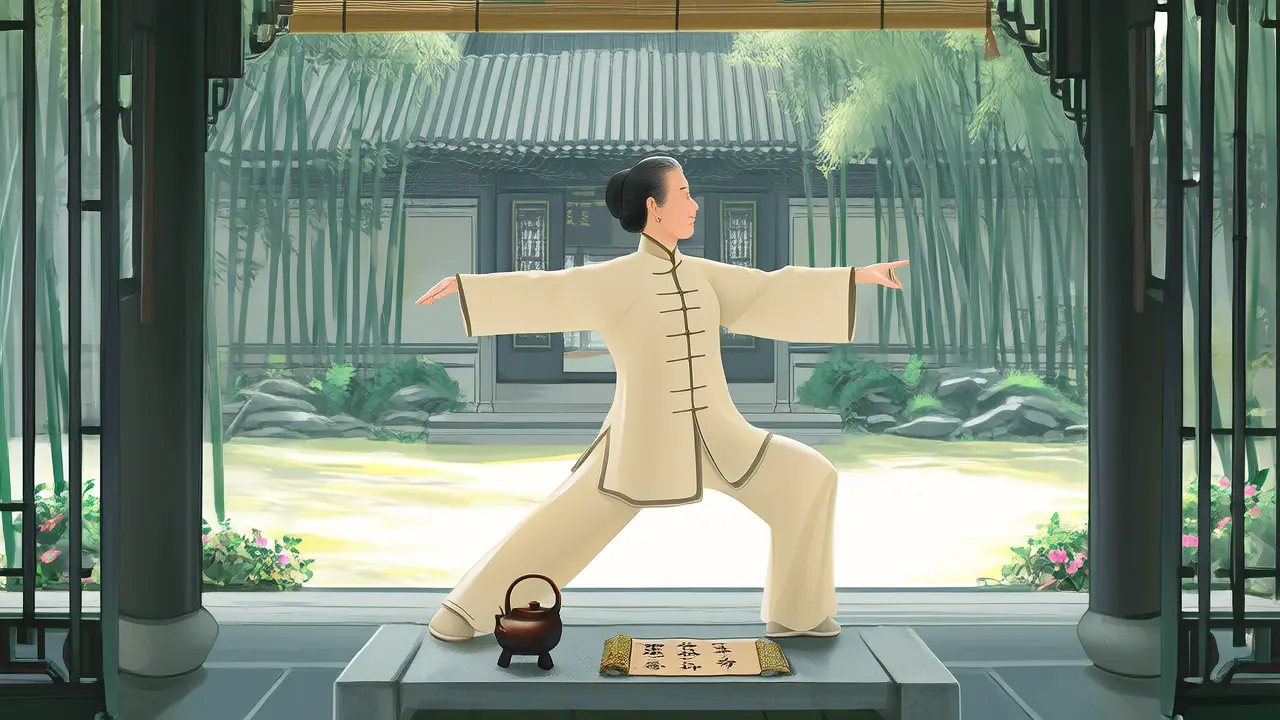
Why Is Qigong Particularly Effective for Shoulders and Neck?
According to traditional Chinese medicine, "If there is flow, there is no pain; if there is pain, there is no flow." Stiffness in the shoulders and neck often results from stagnated qi and blood, and tense muscles. Qigong helps unblock meridians and relax fascia through gentle stretching and deep breathing. It doesn't focus on the range of motion but emphasizes "relaxation, stillness, and naturalness," harmonizing breath within movement to gradually release tension.
A Simple Tip: Hands Supporting the Sky to Regulate the Three Jiao
This is a classic qigong movement, simple and safe, especially suitable for those with shoulder and neck discomfort.
- Steps: Stand with feet shoulder-width apart, hands naturally hanging down. Inhale, slowly raise both arms to the chest, palms up, then continue lifting them above the head, turning the palms upward to support as if holding the sky. Follow the movement with your eyes. Hold this position for 2-3 seconds, then exhale while slowly lowering the arms back to the starting position. Repeat 6-8 times.
- Breathing Coordination: Inhale while raising (4-5 seconds), hold your breath for 1-2 seconds while holding the position, and exhale while lowering (6-7 seconds). Breathe deeply and evenly, without holding your breath.
- Sensation: Feel the scapulae moving toward each other and the cervical spine naturally extending during the movement. If raising your arms is difficult, slightly bend your elbows without forcing yourself.
The Principle of Gentle Regulation: Unblocking and Relaxing
This movement stretches the pectoralis major, trapezius, and levator scapulae muscles, while opening the chest cavity and promoting heart and lung circulation. Combined with deep exhalation, it reduces sympathetic nervous system excitement, helping the body switch from a "tense mode" to a "relaxation mode." Doing it for 10 minutes a day is like giving your shoulders and neck a gentle massage.
Daily Light Care: Let Habits Happen Naturally
You don't need to pursue perfection; the key is consistency. You can insert qigong practice into work breaks: 5 minutes each at 10 a.m. and 3 p.m. Slow down the movements and keep a calm mindset, without rushing. After two weeks of persistence, you will find your shoulders feel lighter, your neck moves more smoothly without creaking, and bending to touch the ground becomes easier.
Summary
Qigong for 10 minutes a day has no restrictions on location or age. It teaches us how to care for our bodies in the gentlest way. Start today, put down your phone, stand up, and lift your hands to support the sky. Your shoulders and neck will thank you.
Disclaimer: This article is for sharing health knowledge only and cannot replace medical diagnosis or treatment. If you have severe shoulder or neck pain or diseases, please consult a professional doctor.