Introduction
Modern life is fast-paced, and many people feel stiff in their shoulders and necks, as well as mentally tense. In fact, spending a few minutes each day doing a few gentle movements, combined with breathing, can help relax both the body and mind. The core concept of Qigong is "unblocking the flow of qi and blood, and maintaining balanced breathing." It requires no equipment and can be done at home. Below are three simple exercises that help you relax your body and mind, and enhance your daily comfort.
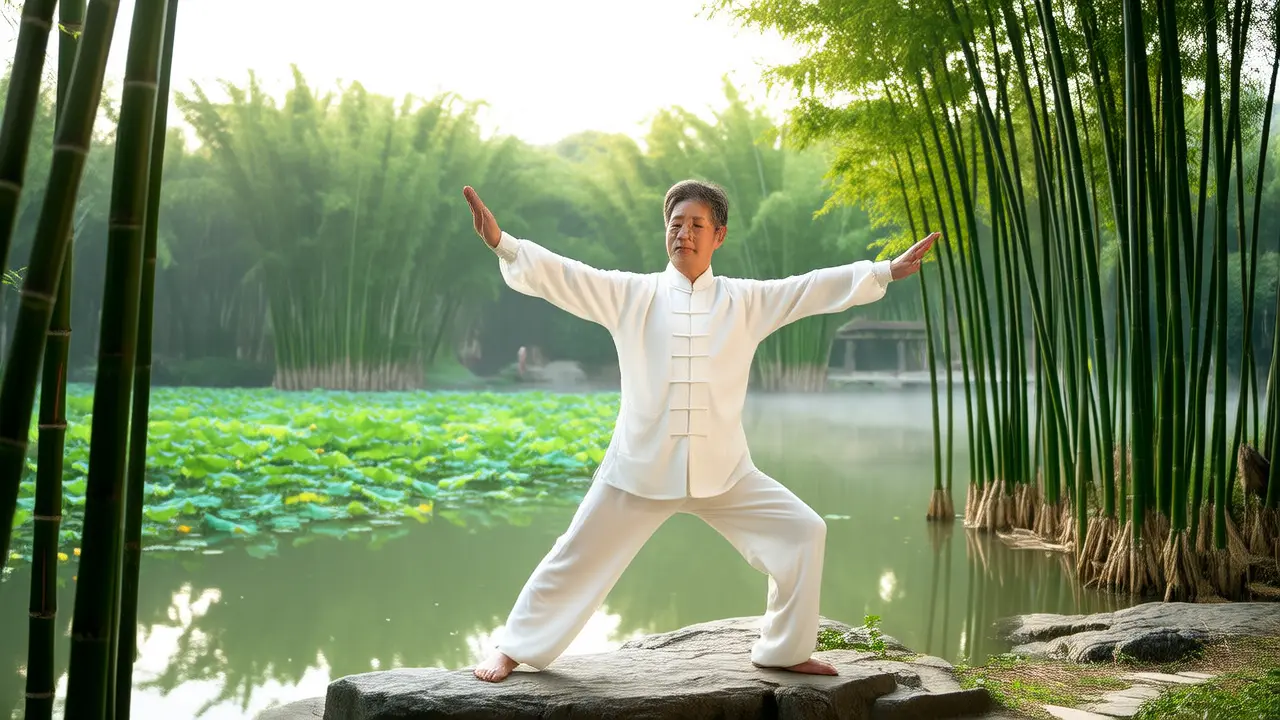
Exercise One: Standing Deep Breathing - Awakening Internal Energy
This exercise is suitable for those who experience back pain after long periods of sitting. Stand with your feet shoulder-width apart, knees slightly bent, as if sitting on an invisible high stool. Let your hands hang naturally or rest lightly on your lower abdomen. Close your eyes, breathe slowly through your nose, imagining the breath rising from your feet to fill your entire body; then open your mouth slightly and exhale slowly, feeling the pressure and fatigue being released with each exhalation. Repeat this 5 to 10 times. This exercise helps calm the mind, regulate breathing, and allows the flow of qi and blood to be natural.
Exercise Two: Raising Arms and Stretching - Relieving Stiff Shoulders and Back
This exercise is particularly effective when your shoulders feel tight or your neck is sore. You can perform it while standing or sitting. Cross your hands in front of your chest, and as you inhale, slowly raise them over your head with palms facing up, feeling the stretch in your shoulders and back. Hold for 3 seconds, then exhale and slowly lower your arms to the sides, returning to the position in front of your chest. Repeat 3 to 5 times. Perform the movement gently, like a cat stretching, without forcing it. This helps unblock the flow of qi and blood in your shoulders and upper back, gradually eliminating stiffness.
Exercise Three: Side Bending Waist - Relaxing the Spine and Abdomen
Prolonged sitting often causes stiffness in the waist. This exercise gently moves the spine. Stand with your feet slightly wider than your shoulders, and place your hands on your hips. As you inhale, slowly tilt your body to the right, feeling the stretch on the left side of your waist; as you exhale, return to the center. Then tilt to the left. Do this 5 times on each side, adjusting the range of motion according to your comfort. Imagine yourself as a tree gently swaying in the breeze. This promotes blood circulation in the waist area and relieves discomfort caused by prolonged sitting.
Summary
These three exercises are very simple and safe. As long as you persist for just a few minutes every day, your body will feel more relaxed and your mind more peaceful. Remember to breathe slowly and move gently, enjoying the present moment. Qigong is not a complicated technique, but rather a gentle way of daily self-care. If you experience significant pain or discomfort, please consult a professional doctor first.
Disclaimer: The content of this article is for reference only and should not be used as medical diagnosis or treatment advice. Please practice according to your own condition, and stop immediately and seek professional medical help if you feel uncomfortable.