Leave Stiffness Behind, Start with a Small Step
Do you often feel like your neck, shoulders or back are locked up? Long periods of sitting and working in front of a computer can gradually make your body tense. In fact, just 10 minutes a day using this ancient and gentle Qigong exercise can help you gradually loosen these "knots." No equipment is needed, and you can do it at home, in the office, or even on the balcony. This method originates from traditional Chinese medicine's health preservation wisdom, emphasizing the unblocking of qi and blood, and relaxing the body and mind, helping you regain ease and comfort.
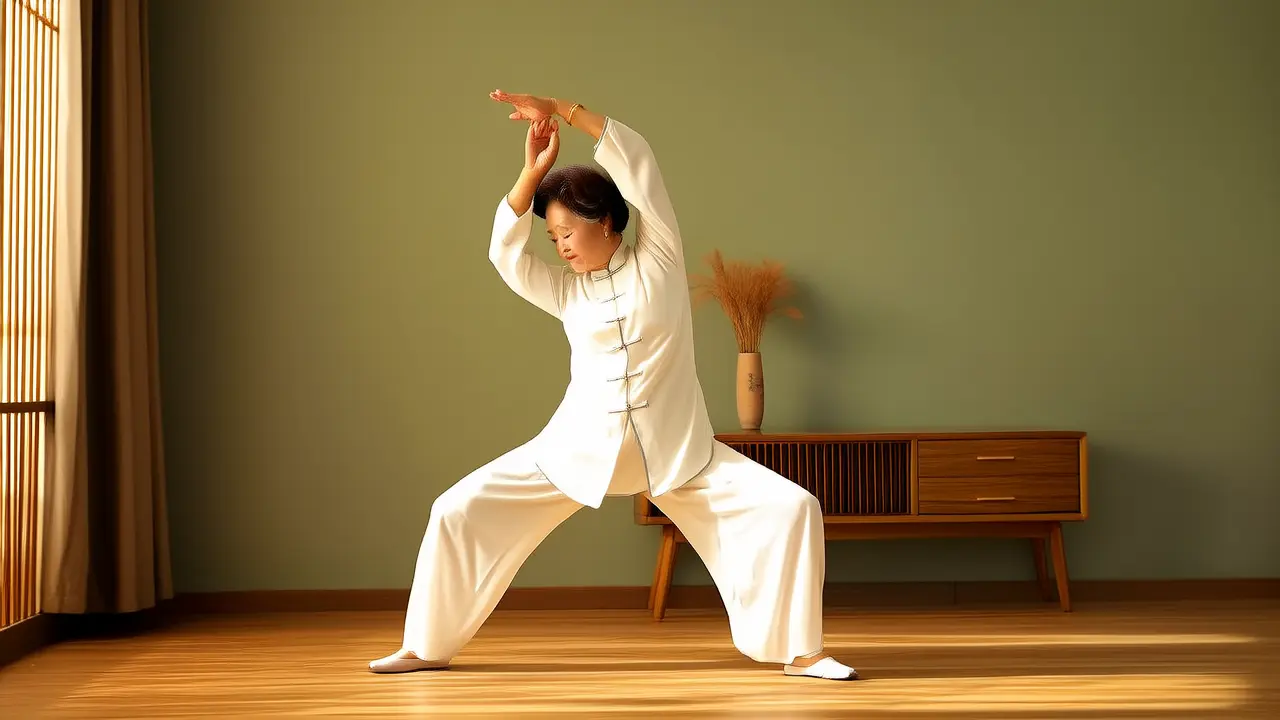
A Core Technique: Hands Supporting the Sky to Regulate the Three Jiao
This is the most classic and simple movement, especially suitable for relieving stiffness in the upper body. Imagine you are gently lifting an entire blue sky.
- Starting Position: Feet shoulder-width apart, hands naturally hanging by the sides of the body, the tip of the tongue lightly touching the upper palate, closing your eyes and breathing three times.
- Movement Steps: Inhale as you slowly raise your hands in front of your abdomen, palms facing up, raising them above your head while lifting your toes, feeling your spine being stretched. Hold for 3 seconds, experiencing the expansion of the chest and abdomen. Exhale as you slowly lower your hands from both sides, returning your heels to the ground, and fully relax your body.
- Breath Coordination: Inhale when raising your hands, exhale when lowering them. The breathing should be deep, long, and even, without holding your breath.
The Principle of Gentle Adjustment: Unblocking Qi and Blood Between Movement and Stillness
This seemingly simple movement subtly aligns with the traditional Chinese medicine principle of "lifting qi." Raising the arms activates the intercostal muscles and diaphragm, increasing the volume of the thoracic cavity, promoting the upward movement of qi and blood to the head, and improving cerebral blood supply issues caused by prolonged sitting. The downward movement guides the qi back to its origin, allowing heart fire to descend and kidney water to rise, achieving a balance between body and mind. This entire process is like a gentle "internal massage," allowing stiff muscle fibers to gradually awaken and tension to be released with exhalation. Practicing daily can effectively relieve stiffness in the shoulders, neck, and back, and also calm anxious emotions.
Practical Tips for Daily Practice
- Time Selection: Best to practice after waking up in the morning or when feeling tired in the afternoon.
- Space Requirements: Just need a space where you can stretch out your arms.
- Safety First: Perform the movements gently, without pursuing amplitude, and focus on comfort. If you have joint pain or balance issues, you can practice against the wall.
Summary
10 minutes of equipment-free Qigong every day requires no effort and doesn't make you sweat, yet brings deep relaxation and vitality. It teaches us to communicate with our bodies in a peaceful way. After practicing for a week, you will feel your whole body becoming supple and light.
Disclaimer: This article provides only health exercise suggestions and cannot replace professional medical diagnosis or treatment. If you have chronic diseases, acute pain, or injuries, please consult a doctor first. Stop practicing immediately if you feel uncomfortable during the exercise.