Introduction: A Gentle Invitation to a Busy Body
Do you often feel like your shoulders and neck are carrying a heavy slab of stone, or your back is so stiff that turning around is difficult? Don't rush to blame yourself—sitting for long periods and staring at screens have already caused your body to silently protest. Today, we won't talk about high-intensity training, but instead share a 5-minute breathing exercise from Qigong. It requires no equipment, doesn't need a specific location, and can be done before bedtime, or by your desk during the afternoon. With gentle movements combined with deep breathing, it's like giving your body an internal massage, gradually melting away the stiffness in every corner.
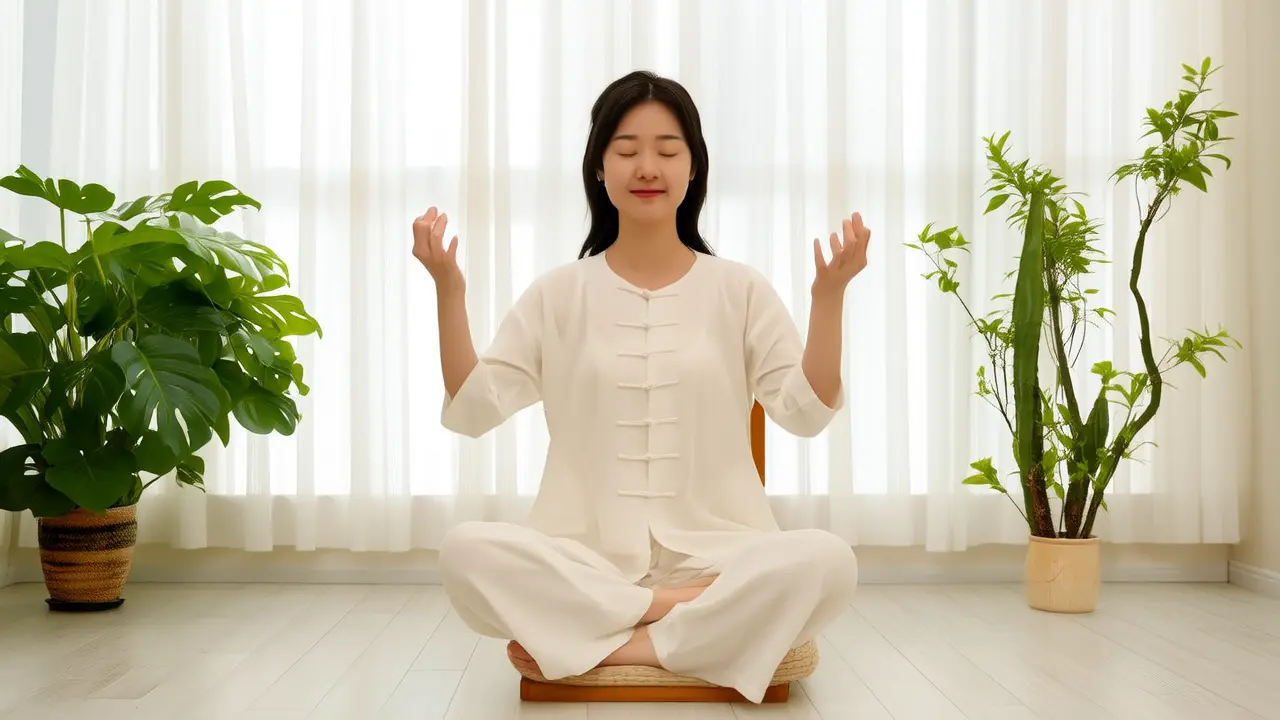
Who Is It For? When To Practice?
This practice is especially suitable for people who sit for long hours, those who feel tight after waking up, and individuals under great stress who always feel chest discomfort. If you feel muscle soreness, emotional irritability, or scattered energy, you can stop and try it. It is safe and carries no risk; the only thing you need to remember is: always keep your movements gentle and avoid forcing any stretches.
Core Technique: Cloud Hands Pushing Qi, Relaxing Shoulders and Back
Preparation Posture
Sit on the front third of the chair, feet flat on the ground, hands naturally placed on the thighs. Gently close your eyes, inhale through your nose, then exhale slowly, repeating this three times to calm your mind.
Movement Steps
- Inhale: Slowly lift both hands from the sides of your body, as if holding a soft cloud of air, until they reach chest height.
- Exhale: Slightly turn your body to the right, with the right hand in front and the left hand behind, gently pushing forward like cloud hands, following the movement with your gaze.
- Inhale: Turn your body back to the center, bringing your hands back to the chest.
- Exhale: Repeat on the left side. Alternate sides, doing 5-8 rounds total.
Keep your breathing long and smooth throughout the process, and let your movements be as gentle as if you were moving through water.
Breath Coordination: Using Breath to Unblock Qi and Blood Flow
Breathing is the soul of Qigong. When you inhale, imagine fresh air flowing down your spine, nourishing your lower back and waist. When you exhale, send tension and stiffness out from your fingertips. This "calm breathing" promotes the circulation of qi and blood, allowing tense muscles to gradually relax in the warm breath, achieving a balanced state of "movement and stillness."
Why It Works: The Principle of Gentle Adjustment
The slow twisting and pushing motions gently stretch the fascia in the shoulders, neck, and waist, while deep breathing activates the parasympathetic nervous system, switching your body from a "fight mode" to a "repair mode." Traditional Chinese medicine states "when qi flows, blood flows." Breathing drives the internal qi movement, effectively performing a gentle unblocking for areas that are stagnant. It is not a treatment, but rather using small daily habits to help your body regain a comfortable balance.
Summary: 5 Minutes Daily, Gentle Care for Body and Mind
Qigong breathing doesn't require sweating heavily or striving for perfect form. It is a gesture of care for your own body—when you feel stiff, stop and spend 5 minutes communicating with your body. Over time, this calmness will seep into your life. Remember: gentleness, consistency, and not forcing yourself are the best ways to maintain daily well-being.
Disclaimer: This article is for health education purposes only and does not constitute medical advice. If you experience severe pain or illness, please consult a professional physician promptly.