Introduction: A Gentle Pause for the Body in a Busy Life
Do you often feel stiff shoulders and neck, sleepy in the afternoon, or lacking energy? Actually, relieving fatigue doesn't necessarily require heavy sweating. Today, we introduce a gentle exercise from Tai Chi - Qigong breathing techniques. It is simple, mild, requires no equipment, can be done at home, and just a few minutes each day can help restore the flow of qi and blood.
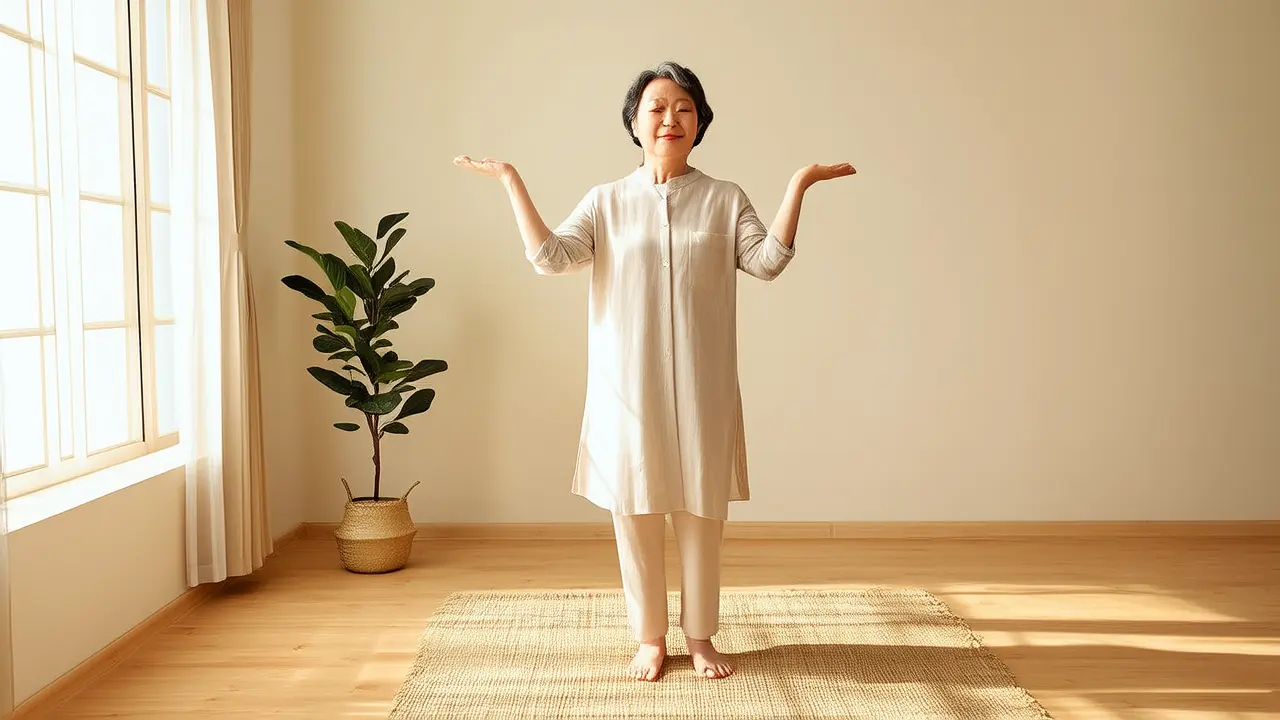
Tip: Rising and Falling Breathing Method
This method specifically targets physical stiffness and mental fog after long periods of sitting. The movements are minimal and safe with no risks.
Step One: Preparatory Posture
- Naturally stand with your feet shoulder-width apart, knees slightly bent; or sit comfortably on a chair.
- Gently place your hands in front of your lower abdomen, palms up, and relax your shoulders.
- Close your eyes and take three steady breaths to calm your mind.
Step Two: Inhale and Rise
- Inhale slowly through your nose while raising your hands slowly, as if holding a soft ball of energy, until they reach chest level.
- Imagine the breath rising from the soles of your feet up your legs to your waist and abdomen, then filling your chest cavity.
Step Three: Exhale and Lower
- Exhale slowly through your mouth or nose, letting your hands gently fall like feathers back to your lower abdomen.
- Feel the tension in your body flowing down from your head to your feet with each exhalation, sinking into the earth.
Breathing and Rhythm
Try to extend each inhalation and exhalation as much as possible, but without holding your breath. Repeat eight to ten times, about three minutes. The entire process is as smooth and peaceful as a stream.
Why Does It Relieve Fatigue?
According to Traditional Chinese Medicine, fatigue often results from poor circulation of qi and blood, and stagnation of vital energy. The rising and falling breathing method helps unblock meridians and promote the flow of qi and blood by combining slow body movements with deep, long breathing. It is both active and still, externally moving and internally quiet, gradually relaxing the sympathetic nervous system and activating the parasympathetic nervous system, thus alleviating muscle tension and stabilizing emotions. Simply put, it's like pressing the "repair button" for your busy body.
Daily Light Care Tips
Practice once daily in the afternoon or before bedtime, and it works better with light music. Don't pursue sweating or large movements, just focus on comfort and naturalness. After persisting for one or two weeks, you'll find yourself more relaxed and the feeling of fatigue will gradually decrease.
Summary
Daily light exercise emphasizes "lightness" and values "consistency." The rising and falling breathing method based on Tai Chi is a small health habit integrated into daily life. Just a few minutes can bring smooth circulation of qi and blood, and a relaxed body and mind. From today on, give your tired self a gentle care.
Disclaimer: This article is for health knowledge and wellness reference only and does not constitute diagnosis or treatment advice. If you have any illness or severe discomfort, please consult a professional physician or medical institution promptly.