Introduction: Why Choose Gentle Qigong?
In today's fast-paced life, many people feel tired, stiff, and stressed. Gentle Qigong, a traditional Chinese health practice, is becoming the preferred choice for daily relaxation. It involves gentle movements, requires no equipment, and can be done at home. Through slow body stretches combined with breathing, it helps to unblock the flow of qi and blood, and balance the mind and body. No prior experience is needed; just spend 10 minutes each day, and you will gradually feel your body stretch and your mind calm down.
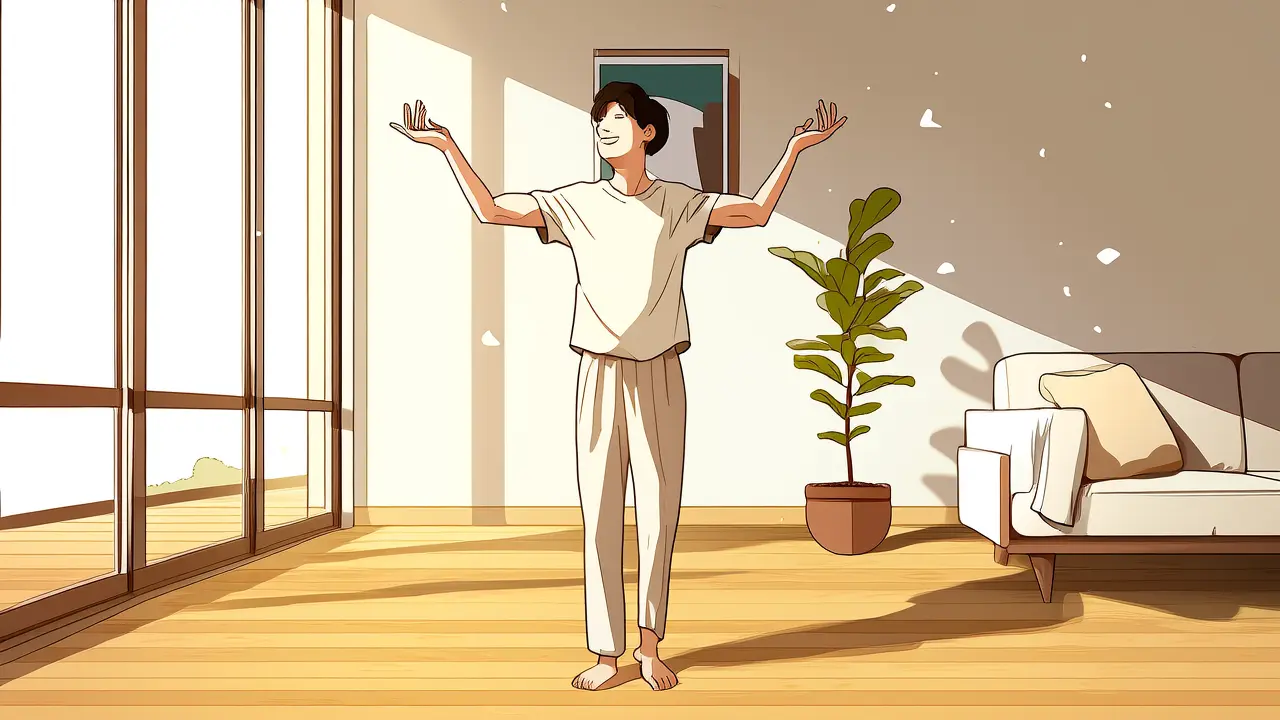
First Exercise: Hands Holding Heaven to Regulate the Three Jiao
Applicable Symptoms: Stiff shoulders and neck, back pain, and easy fatigue.
Exercise Steps: Stand naturally with feet shoulder-width apart. Inhale, slowly raise both hands from the sides of the body to above the head, palms up, as if holding a piece of sky. Hold for 1-2 deep breaths, then exhale and slowly lower the hands to the sides of the body.
Breathing Coordination: Inhale while raising the hands, exhale while lowering them, keeping the movement synchronized with breathing.
Gentle Regulation Principle: This exercise stretches the entire torso, stimulates the three jiao meridians (in Traditional Chinese Medicine, upper, middle, and lower jiao), and promotes the circulation of qi and blood. By opening the chest and abdomen, it relieves hunched posture caused by prolonged sitting, allowing deeper and longer breathing.
Second Exercise: Left and Right Open Bow Like Shooting a Bird
Applicable Symptoms: Chest tightness and shortness of breath, arm soreness, and low mood.
Exercise Steps: Step left foot outward about one step, slightly bend the knees. Clench both hands into empty fists and place them in front of the chest. Inhale, push the left hand to the left and pull the right hand back to the right, imitating the posture of drawing a bow and shooting an arrow, with eyes looking towards the left hand. Exhale and return to the original position, then switch sides.
Breathing Coordination: Inhale when pushing forward, exhale when returning, keeping the movement slow and smooth.
Gentle Regulation Principle: The left and right open bow motion opens the thoracic cavity, stimulates the lung and pericardium meridians, helping to release stagnant qi and improve heart and lung function. At the same time, it exercises the flexibility of the shoulders and arms, releasing accumulated tension through the movement.
Third Exercise: Shaking Head and Swishing Tail to Eliminate Heart Fire
Applicable Symptoms: Restlessness and insomnia, dry mouth due to internal heat, and stiff waist.
Exercise Steps: Stand with feet about twice the width of the shoulders, hands on the hips. Inhale, lean the body forward; exhale, rotate the body around the waist to the left and lower the head, feeling like a fish swishing its tail. Return to the center, then rotate to the right. Keep the body relaxed, starting with small movements and gradually increasing the range.
Breathing Coordination: Exhale while rotating, inhale while returning to the center, letting the movement guide the breathing rhythm.
Gentle Regulation Principle: Shaking the head and swishing the tail stimulates the governing vessel and bladder meridians through spinal rotation, guiding excessive heart fire downward. According to Traditional Chinese Medicine, excessive heart fire can cause restlessness and insomnia. This exercise balances yin and yang, restoring peace to the mind and body.
Summary: Make Gentle Qigong Your Daily Light Exercise
The above three exercises are simple and safe. Choose 1-2 of them each day, practicing for 5-10 minutes each time, and you can achieve the effects of unblocking meridians and relaxing the body and mind. After practicing for some time, you will find your energy increases, your body becomes lighter, and your sleep becomes more stable. Important Note: The gentle Qigong exercises introduced in this article are only for reference in daily health care and should not replace professional medical treatment. If you have serious health issues or pain, please consult a doctor.