Introduction
Feeling tired, stiff, or mentally drained after a long day? You don't need a gym or any equipment. There's a simple, gentle practice from traditional Chinese wellness – Qigong – that you can do right in your living room. It’s not about sweating or pushing your limits. It's about moving slowly, breathing deeply, and letting your body unwind. Today, we’ll share one tiny routine that helps release tension, improve comfort, and bring a sense of calm. No experience needed. Just you, a quiet spot, and a few minutes.
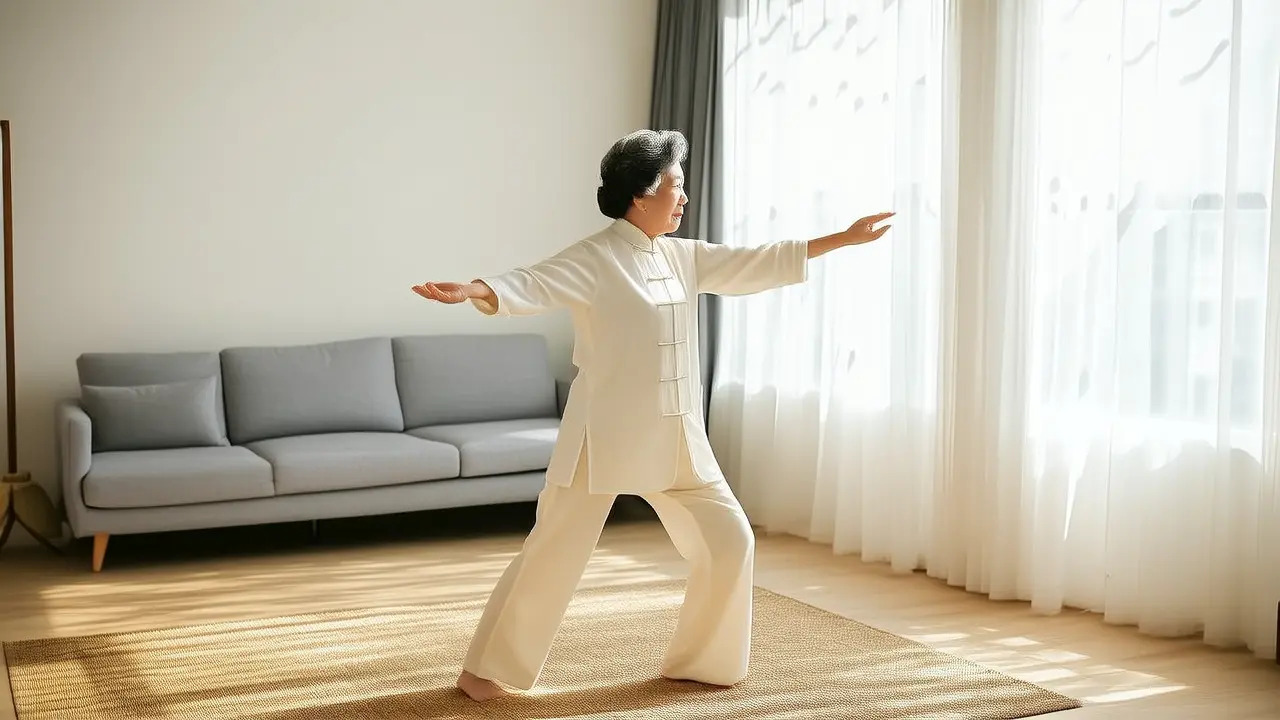
The One Gentle Movement: 'Cloud Hands' for Shoulder and Neck Relaxation
This move is perfect if you have tight shoulders, a stiff neck, or feel mentally foggy after sitting for hours. It gently moves your upper body, opens your chest, and encourages the flow of energy (Qi) through your arms and torso. The principle is simple: soft, flowing motion with natural breathing – just like clouds drifting in the sky.
When to Do It
- After sitting at a desk for a long time
- When you feel stress building up
- In the morning to wake up gently, or before bed to relax
- Any time you need a short break to feel more present and less tense
Step-by-Step Instructions
1. Stand comfortably with your feet shoulder-width apart, knees slightly bent, and your arms hanging naturally at your sides. Relax your jaw and take a slow breath in.
2. Begin the 'Cloud Hands' movement. Slowly raise your arms as if you are reaching for the sky, palms facing inward. As you inhale, imagine drawing energy into your body. Then, as you exhale, let your arms gently sway from side to side, like clouds drifting in the wind. Keep your movements smooth and controlled, focusing on your breath and the sensation in your body. Repeat this motion for several minutes, allowing yourself to fully relax and release any tension.
ds' motion: Slowly raise both arms in front of you to shoulder height, palms facing down, as if you are lifting a light balloon. Keep your elbows soft and your wrists relaxed.3. Shift your weight gently to your right leg, and at the same time turn your upper body slowly to the right. Let your left arm naturally swing across your body, palm still facing down, while your right arm stays in front. Don't force it – let it feel as if the wind is moving your arms.
4. Breathe with the movement: Inhale as you lift and turn; exhale as you shift back to the center. Keep the exhale longer than the inhale – breathe out like you're letting go of tension.
5. Repeat to the left side. Continue alternating left and right for about 2–3 minutes. Let each movement become slower and smoother. Focus on the gentle stretch in your shoulders, neck, and upper back.
How Breath Works with This Move
Breathing is the secret ingredient. When you lift and turn, you naturally open your chest – that's the inhale. When you return to center, you soften – that's the exhale. This pattern activates your parasympathetic nervous system (the 'rest and digest' mode) and helps release physical tightness. The slow, mindful breathing also calms your mind, making you feel centered and peaceful.
Why It Works (Traditional Chinese Wellness Ideas)
In Chinese wellness, this movement is said to 'smooth the flow of Qi' – yoYour body's natural energy. When Qi becomes stagnant (often due to stress or a static posture), you feel tired, sore, or irritable. Gentle movements like this one "unblock" that stagnant energy. It combines movement and stillness – your arms move, but your mind remains quiet. It is a form of 'daily light nourishment' for your entire body, not a workout. You are not forcing anything; you are inviting your body to relax and restore balance.
Conclusion
That's it – just one easy, gentle movement you can do in your own home, without any special tools. A few minutes of 'Cloud Hands' each day can help your body feel less stiff, your mind feel clearer, and your energy feel renewed. It's a simple way to practice self-care and connect with yourself. Remember, consistency matters more than intensity. Even two minutes of slow movement with relaxed breathing can make a real difference in how you feel overall.
Disclaimer
This content is for informational purposes only and is not a substitute for professional medical advice, diagnosis, or treatment. Always consult a qualified healthcare provider before starting any new exercise routine, especially if you have pre-existing health conditions or injuries. Listen to your body and stop if you feel pain or dizziness.