Introduction: From Tension to Relaxation, Just One Movement
Do you often feel your shoulders are as hard as stones, your back aches, and even deep breathing becomes shallow? The long periods of sitting and looking down at our phones have gradually put our bodies into a "stiff mode." Actually, you don't need complicated equipment or intense exercise. Just one simple qigong movement can help you regain lightness and comfort in daily life. This is the "Rising and Falling Breathing Method" we're sharing today.
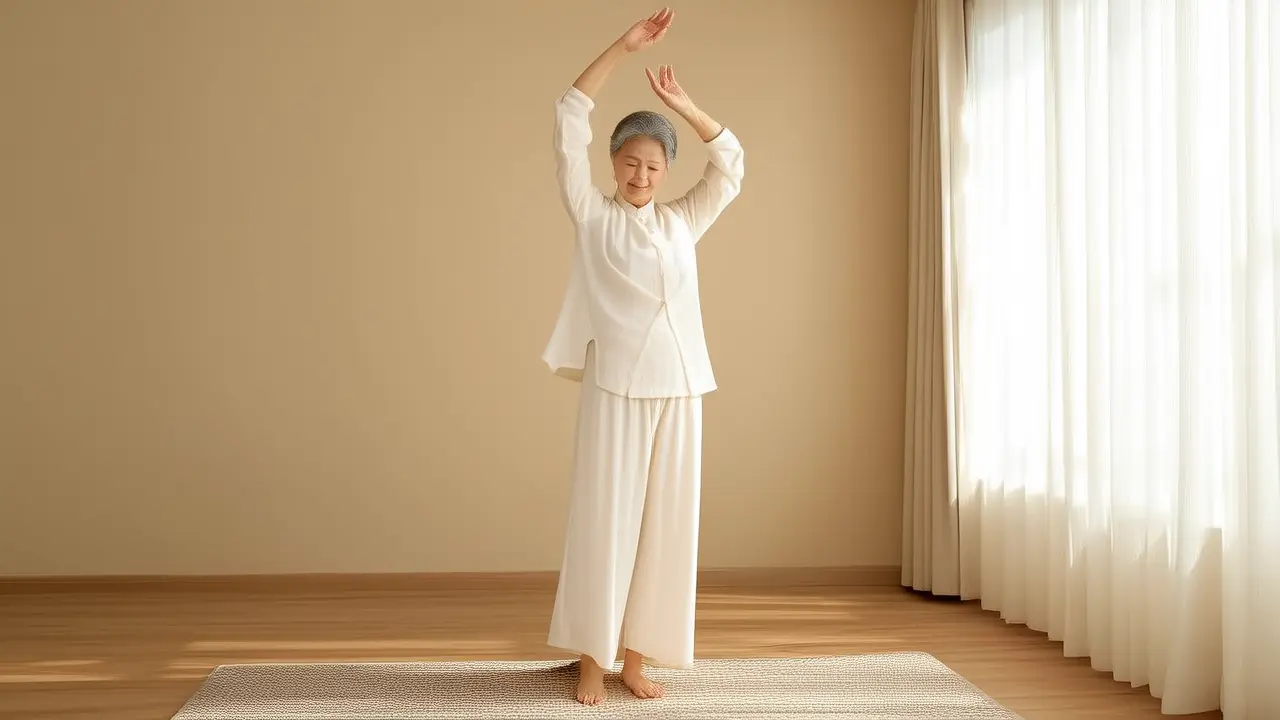
Technique Explained: Three Steps of the "Rising and Falling Breathing Method"
Step 1: Preparation - Find a Comfortable Standing Posture
Stand with your feet shoulder-width apart, knees slightly bent, not locked. Let your hands naturally hang by your sides. Gently close your eyes, focus on your breathing, take a few natural breaths to calm your mind.
Step 2: Rising - Inhale and Raise Your Hands
Breathe in slowly while raising your hands from your sides, palms up, as if holding a light balloon. Raise them to shoulder height, then continue turning your palms upward until your arms are raised above your head, palms facing each other. During this process, imagine the energy rising from your feet along your back, gently stretching each vertebra of your spine.
Step 3: Falling - Exhale and Release
Breathe out slowly, lowering your hands from the top of your head, palms down, as if gently pressing a floating ball on water. Lower them all the way to your sides, returning to the starting position. While exhaling, imagine your fatigue and stiffness flowing out through your palms and soles. Repeat 6-8 times, making the movements as smooth and gentle as flowing water.
The Principle of Gentle Regulation: Why Is It So Effective?
This seemingly simple movement actually integrates the traditional Chinese medicine concept of "unblocking qi and blood flow." Raising your hands opens up your chest and diaphragm, increasing lung ventilation and allowing oxygen to reach deeper tissues; lowering your hands relaxes the muscles in your shoulders, neck, and back, promoting blood circulation. Combined with deep, prolonged breathing, it activates the parasympathetic nervous system, relieving stress and tension. Throughout the process, there's a balance between movement and stillness—movements are slow, but internal qi flows smoothly. Practicing it once in the morning and once in the evening is like giving your body a gentle "internal massage."
Summary: Daily Light Care Lies in Consistency
When practicing, you don't need to force yourself to achieve perfection. As long as you feel your body is stretched, your breathing deepens, and your mood relaxes, that's the best result. If a particular area is especially stiff, you can stay a little longer in the breath, letting warmth penetrate. Remember, qigong isn't about pushing limits, but communicating with your body. When you incorporate the "Rising and Falling Breathing Method" into your daily routine, you'll be surprised to find that stiffness disappears without you noticing, and comfort can be so simple.
Disclaimer: The content of this article is for sharing health knowledge only and does not constitute medical advice. If you have severe joint damage, high blood pressure, or other chronic diseases, please consult a professional doctor before practicing. Stop immediately if you feel unwell, prioritizing safety.