Introduction
After a busy day, stiff shoulders and neck, sore back, and irritability— you don't need intense exercise that makes you sweat to regain relaxation and vitality. Gentle movements in traditional qigong, combined with natural breathing, can unblock the flow of qi and blood, and relax your body and mind without fatigue or shortness of breath. Below is a simple "Hands Holding the Sky" exercise that you can do anytime, anywhere.
1. Why Gentle Movements Last Longer
Although high-intensity exercises are beneficial, they can be intimidating and even cause injuries. Qigong emphasizes "a balance between movement and stillness, and calm breathing." The slow, smooth movements avoid forcing yourself or holding your breath, making it especially suitable for people who sit for long periods, those who are tired, and beginners. Just a few minutes a day can effectively relieve muscle tension and enhance inner comfort.
2. Today's Tip: Hands Holding the Sky to Regulate the Three Jiao
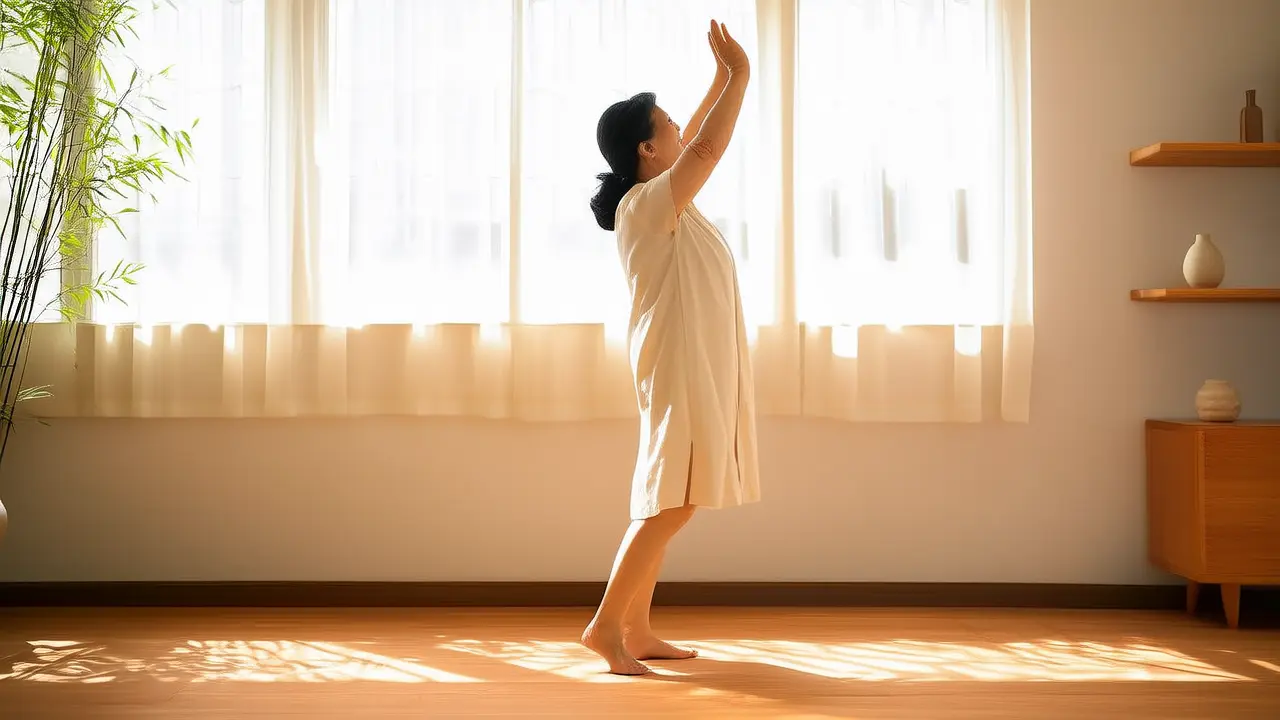
"Hands Holding the Sky to Regulate the Three Jiao" is a classic move in Baduanjin (Eight Pieces of Brocade). Although it seems simple, it stretches the spine, opens the chest cavity, and promotes blood circulation. It requires no equipment and can be done at home or during office breaks.
Applicable Discomforts
- Stiff neck and shoulders, hunched posture
- Tiredness, lack of energy
- Back and waist pain after prolonged sitting
Exercise Steps
- Stand naturally with feet shoulder-width apart, hands at the sides, and relaxed shoulders.
- Inhale, slowly raise both arms forward with palms up, crossing them in front of the lower abdomen.
- Continue inhaling, lift both hands along the body's midline upward, flip the palms, and raise them above the head, looking at the back of the hands.
- Exhale, slowly lower both arms to the sides, returning to the starting position. Repeat 6–10 times.
Breathing Coordination
Inhale slowly while lifting the arms upward, and fully exhale while lowering the arms. Breathing should be deep, even, fine, and long, avoiding holding your breath. Maintain the same rhythm between movement and breathing, let your mind follow the breath, and let the breath guide your movements.
3. Principles of Gentle Adjustment
This movement stretches the muscles and bones, allowing stiff areas to relax; combined with breathing regulation, it calms tense emotions and promotes blood circulation. According to Traditional Chinese Medicine, when the qi flows smoothly, all diseases disappear. After the qi and blood circulate freely, fatigue and stress naturally ease. This is the wisdom of "daily gentle care," not pursuing intensity but seeking physical and mental balance.
Summary
Healthy living doesn't rely on high intensity, but on consistency and gentleness. Spend a few minutes each day doing qigong exercises, let your breathing deepen, your body relax, and your mood calm. From today, take a simple action to care for yourself.
Disclaimer: This article is for health education and wellness reference only and cannot replace professional medical advice. If you have any physical discomfort or illness, please consult a doctor.