Introduction: Shoulders and Neck Need a Little Gentle Care After a Day of Sitting
Do you often feel like your shoulders are carrying a heavy stone, and your neck makes cracking sounds when you turn it? Don't worry, this is very common. Tai Chi is not just an exercise for the elderly in the park in the morning; it's actually a very gentle self-regulation method. You don't need any special equipment, and you can do it at home. Today, we share four extremely simple basic Tai Chi movements that will help you relax your shoulders, unblock your energy, and make your body feel comfortable again.
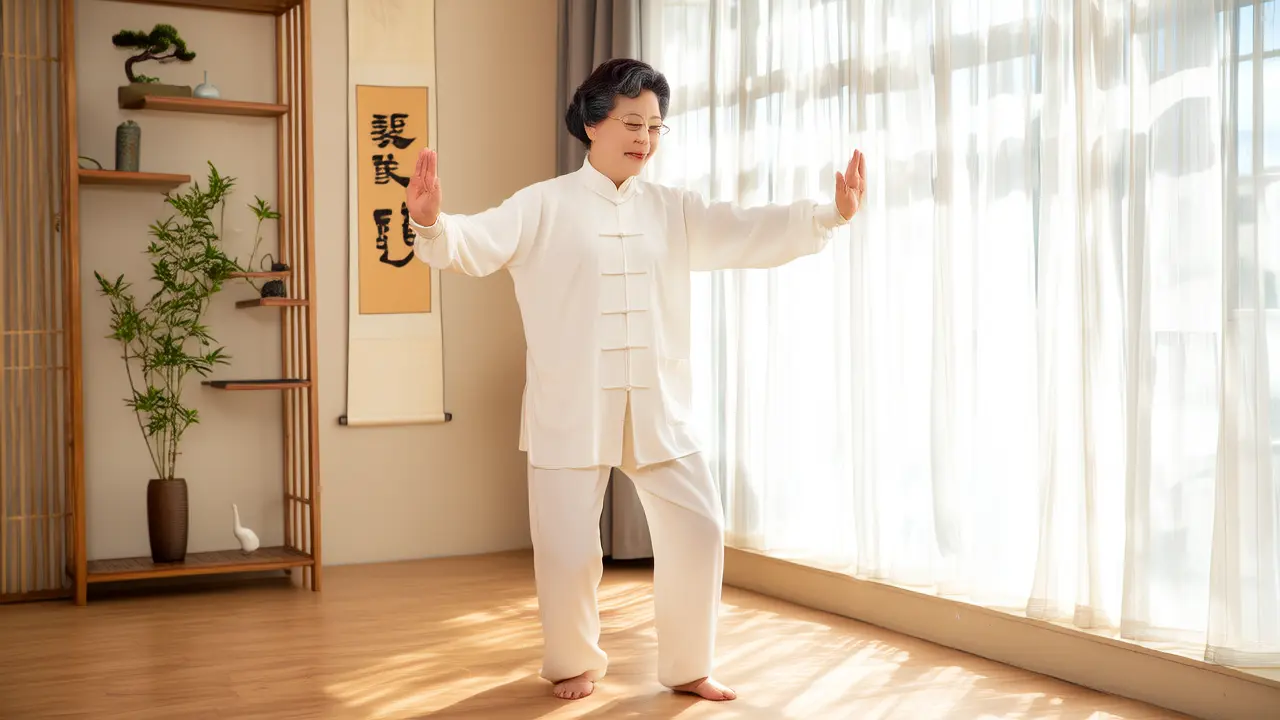
Movement 1: Starting Posture - Stand Firmly, and the Energy Will Flow Smoothly
Applicable Discomforts: Full-body stiffness after waking up or sitting for a long time.
Steps: Feet shoulder-width apart, knees slightly bent, hands naturally hanging by the sides of the body. Inhale, slowly raise both arms to shoulder height with palms facing down; exhale, bend the knees and lower the hands as if pressing on water.
Breathing Coordination: Inhale when lifting, exhale when lowering, keeping the rhythm consistent with the movement.
Regulation Principle: This movement can mobilize the spine and hip joints, guiding the flow of qi and blood upward from the waist, allowing the upper body to gradually relax.
Movement 2: Left-Right Wild Horse Parting Mane - Loosen Stiff Shoulders
Applicable Discomforts: Shoulder and neck pain, people who spend a lot of time looking down.
Steps: Feet one in front of the other (e.g., left foot forward), hands clasped in front of the chest as if holding a ball. Slowly shift the body's center of gravity to the front foot, while the front hand moves diagonally upward and the back hand presses downward. Then shift the center of gravity back and repeat on the other side.
Breathing Coordination: Inhale when separating the hands, exhale when bringing them back.
Regulation Principle: This movement is like slowly pushing open a door, stretching the muscles on the outer side of the shoulders and the sides of the neck, gradually relaxing the tense fascia.
Movement 3: Cloud Hands - Shake Lightly Like Clouds
Applicable Discomforts: Stiff back, chest tightness, shortness of breath.
Steps: Feet slightly wider than shoulder-width apart, center of gravity between the legs. Alternately draw circles in front of the chest with both hands, one hand flipping upward and the other pressing downward, while the body gently turns left and right.
Breathing Coordination: Inhale when the hand goes up, exhale when the hand goes down.
Regulation Principle: Cloud Hands imitate the movement of clouds, helping to relax the ligaments around the spine and promote expansion of the thoracic cavity, making breathing smoother.
Movement 4: Final Posture - Bring the Feeling of Relaxation Into Your Body
Applicable Discomforts: For finishing up after the previous movements.
Steps: Feet together, hands slowly lower from both sides to the outer sides of the thighs, then naturally stand upright. Close your eyes and stand still for 10 seconds, feeling the softness of your body.
Breathing Coordination: Breathe naturally, without刻意 controlling.
Regulation Principle: This is the conclusion of Tai Chi's "balance of movement and stillness," allowing the qi and blood you've just activated to gradually return to their proper places, and calming your mind.
Summary: 10 Minutes a Day, Give Your Shoulders and Neck a Break
These four movements take only 10 minutes in total, no need to change into sportswear, and you can practice them in the office or at home. The key is to perform the movements slowly and maintain even breathing. After a week of practice, you'll find yourself able to stand tall with your head up, and your neck won't be so sore anymore. Remember, Tai Chi isn't a competition; it's a conversation with your own body. Try to take this moment every day, which belongs only to you.
Disclaimer: The content of this article is for reference regarding health knowledge and does not constitute medical advice. If you have severe shoulder and neck diseases or persistent pain, please consult a professional doctor in time. Adjust the range of motion according to your own condition during exercise and avoid over-stretching.