In traditional Chinese health culture, chrysanthemum tea is often simply labeled as "clearing heat." In reality, this unassuming little flower contains the wisdom of gentle regulation and can become a helpful home remedy for dietary therapy according to the changing seasons. From the springtime's liver-clearing and vision-enhancing properties to the autumn night's moistening and calming effects, chrysanthemum tea is not a strong medicine but rather a steady nourishment. Today, let's explore the everyday world of chrysanthemum tea and discover how it can gently integrate into our daily meals and seasonal changes.
The Dual Nature of a Chrysanthemum: Cooling but Not Too Cold
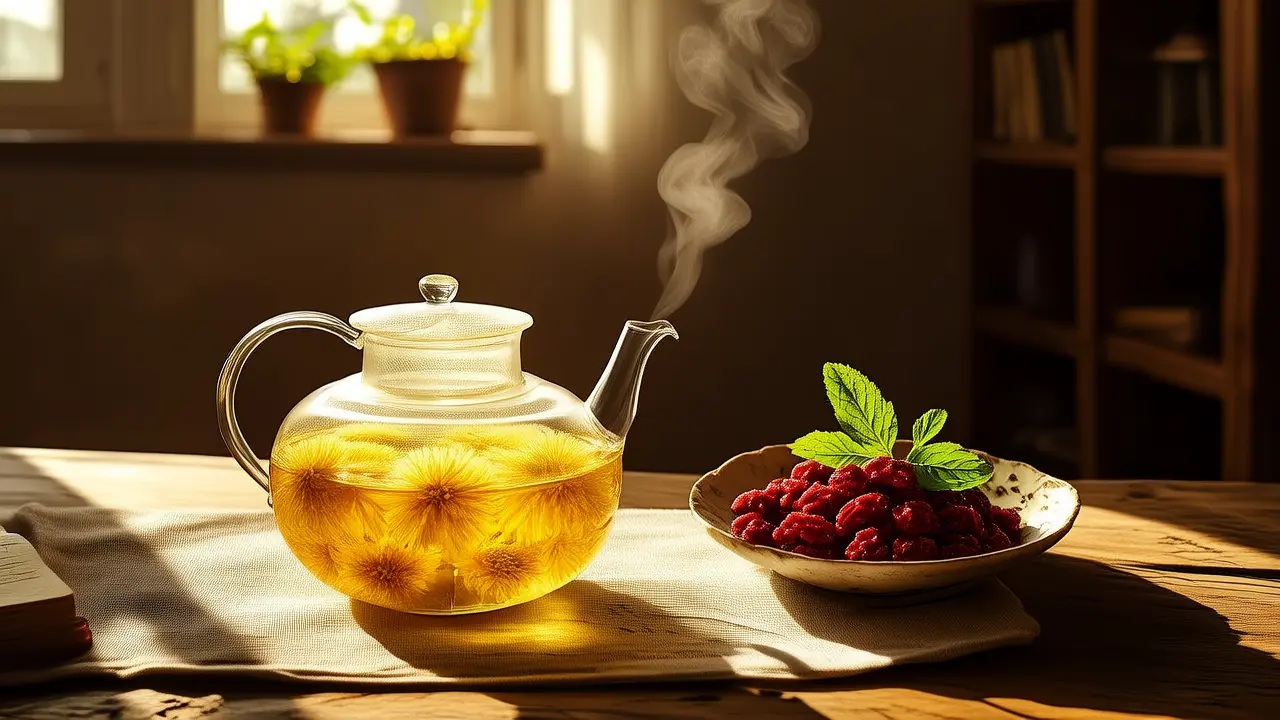
Many people are concerned about the cooling nature of chrysanthemum and hesitate to drink it. Actually, chrysanthemum is slightly cold, different from strongly cold medicines like coptis. It has a cooling yet moisturizing effect, especially suitable for people with internal deficiency heat or excessive liver fire but with a healthy spleen and stomach. When combined with a few goji berries (warming) or a couple of slices of hawthorn (slightly warm) in daily use, it can balance the coldness and become a mild beverage that the whole family can enjoy.
Spring: Chrysanthemum Tea × Mint, Awakening the Vitality of the Season
In spring, when temperatures rise, liver qi tends to be overactive, causing dry eyes and irritability. Take 3 Hangbai chrysanthemums and 5 fresh mint leaves, pour boiling water over them, and let it steep for 5 minutes. The fragrant mint helps relieve stagnation, while the chrysanthemum clears the liver and improves vision. Together, they act like a "spring cleaning" for the body. Drinking a cup when feeling drowsy in the afternoon can refresh the mind.
Summer: Chrysanthemum Tea × Prune, Refreshing and Heart-Protecting with Sweet and Sour Flavors
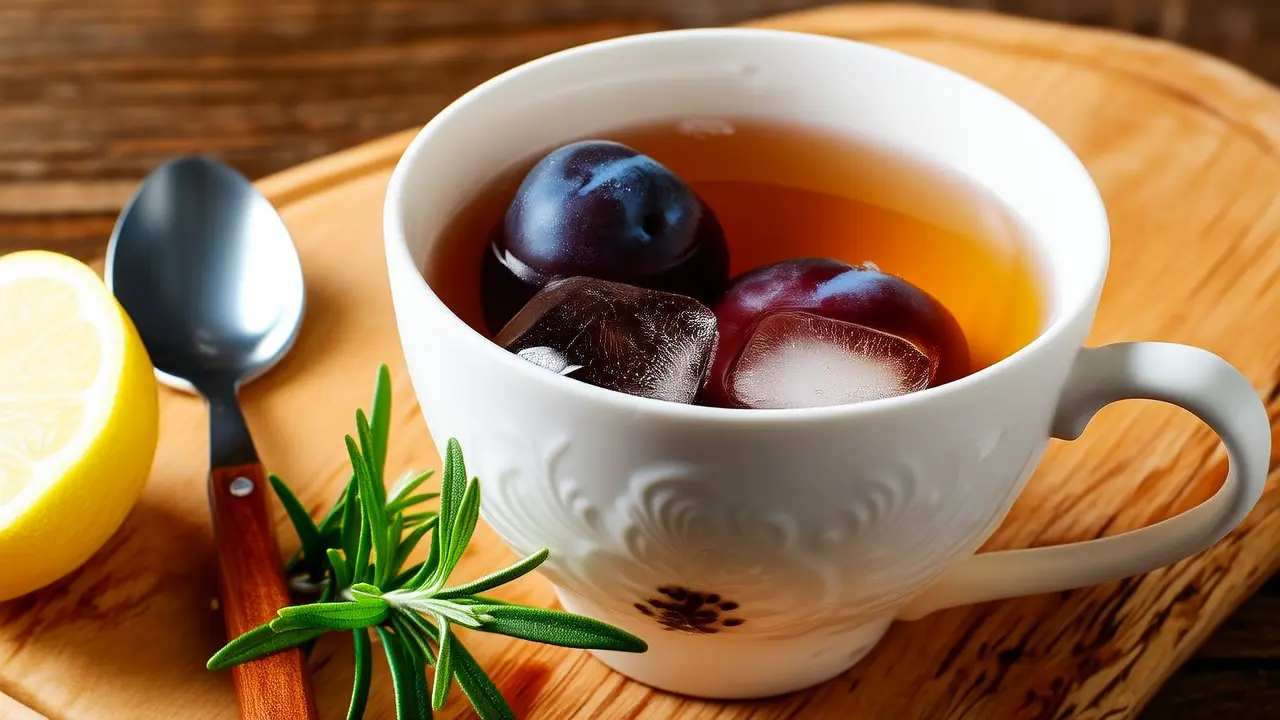
In the hot summer, heat can damage body fluids, and excessive sweating can deplete energy. Use 6 chrysanthemums, 2 prunes, and a little rock sugar, boil them and drink as tea. Prunes, with their sour and sweet properties, generate body fluids and quench thirst; chrysanthemum clears summer heat. This "sour prune chrysanthemum drink" is more refreshing than chilled beverages and does not harm the stomach, especially suitable for those working outdoors or after exercise.
Autumn: Chrysanthemum Tea × Pear, Moisturizing and Cough-Relieving Without Hesitation
In autumn, dryness harms the lungs, leading to dry coughs and sore throats. Cut 1 pear into pieces, add 8 baby chrysanthemums, 5 grams each of southern and northern apricot kernels, and cook with water for 20 minutes. Pears moisturize the lungs, chrysanthemums clear heat, and apricot kernels help reduce气 and relieve asthma. This sweet soup combines "clearing, moisturizing, and reducing," providing effective relief for throat dryness and mild dry cough caused by autumn dryness.
Winter: Chrysanthemum Tea × Red Dates, Warming the Body Without Damaging Yin
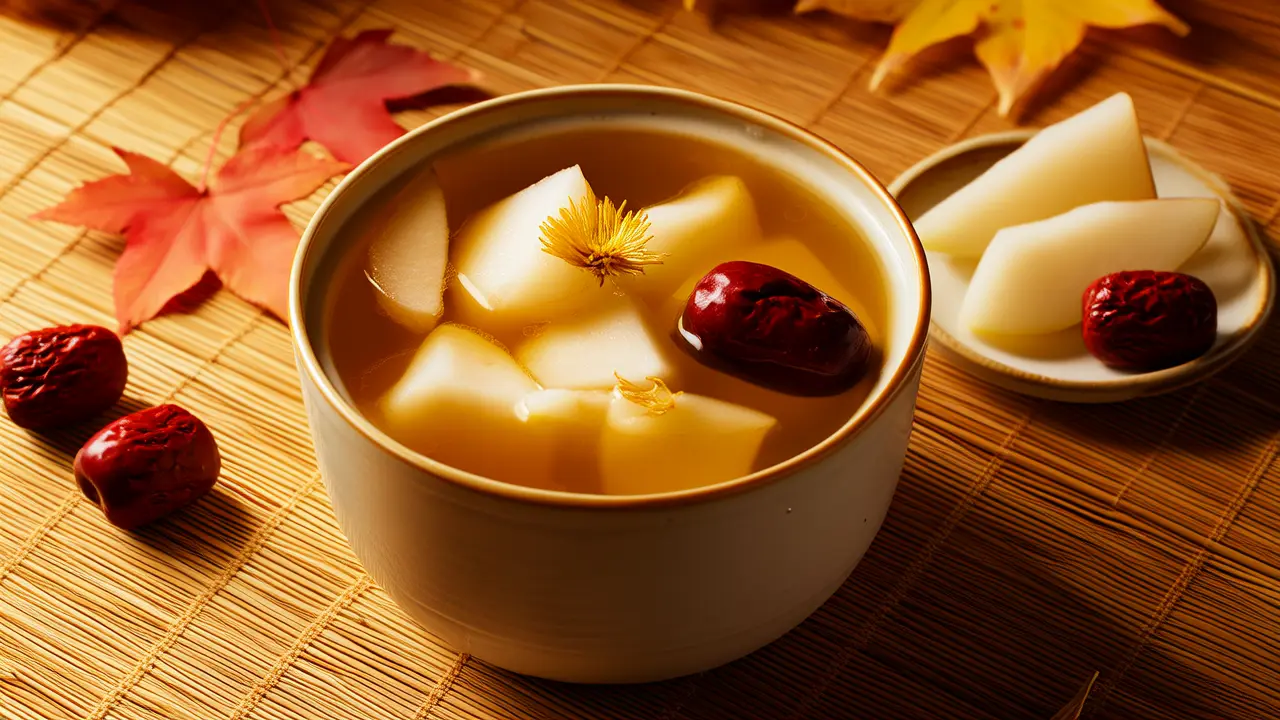
Feeling cold in winter yet prone to heatiness? This is a common issue with the "upper heat, lower cold" constitution. Use 5 chrysanthemums, 3 red dates (pitted), and 2 slices of ginger, steep with boiling water for 10 minutes. Red dates and ginger warm and supplement the middle jiao, while chrysanthemum clears heat from the head and face. The formula is warming without being drying, and cooling without being cold, making it particularly suitable for office workers who sit for long hours or those who stay up late working.
Summary
The charm of chrysanthemum tea lies in its "gentle yet powerful" regulatory properties. It is not a panacea, but through simple ingredient combinations, it can help us adapt to nature and harmonize our bodies during the changing seasons. Whether you're a busy office worker or an elder focused on health, a well-matched chrysanthemum tea at the right time can become a small joy in daily healing. Remember, health preservation is a gradual process, and starting with a cup of tea is already very good.