Introduction: A Bowl of Porridge and a Cup of Tea, Following the Rhythm of Nature
Chinese people have long emphasized the concept of "food as medicine," believing that food is the best medicine. As the seasons change, the human body also undergoes changes: in spring, liver energy rises; in summer, heart fire is strong; in autumn, dryness harms the lungs; and in winter, cold harm the kidneys. Commonly used porridges made from various grains and herbal teas are wise ways to adjust gently according to the seasons. There's no need for expensive medicinal ingredients; just common coarse grains and flowers in the kitchen can quietly nourish the body in daily diet.
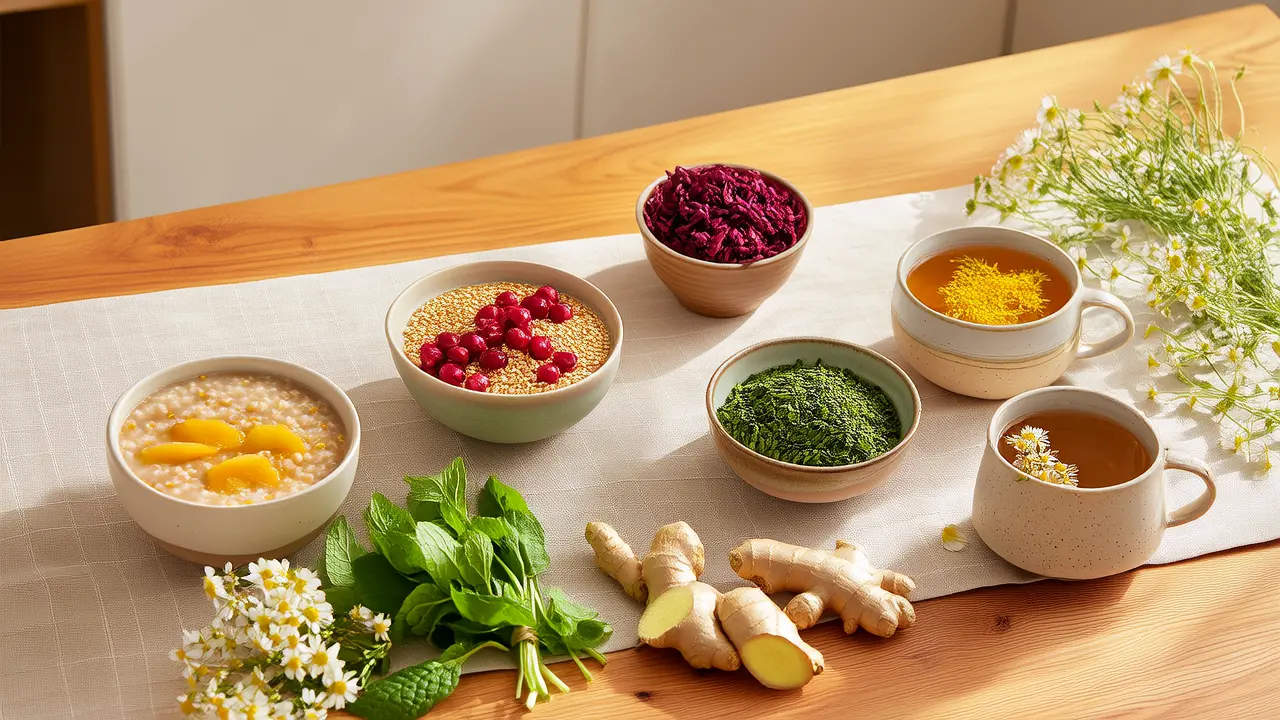
Spring Liver Care: Oatmeal Millet Porridge with Chrysanthemum and Goji Berry Tea
Spring belongs to wood, corresponding to the liver. At this time, it is advisable to "reduce sourness and increase sweetness," eating more mild sweet foods to protect the spleen and stomach. Oats and millet are both sweet and neutral in nature. Adding a few dates and goji berries, cooking them into a thick porridge can gently replenish qi. If you feel dry eyes or easily get angry, you can brew a cup of chrysanthemum and goji berry tea: 5 dried chrysanthemums and 10 goji berries steeped in boiling water for 5 minutes. Chrysanthemum clears the liver and improves vision, while goji berries nourish the liver and kidneys, and their combination is cool but not cold.
Summer Heart Cooling: Mung Bean and Coix Seed Porridge with Mint and Lemon Tea
Summer belongs to fire, corresponding to the heart. The hot and humid weather often causes irritability, thirst, and loss of appetite. Mung beans clear heat and detoxify, while coix seeds remove dampness and strengthen the spleen. When making porridge, adding a little rock sugar and then refrigerating it makes it more refreshing. For the tea, use 3 fresh mint leaves and 2 lemon slices, steeped in warm water with a little honey. Mint cools and disperses, while lemon quenches thirst and promotes saliva production. Drinking it after meals helps dissolve greasiness.
Autumn Moisturizing: Tremella and Lily Porridge with Osmanthus Pear Tea
Autumn belongs to metal, corresponding to the lungs. Dry weather easily causes throat irritation and tight skin. Soak tremella and tear it into small pieces, then simmer it with lily and glutinous rice until it becomes gel-like, soft and smooth. Pair it with osmanthus pear tea: cook pear chunks (with skin) in water, add dried osmanthus and simmer for 10 minutes. Pears moisten the lungs and resolve phlegm, while osmanthus warms the stomach and dispels cold, making it very suitable for drinking on an autumn afternoon.
Winter Kidney Nourishment: Black Sesame and Black Rice Porridge with Tangerine Peel and Ginger Tea
Winter belongs to water, corresponding to the kidneys. In cold seasons, it is important to warm and supplement kidney yang. Choose black ingredients like black sesame, black rice, and black beans. After soaking, cook them into a thick porridge and add a moderate amount of brown sugar for flavoring. If you feel cold hands and feet, brew a cup of tangerine peel and ginger tea: one small piece of tangerine peel and three slices of ginger, steeped in boiling water for 5 minutes. Tangerine peel regulates qi and strengthens the spleen, while ginger warms the center and dispels cold. Drinking it makes your whole body warm.
Summary: Simple Every Day, Valuable in Persistence
Seasonal dietary therapy is not a complicated prescription, but rather a way to communicate with the body using ordinary ingredients. A bowl of porridge, a cup of tea, following seasonal changes, gently harmonizing the spleen and five organs. There's no need to pursue immediate results. As long as you persist in the principle of light, natural, and seasonal diet, you can gain lasting health and peace in the daily life.