Introduction: Adapting to the Seasons, Nourishing with Food
As spring turns into summer, the heat gradually increases, and the body may experience minor discomforts such as dry mouth and tongue, irritability, insomnia, and poor appetite—common issues related to "heat" and "damp-heat." Traditional Chinese Medicine emphasizes that "food and medicine share the same origin," and many cooling herbs commonly found in the kitchen can help us gently clear heat, moisten dryness, and harmonize the spleen and stomach. Today, we will share a simple and safe home remedy to help everyone comfortably go through the hot season.
Applicable Symptoms
If you have recently felt: bitterness in the mouth, a desire for icy water, dry and hot skin, restless sleep, or bloating and discomfort after eating greasy food—these are mostly caused by "deficient fire" or "damp-heat" inside the body. There is no need to take medicine; try the following gentle dietary therapy instead.
Ingredients Preparation
- Mint (fresh or dried leaves): dispel wind-heat, clear the head and eyes
- Chrysanthemum (Hangzhou white chrysanthemum or ginseng chrysanthemum): clear liver and brighten eyes, relieve heat toxicity
- Mung beans (soaked for 2 hours in advance): clear heat, relieve summer heat, promote diuresis and reduce swelling
- Winter melon (with skin): clear heat, generate body fluids, promote diuresis
- A little rock sugar or golden sugar (for flavoring)
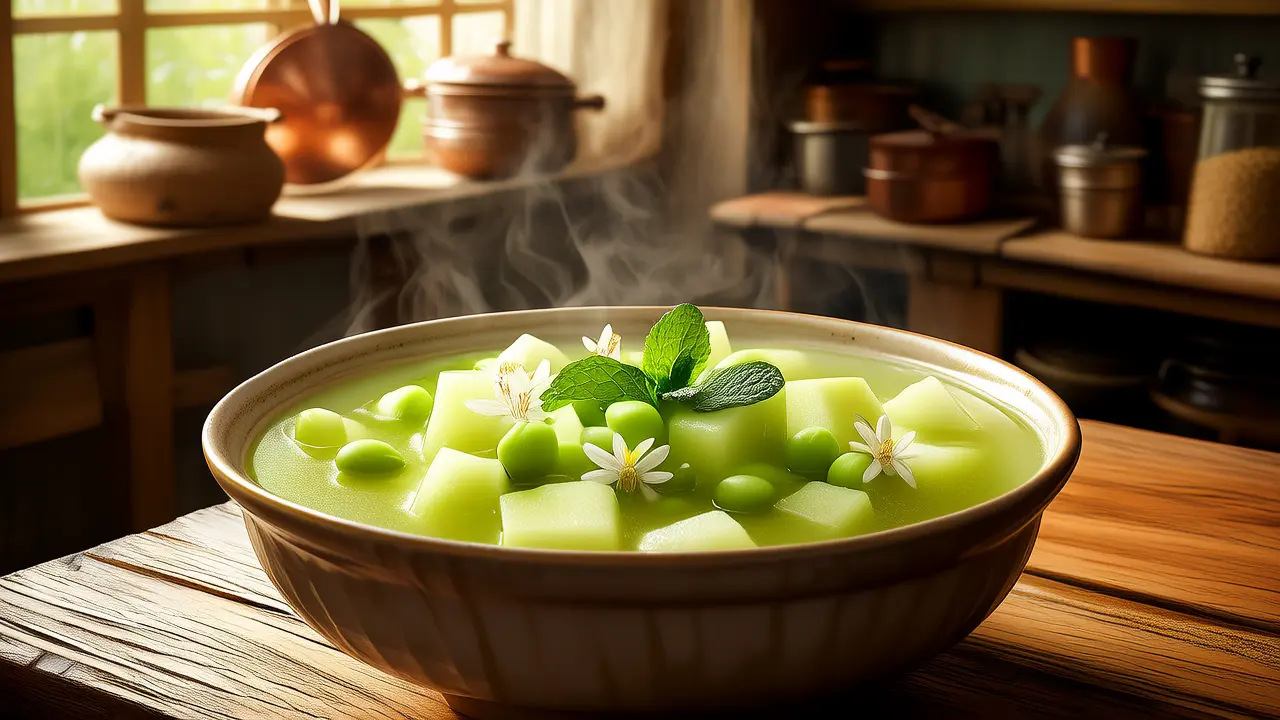
Preparation Steps: Mint Chrysanthemum Mung Bean Winter Melon Soup
This soup combines cooling herbs with common ingredients, and the preparation is very simple:
- Wash about 50 grams of mung beans, cut about 200 grams of winter melon (without peeling) into pieces and set aside.
- Add about 800 ml of water to a pot, put in the mung beans and winter melon, bring to a boil over high heat, then simmer on low heat for 30 minutes.
- Five minutes before turning off the heat, add 10 grams of mint leaves and 5 chrysanthemum flowers, then let it steep for another 3 minutes.
- Strain the soup, add an appropriate amount of rock sugar or golden sugar, and drink while warm. You can also eat the winter melon pieces and mung beans together.
Mild Adjustment Principles
Every ingredient in this soup is slightly cool in nature, but when combined with the "sweet and bland" taste of winter melon and mung beans, along with the fragrant aroma of mint and chrysanthemum, it does not harm the spleen and stomach. The concept of "harmony" emphasized in Traditional Chinese Medicine is reflected in: mung beans and winter melon pass through the water pathway, helping the body expel excess heat through urine; mint and chrysanthemum work on the qi level, dispersing heat from the upper part of the body. This entire process is mild and non-irritating, like gently fanning the body. Following the seasonal principle of "nourishing yang in spring and summer," we do not fight against heat, but rather guide the pathogenic heat to find an outlet.
Notes to Consider
It is recommended to consume it 2-3 times per week, and it is not advisable to drink it every day. Those with a cold constitution (cold hands and feet, prone to diarrhea) can add two slices of ginger to balance the cold nature. Pregnant women and those currently taking medication should consult a doctor.
Summary: Using the Natural Power in the Kitchen to Gently Care for Yourself
You don't need complicated recipes or expensive medicinal ingredients; the mint, chrysanthemum, mung beans, and winter melon at home are the best "fire-reducing guards." This common dietary therapy is suitable for the whole family, quenching thirst and nourishing the body. Remember: the core of seasonal diet is "adaptation"—eat some cooling herbs when it's hot, but also protect the spleen and stomach. Small habits can help your body regain its own rhythm.
Disclaimer: The content of this article is for sharing health knowledge only and does not constitute medical advice. If you have specific health issues, please consult a professional physician.